
 By
By 
Building a doctor appointment booking app is no longer just a digital upgrade for hospitals and clinics. It has become a core part of modern patient care. The demand for seamless healthcare scheduling continues to rise. According to Market Data Forecast, the global medical scheduling software market is expected to grow from 571.7 million dollars in 2025 to 1,593 million dollars by 2033.
This rapid growth shows how strongly patients and providers are shifting toward digital appointment management. For healthcare startups, multi-specialty clinics, and hospitals, this creates a significant opportunity to improve the patient journey, reduce no-shows, optimize doctor schedules, and deliver care more efficiently.
Whether you plan to build a standalone appointment booking app or want to integrate scheduling features into an existing healthcare system, understanding the ins and outs of doctor appointment app development is essential.
This blog explores the key features, technology considerations, development costs, timeline, process, and important compliance requirements for developing a doctor consultation booking app. Whether you are planning to partner with a healthcare app development company or build your app in-house, this guide will help you effectively plan your app development project.
Table of Contents
Market Statistics of Doctor Appointment Apps Like Zocdoc and Doctor On-demand
Below are the 3 statistics of the healthcare industry that suggest it is a perfect time to invest in the doctor appointment mobile app industry.
- According to Statista, the total Revenue in the online doctor consultations segment is expected to show an annual growth rate (CAGR 2023-2027) of 8.76% resulting in a projected market volume of US$35.41bn by 2027.
- According to Statista, the total global market was valued at around 2.4 billion U.S. dollars. It is estimated that the market will grow to over 11 billion dollars by 2025.
So, now let’s get started and learn about the benefits of healthcare apps for doctors and patients.
Benefits of Creating a Doctor Appointment App
To better understand why one needs an app for scheduling appointments let’s explore the key benefits of such an application to doctors, caregivers and patients.
Benefits for Doctors
- Doctors can manage appointments at any time.
- Ability to manage staff appointments more easily.
- Prevent being overbooked for appointments
- Automate administrative tasks and reduce manual errors in appointment management.
Benefits for Patients
- Patients can book appointments 24/7
- Share health documents effortlessly and record medical history.
- Sync appointments with digital calendars.
- Pay for bills and medicines online.
Want to Develop an Appointment Booking App?
Our developers have experience creating a medical appointment booking app with appointment scheduling, video consultation, and prescription management features.

Now let’s learn about the complete process to develop a medical app.
8 Steps to Create a Medical Appointments Scheduler App
Creating a medical appointments scheduler app like Zocdoc and Doctor On-demand requires careful planning and execution. We have divided the process to create a medical booking app like Zocdoc and Doctor on-demand into 8 steps.
Let’s go through it.
-
Define Your App’s Key Features and Functionality
When you want to develop an appointment app, you first need to know which features you want to include in your app.
For example, you might decide to focus on a particular niche within the medical industry, such as mental health, and expand your services by building a telemedicine app, offering features such as telemedicine consultations, therapist searches, and virtual appointments.Above, we have already provided the list that you can add to your doctor’s appointment app. Consider doing app market research to identify the essential features that are successful in similar apps to make sure that you have a competitive advantage. Analyze the strengths and weaknesses of similar apps and come up with a unique value proposition.
-
Create a Database of Doctors and Clinics
Creating a database allows patients to search and choose doctors or clinics based on their location, specialty, and availability. Without a database, patients would not be able to find or schedule appointments with doctors or clinics through the app.
You can gather this information by reaching out to clinics and doctors’ offices and asking them to provide their information such as contact information, services they offer, hours of operation, and any other relevant information.
Having a database of doctors and clinics saves time and simplifies appointment scheduling for both doctors and patients.
-
Hire an App Development Team Having Expertise in Developing Doctor Appointment Booking App
You might be wondering how to hire developers for your app. Ensure to hire developers who have experience in developing similar apps and who have a deep understanding of the healthcare industry. Look for developers, designers, and testers who have expertise in app development, UI/UX design, and testing.
Outsourcing companies can provide you with a dedicated team of professionals with the required skills and experience, and they can handle the overall app development process. When choosing an outsourcing company, consider their reputation, experience, and client reviews, and establish clear communication to ensure that the project is a success.
Quick Tip:
Once you have selected a mobile app development company, do SIGN AN NDA with a company to protect your app idea and for security purposes.
-
Choose the Right Technology Stack to Build Doctor Appointment App
Your app development team or company can help you choose the right technology stack based on your app’s requirements, budget, and timeline. They help you stay up-to-date with the latest technologies and trends in the industry.
Here’s a table outlining the tech stack and some of the popular tools and frameworks that can be used to build a doctor appointment app.
Technology Tools and Frameworks Programming Languages Java, Kotlin, Swift, JavaScript Development Frameworks React Native, Flutter Backend Technologies Node.js, PHP, Ruby on Rails Database Management MySQL, MongoDB, PostgreSQL APIs Google Maps API, Stripe, Firebase, HealthKit, Google Cloud Healthcare User Interface and Design Adobe XD, Sketch, Figma Testing, and Deployment Firebase, Jenkins, TestFlight -
Build the Prototype and UI/UX of Your Doctor Appointment Mobile App
Once the technology stack is decided, the business analyst team starts by creating a mobile app wireframe of the app’s structure and functionality, which will give you a basic idea of how the app will look and function. They will then create a prototype, which is a basic version of the app that can be tested by users.
Once the prototype is ready, the design team will focus on the UI/UX design of the app. They will choose an appropriate color scheme, typography, and layout that is visually appealing and easy to use. They will also ensure that the design is consistent throughout the app and that it is optimized for different screen sizes and orientations.
-
Ensure HIPPA Compliance of Your Appointment Booking App
As your development team begins working on the doctor appointment booking app, they even ensure HIPAA compliance. This involves building a secure mobile app architecture that aligns with HIPAA regulations to protect patients’ critical information from being leaked to unauthorized parties.
Ensure that your development team has a thorough understanding of regulatory compliance standards for healthcare and knows the best ways to secure the app.
Some key considerations for a secure on-demand doctor appointment app development include:
- Using SSL connections to ensure secure health data transmission.
- Implementing PHI (Protected Health Information) data encryption to protect sensitive patient information.
- Adhering to regulations like HITECH Act, GDPR, and other relevant standards.
- Considering HIPAA-as-a-Service cloud platforms, which provide HIPAA-compliant infrastructure for hosting and managing healthcare data.
This help to ensure that your doctor appointment booking app is secure and compliant with HIPAA regulations.
-
Integration of Payment Gateway to Your Online Doctor Appointment System
During the development process, your mobile app development team will work to integrate a payment gateway that meets the needs of your app and your users. The mobile app development team selects a suitable payment gateway provider, configures the gateway to work with your app, and ensures that all transactions are secure and compliant with relevant regulations.
When choosing a payment gateway provider, consider factors such as transaction fees, security features, and user experience. Some popular payment gateway providers for healthcare mobile apps include Stripe, PayPal, and Braintree.
By integrating a secure and reliable payment gateway into your online doctor appointment system, you can provide a seamless and convenient experience for your users while ensuring the security and integrity of their data.
-
Testing and Release of Your Doctor Appointment Mobile App
QA team tests the app across various devices and platforms to ensure that it works as intended. This includes testing for functionality, usability, security, and performance, as well as ensuring that the app complies with relevant regulations such as HIPAA.
Your app development team will work closely with the QA team to address any issues that are identified, making improvements and modifications as necessary to ensure that the app meets the required standards.
Once the testing process is complete, and any necessary changes have been made, the app is ready to be launched. This involves submitting the app to the relevant app stores, such as the Apple App Store or Google Play Store, and making it available for download to users.
So, above were the steps to develop a doctor appointment app. Following these steps, you will be able to develop without any technical knowledge. Let’s even check some of the best doctor appointment scheduling apps you can consider while listing out the features.
- Registration & Profile: Secure accounts with medical history, allergies, and insurance
- Doctor Search & Filtering: By specialty, location, availability, insurance, ratings
- Real-Time Booking: Instant slot selection with no scheduling conflicts
- Appointment Management: Reschedule/cancel in-app with automatic syncing
- Secure Payments: Credit card, wallet, or insurance billing options
- Reminders & Notifications: Pre-appointment alerts reduce no-shows significantly
- Medical Documents: Upload prescriptions and test results for doctor review
- Calendar & Schedule: Real-time availability with patient appointment list
- Patient Profiles: Medical history, allergies, past diagnoses accessible pre-visit
- Appointment Confirmation: Confirm bookings and add clinical notes post-visit
- Secure Messaging: Doctor-patient chat for non-urgent questions
- Note-Taking: Visit notes, diagnoses, and treatment plans auto-sync to records
- Analytics: Bookings, no-show rate, appointment trends, patient demographics
- Payment Tracking: View all transactions, refunds, and invoices
- Staff Management: Add doctors, set availability, manage permissions
- Patient Communication: Send bulk reminders, announcements, or cancellations
- Users describe symptoms naturally, and AI recommends appropriate specialists. No more confusion about which doctor to see, thus improving first-visit relevance and reducing costly referrals.
- Patient no-show prediction using historical data automatically optimizes appointment slot density. Lower no-shows with increased clinic capacity utilization, all without hiring extra staff.
- Apple Watch, Fitbit, and glucose monitor connectivity collect pre-appointment vitals automatically. Doctors see health trends before consultation, enabling better diagnostics and shorter appointments.
- Intelligent chatbot systems handle FAQs, rescheduling requests, and pre-appointment intake instantly. Support team workload drops while patients get around-the-clock availability.
- Risk identification algorithms flag high-risk patients for disease progression and medication interactions. Proactive care interventions become possible, supporting value-based care models and improving outcomes.
- Users book appointments, cancel, or check status using voice commands. Accessibility improves for elderly users while busy professionals save time managing schedules.
- HIPAA-compliant video consultation app development built directly into your platform, not third-party Zoom links. Integrated chat, file sharing, and prescription delivery create seamless telehealth without app-switching.
- Doctors issue prescriptions through the app that automatically route to the patient’s preferred pharmacy. Automatic refill reminders and medication adherence tracking improve patient compliance.
- Immutable patient records with patient-controlled sharing permissions ensure specialists access verified data instantly. Fragmentation disappears while medical errors drop significantly.
- Full app localization, including UI and medical terminology, enables geographic expansion. Diverse populations access care in their language while you meet regional compliance requirements.
-
Doctor Appointment Booking App Features
The number and complexity of features you integrate directly determine your app’s development cost and timeline. A basic MVP with essential features: user registration, doctor search, real-time booking, and payment processing, costs significantly less than a full-featured platform with telemedicine, AI scheduling, and analytics dashboards.
Here’s the simple principle: each feature requires additional development hours, testing cycles, and infrastructure investment. A patient search function takes 2–3 weeks; adding video consultation integration takes 4–6 weeks. Multiple features compound the timeline and budget.
Most teams make one critical mistake: building too many features upfront. Instead, launch with core features that directly solve user problems, then add advanced capabilities based on real usage data. This phased approach keeps initial costs down while avoiding expensive features nobody uses.
-
Doctor Appointment App Development Platform iOS/Android/Cross-platform
The cost of developing a Doctor On-demand and Zocdoc clone app depends on the platform you choose. Here’s a table summarizing the basic cost of medical app development for Android, iOS, and cross-platform.
Platform Cost Estimate Timeline Estimate Programming Language Required Android $20,000 – $40,000 500 – 800 hours Kotlin, Java iOS $30,000 – $50,000 500 – 800 hours Swift, Objective-C Cross-Platform $25,000 – $60,000 600 – 1000 hours React Native, Flutter Developing a doctor appointment app for a single platform (iOS or Android) is generally less expensive than developing for both platforms simultaneously. However, choosing a cross-platform development framework like React Native, or Flutter allows you to create an app that can run on both iOS and Android devices, which can save time and reduce costs.
Overall, the platform you choose to develop your doctor appointment app will impact the cost, timeline, and user experience of the app, so it’s important to consider these factors carefully before making a decision.
-
UI/UX Design Required to Develop Custom Doctor Booking App-like Zocdoc or Doctor On-demand
Looking for “How much does it cost to design a doctor booking application?”
Here is the answer.
The average cost of an appointment booking app design ranges between $3,000 to $15,000. The cost of app designing depends upon the number of app screens, complexity, type of design team, and location.
The cost varies depending on the simple, medium, and complex app design of the doctor appointment app. Here’s a table bifurcation to get the tentative idea.
Design App Complexity Doctor Appointment App Design Cost Simple App Design $3,000 – $3,500 Medium App $7,000 – $10,000 Complex App $10,000 – $15000 To design the UI/UX of your medical booking app, first the mobile app wireframe is developed, followed by prototype, and then the final UI/UX. So, the cost adds up when the wireframe and prototype are developed. Check the below table to know the timeline and design cost with the project profile.
Profile Design Stage Timeline App Design Cost/hr Business Analyst Planning & Analysis 1-2 weeks Starts from $28 Wireframing & Prototype 3 weeks UI/UX Designers App Designing 2-3 weeks Starts from $30 The UI/UX design aligns with the app’s functionality and purpose, ensuring that users can easily book appointments, view medical records, and communicate with healthcare providers. investing in a high-quality UI/UX design can pay off in the long run by attracting and retaining users and creating a positive user experience.
-
A Location of the Development Team You Hire
The cost even depends on the team you are hiring and the location of your development team.
You can hire a development team in two ways:
- Working with a professional medical app development company
- Hiring a freelance developer for medical app development
Service Provider Estimated Total Cost Timeline App Development Company $15,000 – $60,000+ 500 – 1000 hours Freelancer $25,000 – $75,000+ 600 – 1200 hours Freelancers may charge more compared to the app development company as they work independently and have fewer resources while developing an app. So, we recommend choosing an app development company as they have the dedicated team, skills, and expertise to build a custom medical app solution.
If you hire developers from Space-O Technologies, you get your app
- Developed by following the app development process
- In your timeline and budget you have set for medical app development
- Responsive, bug-free, and well-tested across multiple devices
In fact, we have recently developed doctor on-demand app solution – Medcall WorkComp which connects patients and doctors in real-time. Apart from this, check the review of one of our clients – Douglas Laver, from Australia who highly recommend us and our team’s efforts and process for the app solution we developed for him.
- Integrate directly with clinic management systems via APIs
- Implement polling mechanisms for systems without real-time APIs
- Use message queues to handle high-volume booking requests
- Cache availability data with automatic refresh intervals
- Use PCI-compliant payment gateways with healthcare certifications
- Implement tokenization to avoid storing raw card data
- Build separate refund logic for cancellations vs. rescheduling
- Integrate insurance verification APIs for upfront eligibility checks
- Encrypt all data in transit (TLS) and at rest (AES-256)
- Implement role-based access controls and audit trails
- Conduct security assessments before launch and quarterly after
- Use secure APIs for all third-party integrations
- Send automated reminders 24 hours, 2 hours, and 15 minutes before the appointment
- Implement deposit requirements for first-time bookings
- Allow easy rescheduling to reduce frustration-based cancellations
- Track no-show patterns and alert doctors to frequent offenders
- Use HL7 FHIR standards for healthcare data exchange
- Prioritize integrations by business impact (EHR first, then billing)
- Use middleware platforms to abstract integration complexity
- Test all integrations thoroughly before launch
- Design for cloud infrastructure from day one (AWS, Azure, GCP)
- Use load balancing for API endpoints and databases
- Implement database replication across geographic regions
- Monitor performance metrics and plan capacity ahead of demand
- Makes it easier for patients to schedule appointments with healthcare providers from anywhere and at any time.
- Easily find available appointment slots and schedule appointments within minutes. This saves time and eliminates the need for patients to wait on hold or visit a clinic in person.
- Easy access to healthcare providers and enabling them to schedule appointments at their convenience, a doctor appointment app can significantly improve patient satisfaction.
- Help healthcare providers manage appointments more efficiently, reducing wait times and eliminating scheduling errors.
- Increases patient satisfaction and streamlines operations and also leads to increased revenue for healthcare providers.
- Commission fees: The app charges a percentage of the consultation fee paid by the patient for each booking made through the platform.
- Subscription-based model: The app charges healthcare providers a monthly or yearly fee to be listed on the platform and access its features.
- Advertising: The app displays advertisements from healthcare-related businesses and charges them a fee for the exposure.
- Premium features: The app offers additional features, such as access to a patient’s medical history, video consultations, or appointment reminders, for a fee.
- Referral fees: The app receives a commission for referring patients to healthcare providers, such as hospitals or clinics.
Essential Features and Advanced Capabilities for Doctor Appointment Booking Apps
Knowing how to make a doctor appointment app requires understanding which 15-20 core features separate successful platforms from mediocre ones. Proper doctor appointment booking system design is the technical backbone that manages real-time availability and prevents scheduling conflicts.
1. Essential Features Your App Must Have
These core features directly solve the patient-doctor connection problem. Build them first to validate your concept, acquire users, and generate early revenue. Advanced features come later once core functionality proves valuable.
1.1 Patient app
1.2 Doctor app
1.3 Admin dashboard
The features you launch with matter far more than the features you build later. Successful doctor appointment mobile app development starts with essentials: user registration, doctor search, and real-time booking. Add advanced capabilities only after your MVP proves users actually want them. Most teams fail by overbuilding features nobody needs. Launch lean, gather feedback, iterate.
2. Advanced Features for Competitive Advantage
Core features get you launched. Advanced features win market share. Building a doctor appointment app development solution that competitors can’t replicate means adding AI recommendations, predictive analytics, and voice booking capabilities that actually change how doctors and patients interact.
2.1 AI-Powered Doctor Recommendations
2.2 Machine Learning Scheduling Optimization
2.3 Wearable Device Integration
2.4 24/7 AI Chatbot Support
2.5 Predictive Health Analytics
2.6 Voice Search & Voice Booking
2.7 In-App Video Consultation
2.8 Prescription Management Integration
2.9 Blockchain-Based Medical Records
2.10 Multilingual Support & Localization
Features don’t win market share, fit does. Launch with essentials: user registration, doctor search, real-time booking, and payment processing. Everything else is secondary until users validate product-market fit. The advanced capabilities (AI, video, voice booking) matter only after you prove the core demand exists.
The features you prioritize directly determine your development budget. Let’s break down the real costs of building a doctor appointment app.
How Much Does it Cost to Develop a Doctor Booking Appointment App?
Doctor appointment booking app development costs range from $10,000 to $100,000+ depending on complexity and features.
A Basic MVP with appointment booking, doctor profiles, and payment processing takes 3-4 months and costs $10,000-$35,000—perfect for startups testing the market.
Mid-level apps adding telemedicine, patient reviews, and health records require 6-9 months with costs of $35,000-$60,000. High-end solutions with AI features, insurance integration, and multi-language support take 9-12+ months and start at $60,000, reaching $100,000+ for enterprise-grade platforms. Timeline and budget depend on your feature requirements, platform choice, and compliance needs.
Here, we have the bifurcated cost of mobile app development with a timeline to provide you with an exact idea of the cost.
| App Complexity | Features Included | Approx Timeline | App Development Cost |
|---|---|---|---|
| Basic MVP | Appointment booking, doctor profiles, and payments | 3–4 months | $10,000–$35,000 |
| Mid-Level | MVP features + telemedicine, reviews, health records | 6–9 months | $35,000–$60,000 |
| High-End | All features + AI, insurance integration, multi-language | 9–12+ months | $60,000–$100,000+ |
You might be curious to know how this cost can be calculated. Check the below image to know the simple formula to calculate the cost of your doctor booking appointment app.
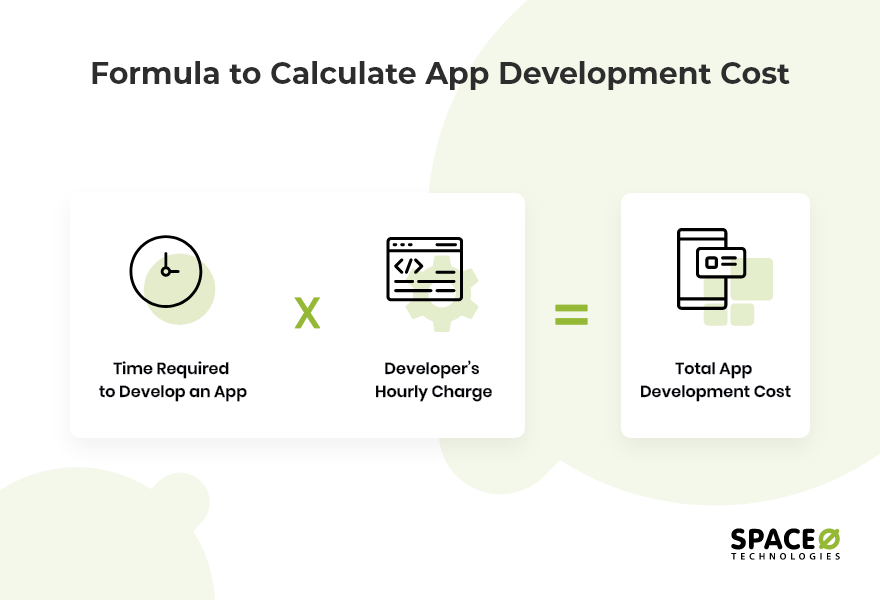
Since you know the tentative cost; let’s understand the factors that impact the cost of this doctor appointment scheduling app development.
Do You Have an Unique Healthcare App Idea?
Need to validate your app idea or consult with an expert? Get a free consultation now!
Which Factors Impact the Cost to Develop Online Doctor Appointment Apps?
Here, we have listed the factors that impact the cost to develop a doctor scheduling app. Knowing the below factors helps to determine the budget for developing medical apps.
Factor 1: Features to Integrate Into Your Appointment Booking App
Factor 2: Doctor Booking App Development Platform iOS/Android/Cross-platform
Factor 3: UI/UX Design Required to Develop Custom Doctor Booking App-like Zocdoc or Doctor On-demand
Factor 4: A Location of the Development Team You Hire
Let’s take an in-depth look at all these factors and how they impact the overall app budget.
Let’s get started with factor 1.

Apart from this, cost even depends on the location of developers you hire. Based on the survey by GoodFirms, here’s a table of app developer’s hourly rates in different countries:
| Region | iOS Avg hrs | Android Avg hrs | Cross-platform Avg hrs |
|---|---|---|---|
| Canada | 90-120 hours | 80-140 hours | 90-120 hours |
| The USA | 60-120 hours | 60-120 hours | 60-130 hours |
| Latin America | 28-90 hours | 28-90 hours | 40-160 hours |
| The UK | 60-75 hours | 60-75 hours | 55-75 hours |
| Europe | 35-55 hours | 35-55 hours | 30-50 hours |
| Ukraine | 40-78 hours | 38-60 hours | 40-78 hours |
| South Africa | 45-80 hours | 40-80 hours | 40-80 hours |
| India | 22-90 hours | 15-25 hours | 20-30 hours |
| Southeast Asia | 23-55 hours | 30-45 hours | 30-45 hours |
| Asia | 23-55 hours | 20-30 hours | 25-35 hours |
| Australia | 25-35 hours | 100-120 hours | 90-120 hours |
The hourly rate of app developers vary depending on the years of experience, location, and technical expertise. For example, the hourly developer rates are higher in countries like the USA and Europe and lower in countries like India, and Asia.
Want to Hire Skilled App Developers?
Share your requirements. We offer flexible engagement models: full-time and part-time. Hire developers as per your budget and timeline.
Common Challenges When Building a Doctor Appointment App
Doctor appointment booking app development looks simple until you start building. Real-world complexity emerges fast; technical constraints, regulatory requirements, and operational needs collide. Most teams underestimate these challenges and pay the price later with delays and budget overruns.
Challenge 1: Real-Time Availability Synchronization
Clinics using legacy systems can’t sync slot availability instantly, causing double bookings, stale information, and frustrated users who abandon the app. When you develop a doctor appointment booking app, ensuring every clinic’s availability updates in real-time across all user devices becomes technically complex. One miscalculation breaks the entire booking experience.
Solutions
Challenge 2: Payment Processing & Insurance Verification
Handling payments, refunds, insurance verification, and split billing creates massive complexity. Building an app for booking doctor appointments requires managing deposits, processing cancellation refunds, verifying insurance eligibility, and tracking payment disputes simultaneously. Poor payment design directly kills revenue and user trust.
Solutions
Challenge 3: HIPAA Compliance & Data Security
Doctor consultation app development must protect patient privacy. A single breach destroys trust, triggers legal consequences, and can shut down your entire platform. Security can’t be an afterthought; it must be built into every layer from day one.
Solutions
Challenge 4: Managing No-Shows & Cancellations
Doctor appointment software loses significant revenue when patients book appointments but never show up. This directly impacts clinic profitability and makes your platform unreliable for healthcare providers who depend on predictable schedules. No-shows plague every doctor app unless you design prevention mechanisms upfront.
Solutions
Challenge 5: Integration Complexity Across Ecosystems
When you build an app for booking doctor appointments, syncing with Electronic Health Records (EHRs), billing systems, pharmacies, and labs becomes mandatory. Each system uses different data formats, authentication methods, and APIs. Integration mismatches create data silos, duplicate records, and angry doctors frustrated by disconnected systems.
Solutions
Challenge 6: Scaling Doctor Appointment Software Across Markets
A system built for one clinic breaks under load when deployed nationally. The infrastructure designed for 100 daily bookings collapses at 10,000. Database queries slow down, API responses time out, and users abandon the app. Scalability requires planning from architecture decisions, not fixing it later.
Solutions
A specialized doctor appointment app development company manages these complexities systematically, preventing costly mistakes during development.
Frequently Asked Questions About Doctor Appointment App Development
What are the benefits of developing a doctor appointment app?
Developing a doctor appointment app can bring numerous benefits for both patients and healthcare providers. Here are some of the key benefits:
How to monetize doctor appointment applications
There are several ways to monetize doctor appointment applications:
By using one or more of these monetization methods, your doctor appointment applications can generate revenue.
How long does it take to develop a doctor appointment app?
The development timeline depends on complexity. A basic MVP with essential features (registration, search, booking, payments) takes 3-4 months. A full-featured doctor appointment mobile app development with video consultation, AI scheduling, and EHR integration requires 6–9 months. Enterprise apps with advanced analytics and multi-location support can take 10–12 months.
Can I build a doctor appointment app myself, or should I hire a company?
It’s technically possible, but not practical unless you have a full-stack healthcare development team. How to make a doctor appointment app properly requires expertise in HIPAA compliance, secure payments, real-time systems, and healthcare integrations.
Most founders spend 2–3x longer building in-house and still miss critical security requirements. Outsourcing to an experienced doctor appointment app development company usually finishes faster and costs less than hiring developers long-term.
Do I need to build iOS and Android apps, or can I just use the web?
Web apps work, but adoption is lower; most users expect native apps. A doctor appointment application development strategy usually includes both iOS and Android for maximum reach. Cross-platform frameworks like React Native or Flutter reduce development time and cost compared to building separate native apps. But progressive web apps are improving rapidly and might be sufficient for your market.
How Space-O Can Help To Determine the Cost of Doctor Appointment Booking App?
You now have a clear idea of the cost and timeline to develop the doctor appointment mobile app. So, if you want to develop or want to know the cost of a doctor appointment mobile app, you need to get in touch with us.
Our developers have experience in developing patient portal apps and can provide you with guidance on how to proceed further. Based on the requirements, our consultant will provide your proposal on the project scope, timeline, and cost.
Contact us today to develop a doctor appointment mobile app.



 All our projects are secured by NDA




 4.8
4.8