
 By
By 
Contents
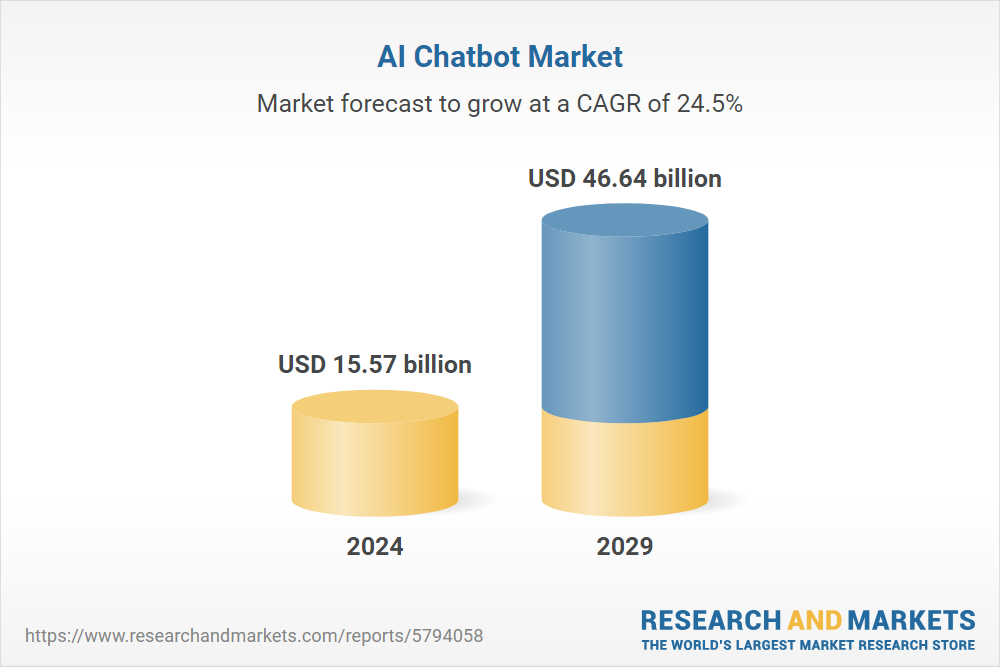
AI chatbots have evolved from simple rule-based assistants into intelligent systems that can understand context, generate responses, connect with business systems, and complete tasks. This growing adoption is reflected in the market, with Research and Markets reporting that the global AI chatbot market was valued at USD 15.57 billion in 2024 and is projected to reach USD 46.64 billion by 2029, growing at a 24.5% CAGR.
With so many chatbot options available, choosing the right type can be challenging. A customer support chatbot may need to handle FAQs and ticket requests, while an enterprise chatbot may require integrations, generative AI, voice capabilities, or autonomous task execution. Understanding these differences is essential when planning AI chatbot development services that align with specific business requirements.
In this guide, we’ll explore the different types of AI chatbots, their key features, benefits, limitations, and use cases. You’ll also learn how to evaluate your business requirements and choose the right chatbot for your specific goals.
10 Types of AI Chatbots by Capability and It Usage
Chatbots are most often classified by what they can do, because capability drives cost, accuracy, and fit more than any other factor. The ten different types of conversational AI chatbot for business use below run from the simplest scripted systems to autonomous agents, and most real deployments combine two or three of them rather than using a single pure type.
1. Rule-based chatbots
Rule-based chatbots, also called decision-tree chatbots, move users along predefined paths using if-then logic, so each input leads to a scripted response. They are best for FAQs, appointment booking, order-status checks, and any workflow where the questions are limited and predictable.
Where they shine: they are fast and inexpensive to build, give you full control over every message, and never invent an answer, which keeps brand voice and compliance tight.
Where they fall short: they break the moment a user phrases something unexpectedly, require manual updates for every new scenario, and cannot learn. A retail site using a decision tree to walk customers through its return policy is a textbook fit, while the same bot would frustrate anyone asking a question outside the script.
2. Retrieval-based chatbots
Retrieval-based chatbots select the best response from a curated library using similarity matching rather than generating new text. Because every answer comes from verified content, they are well suited to technical support, IT helpdesks, and knowledge-base interactions where accuracy is non-negotiable.
Where they shine: responses are consistent and accurate with no risk of fabrication, and quality control is straightforward since you own the response set.
Where they fall short: they cannot answer anything outside their database and may return a loosely related match for ambiguous questions, so they need a comprehensive content library to perform well. An HR bot answering policy questions from an employee handbook is a strong example.
3. NLP-based chatbots
NLP-based chatbots use intent classification and entity extraction to understand what users mean regardless of wording, which moves them well beyond keyword matching. These conversational bots fit complex customer service, lead qualification, and multi-step processes where people express the same need in many different ways.
Where they shine: conversation feels natural, the bot handles phrasing variations gracefully, and it extracts structured data like policy numbers or dates automatically.
Where they fall short: accuracy depends on quality training data and ongoing retraining, and multi-intent messages can still confuse them. An insurance bot that reads a claim description and pulls out the policy number is a representative use case.
4. Generative AI chatbots
Generative AI chatbots for websites or apps use large language models to compose original responses based on context instead of selecting from a fixed set. This makes them ideal for open-ended conversations, content assistance, and any scenario full of edge cases that no script could cover in advance.
Where they shine: they produce fluent, human-like answers, handle novel questions, and work across many domains without separate scripting for each one.
Where they fall short: they can hallucinate confident but wrong information, cost more to operate because of model usage, and need guardrails and review for high-stakes replies. A support bot that explains a complicated product question in plain language is a common generative use case, provided it is grounded with retrieval.
5. Contextual AI chatbots
Contextual AI chatbots remember conversation history, preferences, and past behavior across sessions, so each interaction builds on the last. They are a fit for long-term customer relationships, subscription services, and any experience where personalization drives loyalty.
Where they shine: Continuity and memory enable genuine personalization and stronger relationships over time.
Where they fall short: Storing user data introduces privacy obligations and demands robust data management, and effectiveness depends on the quality of what you retain. A banking assistant that recognizes your recurring transactions and tailors its suggestions illustrates the value. Our guide on how banks use AI chatbots expands that example across onboarding, fraud alerts, and support.
6. Hybrid chatbots
A hybrid chatbot combines rule-based structure with AI flexibility, using scripted logic for well-defined queries and switching to AI for complex or unexpected ones. This is the practical default for enterprises and regulated industries that need both consistency and intelligence in the same system.
Where they shine: You get controlled, compliant responses for critical paths and AI adaptability for everything else, with clear escalation between the two.
Where they fall short: Designing the switching logic adds complexity and requires expertise in both approaches, raising the initial investment. A banking bot that uses rules for balance queries but AI to explain financial products is a clean example, and choosing where to draw that line is exactly what AI consulting services help teams get right before building.
7. Voice AI chatbots
Voice AI chatbots process spoken language using speech recognition, NLP, and text-to-speech, enabling hands-free interaction through natural conversation. They suit call centers, IVR modernization, accessibility use cases, and any context where typing is inconvenient.
Where they shine: voice is fast and natural, expands access for users with visual or mobility constraints, and scales call-center capacity.
Where they fall short: accents, dialects, and background noise reduce accuracy, voice data raises privacy questions, and development and testing are more involved. Replacing a touch-tone phone menu with a system that understands spoken requests is a high-value deployment.
8. Multimodal chatbots
A multimodal chatbot understands and responds across more than one input type, combining text, voice, images, and sometimes video in a single conversation. It fits rich customer experiences, visual product assistance, and document or image processing.
Where they shine: Handling a photo, a spoken description, and text together unlocks problem-solving that text-only bots cannot match. Visual product search is the clearest retail example. Our guide to AI chatbots in ecommerce covers it alongside cart recovery and order tracking.
Where they fall short: They are significantly more complex and expensive to build, demand more infrastructure, and require training across several data types. An ecommerce bot where a shopper uploads a photo to find similar products, or an insurance bot that reads damage photos for a claim, shows the payoff.
9. Transactional chatbots
Transactional chatbots are built to complete a specific action end to end, such as placing an order, booking a slot, processing a payment, or updating an account, rather than only answering questions. They are common in retail, food ordering, travel, and any flow where the goal is a completed task, not a conversation.
Where they shine: They automate high-volume actions reliably and integrate tightly with backend systems like payment and inventory.
Where they fall short: They need solid integrations and careful error handling, since a failed transaction frustrates users more than a missed answer. A food-delivery bot that takes the full order, applies a coupon, and confirms payment is a typical transactional design.
10. Agentic AI chatbots
Agentic AI chatbots are the most autonomous category, able to plan multi-step tasks, use external tools, and execute actions across systems with minimal human input. They fit complex workflows, enterprise automation, and operations where the bot should resolve a request rather than route it.
Where they shine: They complete tasks independently, coordinate across multiple systems, and dramatically reduce manual handling.
Where they fall short: They need strong governance, oversight, and clear boundaries, and the practices around them are still maturing. A travel agent bot that books flights, hotels, and activities as one workflow is the kind of outcome this type targets, and businesses exploring it typically engage AI agent development services to keep autonomous actions safe and bounded.
Capability is only half the picture, because the same chatbot type can behave very differently depending on where customers actually meet it.
Ready to Build an AI Chatbot for Your Customers?
Space-O Technologies helps businesses choose and build the right chatbot architecture for their use case. Share your requirements, and we’ll recommend the best-fit solution.

Side-by-Side Comparison of AI Chatbot Types
Choosing between different AI-enabled chatbots means weighing complexity, accuracy, and cost at the same time, so a single reference table helps narrow the field quickly. The figures below reflect typical market ranges and shifts with integration depth, compliance needs, and geography.
| Chatbot Type | Complexity | Accuracy | Cost Range (USD) | Best Use Cases | Key Limitation |
|---|---|---|---|---|---|
| Rule-based | Low | High within scope | 5,000 to 15,000 | FAQs, simple workflows | No flexibility |
| Retrieval-based | Medium | High | 15,000 to 40,000 | Knowledge-base queries | Limited to its library |
| NLP-based | Medium | Medium to high | 20,000 to 60,000 | Customer service, lead qualification | Needs training data |
| Generative AI | High | Variable | 50,000 to 200,000+ | Complex conversations | Hallucination risk |
| Contextual | High | High | 40,000 to 120,000 | Personalized experiences | Data management |
| Hybrid | Medium to high | High | 25,000 to 80,000 | Enterprise, regulated industries | Build complexity |
| Voice AI | High | Medium to high | 40,000 to 150,000 | Call centers, IVR | Accent and noise issues |
| Multimodal | Very high | High | 80,000 to 250,000+ | Visual assistance | Resource intensive |
| Transactional | Medium to high | High | 25,000 to 90,000 | Orders, bookings, payments | Integration dependent |
| Agentic AI | Very high | Variable | 100,000 to 300,000+ | Autonomous workflows | Governance overhead |
The clear pattern is that cost and complexity climb steadily from rule-based toward agentic systems, yet a higher price tag does not guarantee a better fit. A well-scoped NLP chatbot at USD 30,000 routinely outperforms a poorly planned generative system at three times the cost. For a detailed breakdown of the factors that influence chatbot pricing, see our guide on the cost to develop an AI chatbot. The goal is matching sophistication to the job rather than buying the most advanced option available.
How to Choose the Right Type of AI Chatbot for Your Business
Selecting a chatbot type is not about choosing the most advanced technology; it is about matching capability to your actual requirements, budget, and data. The following five steps give you a structured way to reach a confident decision rather than guessing.
Step 1: Define your primary use case and query complexity
Write down exactly what the chatbot must accomplish, whether that is deflecting support tickets, qualifying leads, or completing transactions, and how varied the incoming questions really are. Simple and repetitive questions point to rule-based or retrieval-based types, while varied and open-ended conversations call for NLP or generative capabilities.
Step 2: Audit the data you can train on
Your existing conversation logs, knowledge base, and documentation determine which types are realistic right now. Rich support transcripts make an NLP chatbot viable quickly, a strong knowledge base feeds a retrieval-based system, and thin data means you should either start simpler or budget for data preparation before expecting AI-grade accuracy.
Step 3: Set a realistic total budget, not just a build cost
Account for development, which ranges from a few thousand dollars to six figures, plus ongoing model and operating costs and annual maintenance that typically runs 15 to 25 percent of the initial build. If your team lacks AI expertise, weigh whether to hire AI chatbot developers or partner with a firm that handles the full lifecycle, since rework after a wrong architectural choice is far more expensive than getting it right once.
Step 4: Map your integration and channel requirements
List the systems the chatbot must connect to, such as your CRM, ERP, payment processor, or authentication layer, and the channels it must serve, from your website to WhatsApp to voice. Each integration and channel adds complexity and cost but sharply increases the chatbot’s usefulness, and connecting these systems cleanly is where AI-powered integration services earn their place.
Step 5: Build in security and compliance from the start
Identify the standards your industry demands, whether HIPAA, PCI-DSS, GDPR, or SOC 2, and treat them as design constraints rather than a later add-on. Retrofitting compliance costs far more than designing for it, and in regulated sectors it often dictates which types are even permitted.
Working through these steps honestly, these steps usually narrow ten options down to two or three, and many businesses end up choosing a custom AI chatbot development path so the architecture fits their stack rather than forcing their workflow into an off-the-shelf product. Even with the right type chosen, a few predictable challenges show up during the build.
Choosing the Right Chatbot Strategy for Your Business
The key takeaway from this guide is simple: the most expensive chatbot is one built on the wrong architecture. A rule-based bot forced into complex conversations or a generative system deployed without proper grounding can lead to poor performance, rework, higher costs, and reduced user trust.
At Space-O Technologies, we help businesses select and implement chatbot solutions based on their specific use cases, workflows, and goals. Our approach covers different chatbot architectures, including rule-based, NLP, generative AI, voice, and agentic systems, so businesses can choose the right level of sophistication.
Our AI specialists handle the complete chatbot development lifecycle, from strategy and architecture to development, integration, deployment, and ongoing optimization. We also help businesses connect chatbots with existing platforms and workflows to create scalable, production-ready solutions.
Ready to build the right chatbot for your business? Schedule a free consultation with our team to discuss your use case, goals, timeline, and budget.
Let’s Build the Right AI Chatbot for Your Business
From a single customer service bot to a multichannel agentic system, Space-O Technologies scopes, builds, and optimizes chatbots that deliver measurable results. Book a free consultation and get a tailored recommendation.
Frequently Asked Questions
What are the main types of AI chatbots?
The main types of AI chatbots by capability are rule-based, retrieval-based, NLP-based, generative AI, contextual, hybrid, voice AI, multimodal, transactional, and agentic AI chatbots. By deployment channel, they are commonly grouped as website chatbots, WhatsApp and social messaging chatbots, omnichannel chatbots, and in-app or voice bots. Most production systems combine several of these rather than using a single pure type.
What is the difference between a rule-based chatbot and an AI chatbot?
A rule-based chatbot follows predefined scripts and decision trees, responding only to anticipated inputs with pre-written answers. An AI chatbot uses NLP, machine learning, and often deep learning to understand intent, handle unexpected phrasing, and improve over time. Rule-based bots offer predictability and low cost, while AI chatbots offer flexibility for complex, varied conversations. For a deeper look at how AI chatbot systems work, explore our guide to understanding AI chatbots.
Which type of AI chatbot is best for customer service?
Hybrid and NLP-based chatbots usually work best for customer service. They combine structured, reliable responses for high-volume routine questions with AI that understands complex or unusual issues and escalates appropriately. This balance keeps answers consistent for common queries while still handling the unpredictable ones intelligently.
What is a deep learning chatbot?
A deep learning chatbot uses multi-layer neural networks to understand and generate language with far more nuance than classical machine learning allows. Deep learning underpins advanced speech recognition, long-context conversation tracking, and the large language models behind generative chatbots, making it the foundation of most sophisticated AI chatbots today.
How much does it cost to build different types of AI chatbots?
Costs range from roughly USD 5,000 to 25,000 for basic rule-based chatbots up to USD 100,000 to 300,000 or more for advanced agentic systems. Integration depth, compliance requirements, multilingual support, and conversation complexity all push the figure higher, and ongoing maintenance typically adds 15 to 25 percent of the build cost each year.
Can I start with a simple chatbot and upgrade to AI later?
Yes. Many businesses launch with a rule-based or retrieval-based chatbot to prove value, then move to hybrid or generative systems as needs grow. A clean initial build with structured data collection from day one makes that transition far smoother, so plan your data strategy early even if you start simple.
How is an AI chatbot developed?
Developing an AI chatbot typically involves defining use cases, selecting the right AI model and technology stack, designing conversation flows, integrating APIs and business systems, training or grounding the chatbot, and testing its responses.
Should I build an AI chatbot in-house or hire a chatbot development company?
The choice depends on your technical expertise, project complexity, timeline, and available resources. Businesses with complex AI requirements or multiple integrations may benefit from comparing AI chatbot development firms before choosing a development partner.



 All our projects are secured by NDA




 4.8
4.8