
 By
By 
The fitness app market is booming, driven by a growing focus on health, convenience, and personalized digital experiences. From workout trackers and nutrition planners to AI-powered coaching platforms, fitness apps have become an essential part of many users’ daily routines. This rapid adoption mirrors the growth seen across other mobile-first industries. According to Grand View Research, the global fitness app market is expected to reach $33.58 billion by 2033, highlighting how strongly users are embracing app-based solutions across sectors.
But for entrepreneurs and businesses looking to enter the fitness space, one critical question comes up early: how much does it cost to develop a fitness app? The answer isn’t one-size-fits-all. Development costs vary based on app type, feature set, design complexity, platform choice, and underlying technology.
This blog offers a complete breakdown of fitness app development costs, based on our expertise as a leading fitness app development agency. Explore pricing ranges for different types of fitness apps and the factors that influence the total budget. Learn how costs differ for MVPs and full-scale products, what impacts timeline and team size, and how to plan your budget before hiring a development partner.
By the end of this blog, you will learn about:
- How much does fitness app development cost?
- On which factors does the development of fitness apps depend?
- How to reduce the cost of fitness app development
Let’s get started.
Table of Contents
How Much Does it Cost to Create a Fitness App? [Quick Answer]
Here we have divided the complexities into simple, medium, and highly complex. Being a leading application development company in the USA, we know what features and costs basic, medium, and complex apps have. In the below table, we have discussed the features for each of these app types and concluded with the development cost.
| Fitness App Types | Must-have Features | Final Cost of Development |
|---|---|---|
| Simple App (Basic Features) |
|
$25,000 – $35,000 |
| Medium App(Slightly Advanced Features) |
All the basic level features +
|
$35,000 – $45,000 |
| Complex |
All basic and medium level features +
|
Starts from $50,000 |
Here is a simple formula (refer to it as an app development cost calculator) to calculate the cost of fitness app development.
However, the fitness app cost depends majorly on the complexity of building the solution. For example, the fitness app features and complexity will differ for yoga and meditation apps compared to diet apps. Let’s look at how the complexity impacts the fitness app development budget.
Let’s understand how app complexity can impact the overall cost of app development. If you plan an MVP for activity-tracking apps, you can build it in fewer hours. It will not require hiring senior or expert developers either. As a result, the cost will automatically go down.
However, the development cost will go up if you plan to develop mobile fitness apps with Artificial Intelligence and other advanced technologies. You will need to hire dedicated developers with expertise in building fitness app solutions.
At the same time, you will also need experienced developers who know how to create a fitness app from scratch.
Ready to see our expertise in action? Explore our portfolio of successful fitness app developed by us.
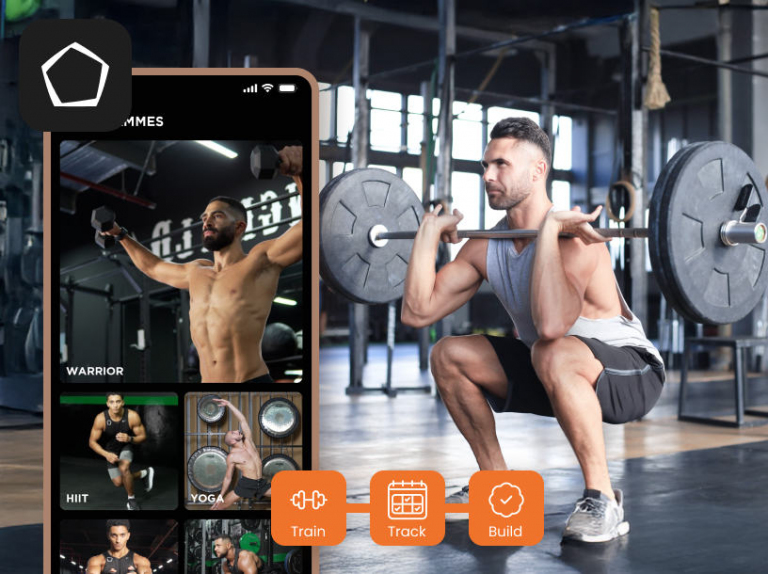
Fiya: Fitness & Workout Training Tracking App
We built FIYA an all-in-one training app combining 6+ workout programs, HD videos, smart tracking, and meditation in one seamless platform. Our team developed the complete solution including video streaming, progress analytics, workout logging, and cross-platform sync capabilities.
Need a Cost Estimate for Your Fitness App Project?
Share your idea with us and get a tailored quotation for your needs. Plan your app development budget

Which Factors Impact the Fitness App Development Cost?
Several other factors impact the fitness app cost, apart from app complexity.
For example, whether you want to build a web app or mobile solution can also impact the cost. Similarly, if you wish to go with native development, the per-platform cost is more than cross-platform development.
Let’s take an in-depth look at all these factors and how they impact the overall fitness app budget.
-
The App Development Approach- iOS/Android/Cross-platform
-
Features to Integrate into Fitness App Development
-
UI/UX Design Needed for Your Fitness Mobile App
-
Fitness App Development Prices by Country
-
Hiring Approach (In-house or Outsourced) for Fitness App Development
- If you are planning native app development for both platforms, you might not have the expertise for Android and iOS. As a result, you need to hire a new team, which can cost you more than expected. Check how to hire app developers for your fitness mobile app.
- Similarly, if you try focusing all efforts on building the fitness app, you may not be able to focus on growing your business and entering untapped markets. This can prove to increase the loss of opportunities.
- However, when you develop in house, you have more control over the app development, which can result in better results.
- Hiring Costs: The total spend on hiring processes, screening and skimming of the resumes before you find the team.
- Salaries: In the case of inhouse app developers, you need to pay monthly salaries. When you outsource app development, you need to pay for the services alone
- Infrastructure: When you outsource, you don’t need to invest in the infrastructure. However, when you build the app inhouse, you need to purchase the software, tools and IT infrastructure. Get in touch with a leading fitness app development company to know the actual price to build your app solution.
- Project Management: In both cases, you will need to hire a project manager and invest in the tools to ensure smooth development and better control.
The cost of developing a fitness app depends on the development approach you choose. Android and iOS are both great choices for developing a fitness app. If you want to know how to create an app in the fitness industry, you can also consider cross-platform app development to build a successful fitness app for your target audience.
The cost of developing a single platform is more than developing a cross-platform app that caters to multiple platforms. The choice of platform depends on the target market, their needs, the type of app you are developing, and the features you want to include.
How Much Does it Cost to Develop a Native Fitness App on iOS and Android?
Development costs depend on the total hours spent building the fitness app and the hourly rates considered. However, you may also want to know how long does it take to develop an app? Get answers from this section.
For this table, we have considered a minimum rate of $15 per hour and a maximum of $25 per hour.
| Platform | Approx timeline | Cost of Developing Fitness App |
|---|---|---|
| Simple App (Basic Features) | 800-1200 hours | $12,000 to $30,000 per platform |
How Much Does it Cost to Develop a Cross-platform Application?
| Platform | Approx timeline | Cost of Developing Fitness App |
|---|---|---|
| Native App Development (Includes iOS and Android Apps) | 600-800 hours | $9,000 to $25,000 |
As discussed earlier, the basic fitness app costs less than advanced wellness apps with current technologies. The features within the apps can make a difference in determining the cost of the application. We will discuss the different features, the time taken to build them, and how they impact the cost of developing popular fitness apps.
Note: The per-hour rate has been considered $15 for developing a fitness app.
| Features | Description | Approx timeline | Cost |
|---|---|---|---|
| Login/Registration+ Profile Creation | This feature allows your users to create their accounts and store their data on the fitness app. It allows them to share their BMI, goals, and other attributes needed to personalize the workout apps | 10-20 hours | $150-$300 |
| Push Notifications | This feature allows the users to receive alerts in real-time to keep them engaged with the application. It tells them when a new feature is added or as they meet their goals. | 10-20 hours | $150-$300 |
| Calorie Counter for Nutrition App | In case you have developed your fitness app to manage and control diet intake, this helps ensure the user is following the diet plans. It helps control calorie intake | 80-100 hours | $1200-$1500 |
| GPS Integration | If you have a wearable fitness app idea, you should integrate GPS features for real-time tracking. | 20-40 hours | $300-600 |
| Workout Plans | This feature helps device the exercise plans for the app users in sync with their personal needs. You should be able to identify ways to streamline navigation through the workout menu | 50-150 hours | $750-$2250 |
| Gamification Features | This is an advanced feature that uses technologies such as AR and VR. Popular fitness apps use this method to engage users. For instance, they provide badges for completing a goal five days in a row. | 200-300 hours | $3000-$4500 |
| On-demand Videos | The on-demand videos allow users to follow the exercise plan that fits them the best. You should leverage this feature to build a great fitness app | 300-450 hours | $4500-$6750 |
| In-app Payments | This feature allows the users to subscribe to the app memberships, and purchase the necessary goodies from within the app using supported payment gateways | 20-30 hours | $300-$4500 |
Aside from these features, you’ll need to integrate HealthKit data into your fitness app if you want to add advanced features like tracking activity levels, monitoring heart rate during workouts, and personalised workout recommendations. This could increase development time and resources, especially if customised data visualisation or analysis is required, resulting in an overall cost increase.
A fitness app should have a visually appealing design and aesthetics to engage users. When it comes to app development, businesses and entrepreneurs sometimes wonder that how much money it takes to develop an app like Snapchat because it has such striking design and features. So, one can take inspiration from that app and use colorful graphics, animations, and other design elements to create an engaging user experience in a fitness app.
The design of an app can impact the overall cost. If your app designer needs to detail the designs and create complex screens, they may take more time. Again, the prototype development costs vary from the actual visual design cost. Let’s look at how this impacts the overall cost of fitness app development.
| Components | Description | Approx timeline | Cost |
|---|---|---|---|
| Wireframing | This process involves creating sketches of possible designs. It will be a rough structure of how the app will look and the movement between screens | 30-80 hours | $450-$1200 |
| Prototype | This will be a complete view into MVP design of the app screen to understand the wireframe further | 30-100 hours | $450-$1500 |
| Visual Design | The visual design is guided by the platform design guidelines. For example, the Apple design guidelines will be used to build the iOS app’s visuals. | 120-140 hours | $1800-2100 |
This will depend on the hourly rates for the particular country. The hourly developer rates are higher in countries like the USA and lower in countries like India.
| Country | Developer Hourly Rates |
|---|---|
| US | $70 |
| Australia | $70 |
| Asia | $49 |
| Canada | $65 |
| Western Europe | $63 |
| Eastern Europe | $56 |
| Latin America | $51 |
| Africa | $50 |
The fitness app development cost depends on the hiring approach. The cost of developing a fitness app in-house might go slightly more when compared with outsourcing.
The choice of approach changes the budget and overall cost of developing the solution. The development cost for the particular approach will depend on several factors.
Planning to Build a Fitness App?
Whether you need a cost estimate, a development blueprint, or end-to-end development support for your app, we are here to help.
White-Label vs Custom Development: Which Approach Fits Your Budget?
Before diving into the cost to develop a fitness app, understand that building from scratch isn’t your only option. White-label solutions offer a faster, more affordable alternative for many businesses.
Custom Development means hiring developers to code your app from scratch based on your specific requirements. Every feature, screen, and function is built uniquely for your business. You own the complete source code, database architecture, and server infrastructure, giving you full control over functionality, scalability, and future modifications.
White-Label solutions are pre-built platforms you rebrand with your logo and colors. The foundation is ready; you just personalize it. Think of it as moving into a fully furnished apartment rather than constructing a house from the ground up.
Cost Comparison
When evaluating fitness application development options, it’s essential to look beyond just the upfront costs and consider the total investment required over multiple years.
| Cost Factor | Custom Development | White-Label Solution |
|---|---|---|
| Upfront Development | $30,000 – $250,000 | $0 – $5,000 setup fee |
| Year 1 Operational Costs | $20,000 – $50,000 | $3,600 – $12,000 |
| Year 1 Total | $50,000 – $300,000 | $3,600 – $17,000 |
| Ongoing Annual Costs | $50,000 – $100,000 | $3,600 – $12,000 |
1. Time to market
In the fast-moving fitness industry, launching quickly can mean the difference between capturing market share and missing opportunities. Here’s how development timelines compare:
White-label solutions launch 6–14 months faster, enabling you to start generating revenue, gathering user feedback, and building your customer base while competitors are still in development. This speed advantage also means lower opportunity cost. If you’re earning $10,000 monthly with a white-label app launched in month 2, that’s $100,000+ in revenue collected before a custom app would even launch in month 12.
2. Choosing the right path for your business
Both approaches have their place depending on your specific situation, budget, and business goals. Let’s explore when each option makes the most sense.
2.1 When to choose custom development
-
✅ Need highly specialized features or unique functionality unavailable in existing platforms
✅ Building a platform to compete with established market leaders
✅ Have 8–12+ months available for development and testing
✅ Require complete control over proprietary algorithms and data architecture
✅ Plan to scale to hundreds of thousands or millions of users
2.2 When to choose white-label
-
✅ Want to launch within 1–3 months
✅ Need standard fitness features that meet most user expectations
✅ Want to test market demand before making larger investments
✅ Prefer predictable monthly costs over large upfront expenditures
✅ Focus on content and coaching rather than technical development
Many successful fitness businesses take a phased approach. White-label solutions let you validate your business model quickly, build a user base, and generate revenue while learning what features your audience truly values. Once you’ve proven market demand and understand user needs, you can make an informed decision about custom development.
Both paths lead to success. The right choice depends on your specific goals, timeline, available capital, and feature requirements. Custom development offers maximum flexibility and ownership, while white-label provides speed and predictability.
Hidden Costs & Unexpected Expenses in Fitness App Development
When budgeting for fitness application development, most focus only on upfront costs. However, hidden expenses can add 25–50% to your initial budget. Here are the critical costs that catch developers off guard:
1. Development Delays and Scope Creep
Impact: 30–60% cost increase
Timeline extensions are extremely common in app development. Changing requirements mid-project, discovering unexpected technical complexity, and adding “just one more feature” can significantly inflate your budget. What starts as a simple workout tracker often evolves into a comprehensive wellness platform with nutrition tracking, social features, and video content.
Prevention: Define your MVP clearly before starting, document all features upfront, and resist the temptation to add features during development.
2. Server and Infrastructure Costs
Monthly Cost: Scales dramatically with user growth
Your server costs start small but grow exponentially as your user base expands. A modest beginning can turn into substantial monthly expenses as thousands of users stream videos, sync data, and access your platform simultaneously. Many app owners are surprised when their infrastructure costs increase 10–20 times within the first few years of success.
3. Third-Party Services and Integrations
Monthly Cost: $400–$1,500
Fitness mobile app development requires multiple ongoing subscriptions: payment processing fees (typically 2.9% per transaction), push notification services, analytics platforms, video hosting, email services, and SMS notifications. These small monthly costs add up quickly and continue for the lifetime of your app.
4. Marketing and User Acquisition
Building the app is only half the battle. Getting users requires significant investment in app store optimization, social media marketing, influencer partnerships, and paid advertising. Many fitness apps spend as much or more on marketing than they do on initial development to build a sustainable user base.
Post-Launch Maintenance and Updates
Annual Cost: 15–25% of development cost
The first few months after launch typically require substantial debugging and improvements based on real user feedback. Additionally, annual operating system updates from Apple and Google require compatibility updates to keep your app functioning properly and maintain positive reviews. For instance, for a $100,000 app, budget $15,000–$25,000 annually for maintenance.
The key to creating a fitness app that attracts users and delivers ROI isn’t avoiding these costs (they’re largely unavoidable) but anticipating them in your budget planning from day one.
How to Monetize Your Fitness App: Pricing Strategies
Understanding the fitness app development cost breakdown is only half the equation. The other critical question: How will your app generate revenue to recover your investment and become profitable?
Your monetization strategy isn’t just about making money; it directly impacts your app’s architecture, feature requirements, and development costs. Choosing the wrong model can mean rebuilding core functionality later. Let’s explore proven strategies and what each means for your bottom line.
Strategy #1: Freemium model
Additional Development Cost: $8,000–$16,000
Users download and access basic features for free, while advanced functionality requires a paid upgrade. This lowers the barrier to entry, allowing users to experience value before committing financially. Typical pricing ranges from $9.99–$29.99/month for premium access.
Revenue potential: With 100,000 downloads and a 3% conversion rate at $9.99/month, you’d generate $29,970 monthly or $359,640 annually. The challenge is that only 2–5% of free users typically convert to paid, so you need a large user base.
Strategy #2: Paid subscription
Additional Development Cost: $11,500–$24,000
Users pay a recurring fee for full access to all features, either through monthly payments ($14.99–$49.99) or annual subscriptions ($99–$399 with a 15–25% discount). This model works when you provide ongoing value through fresh content, personalized coaching, or premium experiences.
Revenue potential: With 10,000 paying subscribers at $19.99/month, you’d earn $199,900 monthly or $2.4 million annually. This provides predictable recurring revenue and higher user commitment, though the upfront barrier to entry is higher.
Strategy #3: Hybrid model (most popular)
Additional Development Cost: $18,000–$36,000
Combine multiple revenue streams by offering free basic features with ads, premium subscriptions ($9.99–$29.99/month), and individual content purchases ($19.99–$49.99). This approach maximizes income from different user segments without leaving money on the table.
Revenue potential with 10,000 users: If 2% subscribe to Premium and 5% make in-app purchases, plus ad revenue from free users, you could generate $4,997 monthly or $59,964 annually.
How to Reduce the Fitness App Development Cost
It is important to ensure you don’t overshoot your planned budget when developing the fitness app. Also, you need to keep in mind about the cost to maintain a mobile app this will also add to your overall budget. If you believe you might exceed the budget, here are all the ways to ensure smooth and within-budget development.
-
Plan the Requirements Before Starting With App Development
You must be fully aware of the requirements of your fitness application. Not specifying one of the many critical requirements can lead to a wrong estimate, which can then impact the budget of app development.
As a result, before you begin fitness app development, you should conduct thorough market research. Look at other fitness apps to know what kind of solutions exist. Identify the features that you believe will solve the issues that exist. Determine the app monetization strategies.
-
Hire the In-house Team for Your Fitness Mobile App
It is important to know if you want a dedicated team to develop the fitness app or if you would like to develop it in-house. Depending on the approach, you can plan the budget and hire the resources.
Make sure you plan for the approach even before you begin scanning through the resources or hiring them. Draw a list of pros and cons, and identify the strengths of each approach. Knowing what will work best for your business can help you choose the approach.
-
Validate the App Idea Before Beginning With App Development
Before you begin the mobile app development process, it is important to validate the concept and see if it will work in the market. For example, if you plan on delivering a solution for mental health, you should know if the users will use the application. You can conduct a random survey or use other validation techniques to know if the concept will work.
You will automatically reduce the app building cost by validating the app idea
-
Create an MVP to Test Your Idea in the Market
Before you go with a complete Android development for fitness apps, you should develop the MVP app. The minimum viable product will show you how to proceed with the software development. It will help you identify the issues that are likely to occur. It will give you a basic insight into the app.
For example, if the MVP is a success, and you feel you have a market of users, you can begin building the rest of the application.
-
Know the Software Development Process
Instead of working on random phases and building the application, you should consider planning a process for streamlined development. If you move from one phase to another naturally, you can plan better, use minimal resources and enhance the development.
For example, you will spend more on resources and development if you haphazardly move from concept to development. However, if you move from concept to validation to wireframing, it will cost you less. The iterations will show you if something is wrong with the app at the start itself, thus helping you build the solution faster with minimal issues and maximum acceptance.
Let’s answer a few frequently asked questions about fitness applications that might help businesses.
Frequently Asked Questions About Fitness App Development
How to develop a fitness app for your business
Here’s a checklist of all the steps to build your fitness application:
- Conduct thorough market research to determine the types of apps that exist
- Plan the app type that best fits your needs
- Determine the requirements and features
- Choose the tech stack, development approach and monetization model
- Select the development team to support your fitness app vision
- Create the documentation for all steps involved
- Design and develop the mobile application
- Conduct thorough testing before releasing the mobile app
How long does it take to develop a fitness app?
Development timelines vary by complexity. A basic fitness app takes 3–4 months, a medium-complexity app requires 5–7 months, and a complex app with advanced features takes 8–12+ months. White-label solutions can launch in 1–2 months.
Can I start with an MVP and add features later?
Yes, and this is highly recommended. An MVP with 5–7 core features costs 50–70% less than a full app and lets you validate market demand before investing heavily. You can add advanced features in phases based on user feedback.
Can I start with an MVP and add features later?
Yes, and this is highly recommended. An MVP with 5–7 core features costs 50–70% less than a full app and lets you validate market demand before investing heavily. You can add advanced features in phases based on user feedback.
Can I integrate my fitness app with wearable devices?
Yes, integration with Apple Watch, Fitbit, Garmin, and other wearables adds $5,000–$15,000 to development costs per device platform. This feature significantly enhances user experience but requires ongoing maintenance as devices release updates.
Is it cheaper to hire freelancers or an app development company?
Freelancers cost less hourly ($10–$80) but require more management and carry a higher risk. Development companies ($25–$150/hour) cost more but provide complete teams, project management, quality assurance, and accountability. For complex projects, companies typically deliver better results.
How do I monetize the Fitness application?
Here are all the ways you can monetize the fitness app.
| Monetization Type | Description |
|---|---|
| Ads | You can use display or video ads to promote other brands on your app |
| One-time subscription | It allows users to become members of the fitness application. They can pay monthly or yearly |
| Freemium | You can offer the basic version for free and then charge for the additional features. |
Ready to Start With Fitness App Development?
In this guide, we discussed the cost of developing a fitness mobile app. We took you through the different factors that impact the cost of development. For instance, developing a simple app may cost less than building an application with advanced features. Similarly, if you were to develop the physical and mental health app inhouse, you would need to spend more. However, if you outsource app development, your cost will go down.
Every feature that you add can increase the cost of development. We saw the cost of implementing some of the popular features in the fitness app.
If you want to create a fitness app, you need a development team that can translate your vision into a solution. Space O is a leading fitness app development company with a diverse portfolio. We have created several app types. Connect with us if you want to build a fitness application for your requirements.



 All our projects are secured by NDA




 4.8
4.8