
 By
By 
Custom software (also called bespoke or tailor-made software) is an application built from scratch for one organization’s exact workflows, instead of a mass-market off-the-shelf product like Microsoft Office. You own the source code, it integrates with your existing systems, and it scales as you grow — for a higher upfront cost and longer timeline. Example: Uber’s dispatch system was built only for matching riders to drivers; no off-the-shelf app could do it.
What is Custom Software?
Custom software is an application designed, built, and deployed from the ground up for one organization’s specific needs, rather than for a broad market. Custom software, bespoke software, tailor-made software, and customised software all mean the same thing — software shaped around your processes instead of forcing your team to adapt to someone else’s. For example, a bank might commission custom software to manage customer data and financial transactions in a way no packaged product allows.
It stands in contrast to commercial off-the-shelf software (COTS) — mass-market products sold to many buyers. Where COTS gives you a fixed set of features, custom software solutions are engineered to align with your specific business processes, workflows, and strategic objectives. Every feature, integration, and screen exists because your business needs it.
Custom Software vs Off-the-Shelf Software
Off-the-shelf software is ready-made and sold to everyone with fixed features and subscription pricing; custom software is built only for you, contains only the features you need, integrates with your existing systems, and gives you full source-code ownership — for a higher upfront cost. The table below breaks it down:
| Custom Software Development | Off-the-Shelf Software |
|---|---|
|
|
|
|
|
|
|
|
|
|
|
|
Table of Contents
- What is Custom Software?
- What is Custom Software Development?
- What is Custom Made Software?
- Who Is Custom Software For?
- Types of Customized Software
- Custom Software Development Process: 5 Key Phases
- Pros and Cons of Custom Software Development
- Configuration vs Customization vs Custom Development
- Software Customization vs Custom Software Development
- Which Should You Choose: Custom, Customization, or Off-the-Shelf?
- What To Look For In a Custom Software Development Team
- Technologies and Tools Used In Custom Software Development
- How Much Does Custom Software Development Cost?
- Best Custom Software Examples
- Best Practices For Custom Software Development
- Ready to Build Custom Software for Your Business?
- FAQs About Custom Software Development
Beyond the build-vs-buy decision, teams also need to determine how the software will be built, starting with the right software development framework to align technology choices with long-term business goals.
What is Custom Software Development?
Custom software development is the process of designing, building, deploying, and maintaining an application tailored to one organization’s unique requirements. Unlike mass-market software, custom solutions are built from scratch to fit your exact workflows, rather than forcing your business to adapt to the software. It is specially developed for a specific user group or organization, keeping business-related challenges in mind.
This is the reason for developing customized software, keeping the company’s management, branding, implementation needs, and business processes in mind. Custom software can also be called bespoke software or tailor-made software.
Moreover, custom software helps in filling in the gaps when you can’t find packaged software, off-the-shelf software, or readymade software that suits your specific needs. The custom software development process includes designing, creating, deploying, and maintaining software.
How are custom software solutions built?
Custom solutions are either developed by an in-house development team or outsourced to a third party. However, the development process and methodology remain the same as other types of software development.
On the other hand, off-the-shelf software is ideal for a wider audience.
Off-the-shelf software is built for a wider audience. Four common examples, each in its role: Microsoft Office is a packaged productivity suite, Adobe Photoshop is licensed image-editing software, SAP is mass-market ERP, and Norton Antivirus is consumer security software — all are bought and configured, never built for one company.
- Microsoft Office
- Adobe Photoshop
- SAP
- Norton Antivirus
If you’re interested in learning how to build a software, let’s first understand what custom-made software is and explore some of the best examples of custom-made software solutions.
Turn Your Unique Workflow Into Custom Software
Our developers build software around your workflows, integrations, users, and business requirements instead of forcing your processes into a ready-made product.

What is Custom Made Software?
According to the Business Research Company, the custom software development market is set to see exponential growth, with projections reaching $105.02 billion by 2028 at a CAGR of 23.7%. Due to this rapid growth, enterprises are focusing on developing custom software solutions.
Custom-made software is intended to work best only with a given company, department, or team in mind. However, small and large enterprises can use custom-made software for a variety of purposes.
Here are some of the purposes for creating custom software.
- To automate manual data entry processes
- To avoid duplicate work, reducing costs, and risk
- Helps employees to work continue on higher-level activities
- Reduces manual error
- Enhanced data sharing and resource management
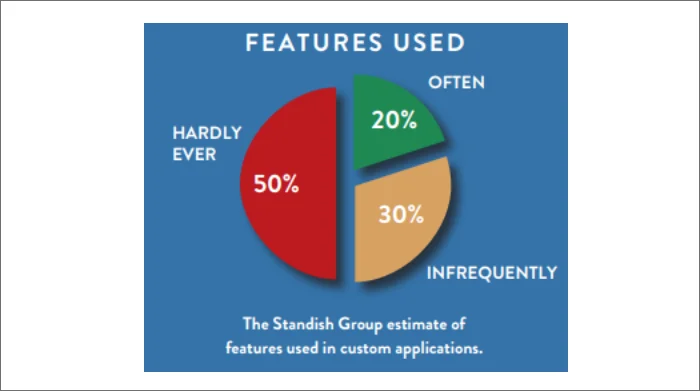
These are some of the general purposes. It could always vary based on your business goals and requirements. Based on your unique business needs, you can have different tailor-made reporting features and integrations. However, ensure that you integrate the exact features that your business requires. This will help avoid feature abandonment, and keep development time and costs low.
Which enterprises are using custom-made software?
McDonald’s, Amazon, Uber, Netflix, Google, and several other enterprises are using custom-made software to lead their industries and automate processes.
Who Is Custom Software For?
Custom software fits any organization whose workflow is its competitive edge — not just large enterprises. A small or mid-sized business often starts with a single workflow tool or a minimum viable product (MVP), while an enterprise replaces tangled legacy systems. If you keep building manual workarounds because no product fits, or you need to own and protect proprietary features, custom software is usually worth the higher upfront cost. McDonald’s, Amazon, Uber, Netflix, and Google all run custom-built software to lead their industries.
Is Custom Software Right for Your Business?
Our experts evaluate your workflows, existing systems, scalability needs, and software gaps to determine the right development approach.
Types of Customized Software
We have mentioned the 5 most common types of customized software that enterprise businesses can benefit from. But before you check the customized software in detail, please take a look at the following table to get the gist of these types.
| Custom Software Type | What It Does (Relationship) | Best For Industries | Top Example |
|---|---|---|---|
| Content Management System (CMS) | Lets non-technical teams publish and manage website content without a developer |
|
TechCrunch |
| Customer Relationship Management (CRM) | Centralizes customer data, sales pipelines, and interactions in one place |
|
Airbnb |
| Enterprise Resource Planning (ERP) | Connects day-to-day operations like accounting, procurement, and supply chain |
|
McDonald’s |
| Operations Management Software | Automates and monitors production and business processes |
|
TELUS |
| Enterprise Software Solutions | Boosts revenue and reporting across the whole organization |
|
Amazon |
Now, we will discuss these types in detail, so you can choose one of them according to your business requirements.
-
Content Management Systems (CMS)
A content management system helps businesses update their websites with new posts, content, and documents without needing a web developer. The content management system handles all the basic tasks, helps you focus on essential parts of your website.
In technical words, a content management system lets you build a website without needing to write all the code from scratch. This means you can save time and cost for creating web pages, storing images, and other functions. Custom CMS solutions allow businesses to manage website content without technical expertise.
Custom Software Build Using Content Management System (CMS)
- RCDSO’s – E-Portfolio Accreditation Platform
- Iridium – Partners Portal
- Bell – Consulting and E-Procurement Solution
Top Features of Content Management System (CMS)
- Manages unstructured information
- Focuses on content generation or production
- Content delivery is done through the apps
- Supports workflow and content categorization capabilities
- Stores digital files in nested folders
-
Customer Relationship Management (CRM)
Customer relationship management (CRM) software lets businesses keep track of customers, referrals, prospective customers, and vendors for sales and marketing departments. Custom CRM systems track customer interactions, sales pipelines, and business relationships.
CRM software manages all the customer information into a single repository so you can organize and manage relationships better. It also automates common processes and helps to monitor performance and productivity.
Custom Software Build Using Customer Relationship Management (CRM)
- Google – Programmable Search Engine
- DHL – Unique Logistics and Tracking Code
- Auzmor – Learning Management System
Top Features of Customer Relationship Management (CRM)
- Helps in storing contact information of customers such as names and addresses
- Track interaction history to document communications with contacts
- Helps in lead management
- Integration with emails such as Gmail, Outlook, and Yahoo
- Quotes/proposal management
-
Enterprise Resource Planning System
Enterprise resource planning (ERP) software helps in managing the day-to-day operations of enterprise business, including accounting, risk management, and compliance, procurement, supply chain operations, and project management. Custom ERP systems integrate all business operations into a single platform.
Moreover, it can help you to combine a bunch of existing business processes into one easy-to-use customized system while eliminating unnecessary data duplication.
Custom Software Build Using Enterprise Resource Planning System
- McDonald’s – POS Technology
- Uber – Uber API
- Monster Movers – GPA Tracker Application
Top Features of Enterprise Resource Planning System
- Provides a fully integrated and intuitive platform to analyze and monitor data-driven tasks
- Has the capability to do tedious tasks, including data entry, accounting, invoicing, and reporting
- Helps in managing every aspect of sales and revenue for your business
-
Operations Management Software
Operations management software is designed to help a business from automating manufacturing capabilities to managing business processes.
However, the operations management software mainly ensures that a business’s operations are as effective and efficient as possible to help you deliver the best results to customers.
Custom Software Build Using Operations Management Software
- TorahResource – Custom Software to Manage Business Operations
- BlackBerry – Issue Tracking Application
- UK Government Agency – Idea Street Software Solution
Top Features of Operations Management Software
- Increases reliability of operations due to analytics-based capacity planning
- Improves quality and regulatory compliance of production outputs with standardized operational processes
- Reduced inventory costs due to accurate inventory planning and tracking
- Lessen operational risks and give timely alerts on operational issues, such as delays and defective products
-
Enterprise Software Solutions
Enterprise software solution helps an organization to enhance the business and management reporting tasks. Such software helps organizations with easy online payment processing, interactive product catalogues, automated billing systems, and security. Enterprise software development services focus on building customized solutions tailored to an organization’s needs, ensuring seamless integration, scalability, and efficiency in business operations.
Custom Software Build Using Enterprise Software Solutions
- Air Canada – In-house Financial Application
- Life Support Systems – Performance Tracking App
Top Features of Enterprise Software Solutions
- Helps finance teams with the process by tracking, analyzing, and reporting business data
- Acts as an end-to-end employee management platform
- Create efficiency in manufacturing processes with planning, sourcing raw materials, and forecasting
Partner with a software development company to create a tailored solution to meet your business needs. We have curated a list of top enterprise software development companies to check it out.
Build Software Around Your Business Operations
We develop custom CRM, ERP, CMS, operations, and enterprise solutions tailored to your workflows and technology requirements.
Custom Software Development Process: 5 Key Phases
Custom software is built in five phases, together called the software development life cycle (SDLC): discovery, design, development, testing, and deployment with ongoing support. Understanding each phase helps you know what to expect when building a tailored solution.
Phase 1: Discovery and Requirements Gathering
The first phase of custom software development involves understanding your business needs, goals, and challenges. Development teams conduct stakeholder interviews, analyze your current processes, and document detailed requirements. This phase ensures that everyone, including stakeholders, developers, and project managers, has a shared understanding of what the software needs to accomplish.
Phase 2: Design and Architecture
Once requirements are finalized, the design phase begins. Architects and UX/UI designers create detailed specifications, wireframes, prototypes, and system architecture diagrams. This phase establishes the technical foundation and user experience before a single line of code is written, reducing costly changes later.
Phase 3: Development and Coding
Developers begin building the actual software based on the approved design and architecture. Most modern teams use Agile methodology, delivering software in sprints and gathering feedback regularly. This iterative approach allows for adjustments and improvements throughout the development cycle.
Phase 4: Testing and Quality Assurance
Before deployment, the software undergoes comprehensive testing including unit testing, integration testing, system testing, and user acceptance testing (UAT). QA teams identify and document bugs, performance issues, and usability problems to ensure the software meets quality standards.
Phase 5: Deployment and Post-Launch Support
Once approved, the software is deployed to production environments. The development team provides training, documentation, and ongoing support to ensure smooth adoption. Post-launch monitoring helps identify and resolve any issues that arise in the live environment.
Pros and Cons of Custom Software Development
Before investing in custom software development, it is important to weigh both sides. Here is a balanced look at the advantages and disadvantages.
Advantages of Custom Software Development
- Perfect fit for business needs: Every feature is built specifically for your workflows, eliminating unnecessary functionality.
- Long-term cost savings: While upfront costs are higher, you avoid paying for features you don’t use and recurring licensing fees.
- Competitive advantage: Custom software enables you to implement unique business processes competitors can’t replicate.
- Enhanced security: Built with your specific security requirements and industry compliance needs in mind.
- Full control and ownership: You own the source code and can modify it anytime without vendor restrictions.
- Scalability and flexibility: The software grows with your business and adapts to changing requirements.
- Dedicated support: Access to the development team for maintenance, updates, and technical support.
Disadvantages of Custom Software Development
- Higher initial investment: Custom development requires significant upfront capital compared to off-the-shelf solutions.
- Longer time to market: Building from scratch takes more time than implementing ready-made software.
- Ongoing maintenance required: You are responsible for all updates, security patches, and maintenance costs.
- Development risks: Project delays, scope creep, or poor vendor selection can lead to suboptimal results.
- Knowledge dependency: Your team needs training and documentation to effectively use the software.
- Limited pre-built features: Unlike off-the-shelf software, you don’t benefit from features other companies have already developed.
Take Your Software From Requirements to Deployment
Our developers manage discovery, architecture, coding, testing, deployment, and post-launch support through a structured development process.
Configuration vs Customization vs Custom Development
People mix up three different things. Here is the plain difference, because choosing the wrong one wastes budget.
| Configuration | Software Customization | Custom Development | |
|---|---|---|---|
| What it is | Changing settings in software you already own. | Modifying the code of existing off-the-shelf software. | Building new software from scratch. |
| Needs code? | No — built-in admin menus. | Yes — developers alter the product’s code. | Yes — everything is written for you. |
| Starting point | The vendor’s product, as shipped. | The vendor’s product, then changed. | A blank slate. |
| Best when | The product already fits; you just set it up. | An off-the-shelf tool is 70–80% right. | No product comes close to your needs. |
| Example | Setting time zones and user roles in Salesforce. | Adding custom fields and scripts to Salesforce. | Building Uber’s dispatch system. |
- Configuration toggles existing settings (time zones, permissions, dark mode) through a no-code admin UI; the vendor still supports it.
- Software customization writes new code on top of a packaged product — custom APIs, scripts, or dashboards — to make a generic application fit your workflow.
- Custom development owes nothing to an existing product; it is limited only by your budget and technical feasibility.
What Is Software Customization vs Custom Software Development?
These terms are often used interchangeably, but they represent fundamentally different approaches.
| Software Customization | Custom Software Development |
|---|---|
| Definition: Modifying existing off-the-shelf software to fit your needs. | Definition: Building software from scratch specifically for your requirements. |
| Starting point: Pre-existing software with standard features. | Starting point: Blank slate, no pre-existing code. |
| Limitations: Only customizable within the software’s designed parameters. | Limitations: Limited only by your budget and technical feasibility. |
| Timeline: Weeks to a few months. | Timeline: Months to 2+ years depending on complexity. |
| Cost: Moderate (usually $10K to $100K). | Cost: Higher (typically $50K to $500K+). |
| Examples: Adding custom fields to Salesforce, white-labeling Shopify. | Examples: Building Uber’s dispatch system, Netflix’s recommendation algorithm. |
When to choose software customization: When an existing solution is 70 to 80% of what you need, and customization fills the remaining gaps cost-effectively.
When to choose custom development: When no existing solution comes close to meeting your needs, or when your business processes are unique enough to provide a competitive advantage.
Which Should You Choose: Custom, Customization, or Off-the-Shelf?
Use this quick decision guide to pick the right approach for your situation:
- Choose off-the-shelf when a packaged product already covers your needs, budget is tight, and you need it running this week. It is the fastest, cheapest start.
- Choose customization or configuration when an off-the-shelf platform (Salesforce, Shopify, SAP) is 70–80% right and you only need to bridge the last gap. Configuration changes settings through a built-in admin UI with no code; customization modifies the underlying code.
- Choose a low-code/no-code build when you need a lightweight internal tool quickly and don’t want deep engineering — good for solopreneurs and small departmental tools.
- Choose full custom development when your workflow is your competitive edge, you need to own the source code, integrate deeply with legacy systems, and scale to many users.
Is custom software right for you? If you keep building manual workarounds because no product fits, or you need to own and protect proprietary features, custom development is usually worth the higher upfront cost.
Choose the Right Path for Your Software
Our experts assess your existing systems and business requirements to determine whether customization or full custom development delivers the better solution.
What To Look For In a Custom Software Development Team
Choosing the right development partner is crucial for project success. Here are the essential qualities to evaluate before you commit.
Technical expertise and experience
The team should have proven experience with your required technology stack and industry domain. Ask for case studies, portfolio examples, and references from similar projects. Check their experience with specific technologies, such as Python, Java, React, or cloud platforms, that align with your project needs.
Clear communication and project management
Regular communication is essential. Ensure they have a clear project management methodology such as Agile or Scrum, provide regular updates, and remain responsive to questions and concerns. A good team maintains transparent communication about progress, challenges, and adjustments.
Understanding of your business
The best development teams take time to understand your business challenges, industry context, and long-term goals, not just technical requirements. They should ask thoughtful questions during the discovery phase and demonstrate domain knowledge.
Quality assurance and testing focus
Inquire about their QA processes, testing methodologies, and commitment to code quality. A team that prioritizes testing and code reviews is more likely to deliver stable, secure software with fewer post-launch issues.
Post-launch support and maintenance
Software development does not end at deployment. Verify that the team offers ongoing support, bug fixes, security updates, and the ability to scale features as your business grows.
Need a Team to Build Your Custom Software?
Our developers bring expertise across architecture, development, testing, integrations, and post-launch support for tailored software projects.
Technologies and Tools Used In Custom Software Development
The technology stack used in custom software development depends on your specific needs, scalability requirements, and team expertise. Common choices include:
Backend technologies
- Python suits fast development, AI/ML, and startups;
- Java is enterprise-grade and highly secure;
- PHP/Laravel powers many web apps;
- Node.js handles real-time, event-driven apps;
- Go suits high-performance microservices.
Frontend technologies
- React: Popular JavaScript framework for interactive UIs.
- Angular: Full-featured framework for enterprise web applications.
- Vue.js: Progressive framework for flexible UI development.
Database technologies
- PostgreSQL/MySQL: Relational databases for structured data.
- MongoDB: NoSQL database for flexible, document-oriented data.
- Redis: In-memory cache for high-performance applications.
Development tools and platforms
- Cloud platforms: AWS, Google Cloud, Azure for scalable infrastructure.
- Version control: Git, GitHub, GitLab for code management.
- CI/CD tools: Jenkins, GitLab CI, CircleCI for automation.
- Project management: Jira, Asana, Monday for workflow tracking.
How Much Does Custom Software Development Cost?
The cost of custom software development varies significantly based on project complexity, team location, features, and timeline. Here is a breakdown to help you plan your budget.
Cost breakdown by project scope
- Simple projects: $20,000 to $50,000 (basic web apps, MVP with core features, 2 to 4 months).
- Medium projects: $50,000 to $150,000 (business applications, mobile apps, API integrations, 4 to 8 months).
- Complex projects: $150,000 to $500,000+ (enterprise systems, AI/ML features, real-time applications, 8 to 18 months).
Key factors that impact cost
- Team location: US/UK developers charge $100 to $200/hr vs Asia at $30 to $60/hr.
- Feature complexity: Payment integrations, real-time features, and ML components increase costs.
- Integrations required: Connecting to existing systems and APIs adds development time.
- Scalability needs: Building for millions of users costs more than building for hundreds.
- Timeline urgency: Faster delivery requires larger teams and higher costs.
Engagement models and pricing
- Fixed-price model: Best for well-defined projects with clear requirements, a fixed cost software development model offers lower risk and better budget predictability for the client.
- Time and materials: Developers billed hourly, better for evolving requirements and more flexible scope.
- Dedicated team: Monthly retainer for ongoing development and maintenance, ideal for long-term projects.
Get a Custom Software Cost Estimate
Wondering what it takes to build your software idea? Try our quick cost calculator and discover your project’s estimated price range.

Best Custom Software Examples
Common examples of custom software include custom CRMs, ERP systems, content management systems, and proprietary platforms. The best-known cases below are each labelled with the kind of custom software it is — a dispatch/matching engine (Uber), a recommendation engine (Netflix), a logistics and cloud platform (Amazon), a search algorithm (Google), and a POS and kiosk system (McDonald’s).
| Company | Custom Software Solution | Key Impact |
|---|---|---|
| Uber | Custom dispatch system, real-time GPS matching algorithm, and driver/rider mobile apps optimized for seamless ride-sharing experience. | Billions in market value and global expansion across 70+ countries. |
| Netflix | Custom recommendation engine that analyzes viewing patterns, content metadata, and user behavior to personalize content suggestions. | Industry leader in streaming with $30B+ annual revenue. |
| Amazon | Custom e-commerce platform, logistics optimization software, and AWS infrastructure services built for massive scalability. | World’s largest e-commerce platform and cloud services provider. |
| Custom search algorithm, PageRank system, and infrastructure built to process billions of queries efficiently and deliver relevant results. | Dominates global search market with over 90% market share. | |
| McDonald’s | Custom POS system, self-order kiosks, and operational management software for a consistent experience across thousands of locations globally. | Streamlined operations, reduced wait times, and improved customer satisfaction scores. |
After discussing important use cases of custom software, let’s identify the advantages of custom software development. Check the top best practices for custom software development in the next section.
Best Practices For Custom Software Development
Following proven best practices throughout the custom software development lifecycle increases the likelihood of project success. Here are 7 key principles to follow.
- Start with clear requirements: Spend time in the discovery phase documenting detailed, measurable requirements. Vague requirements lead to scope creep and project delays.
- Adopt agile development: Use iterative sprints, regular demos, and feedback loops. This approach allows you to course-correct early and stay aligned with business objectives.
- Maintain clear communication: Establish regular check-ins, transparent reporting, and clear escalation paths. Miscommunication is a leading cause of project failure.
- Prioritize security and testing: Build security into every phase, not as an afterthought. Conduct regular testing, code reviews, and security audits throughout development.
- Document everything: Maintain comprehensive technical documentation and user guides. This is essential for team onboarding and future maintenance.
- Plan for post-launch support: Define support SLAs, maintenance windows, and upgrade schedules before launch to avoid operational gaps.
- Build for scalability: Design architecture that can handle growth in users, data, and features without requiring a complete rewrite down the line.
Build Custom Software Inspired by Real Solutions
Turn proven software concepts into a solution designed around your own workflows, users, integrations, and competitive requirements.
Partnering with Space-O Technologies for tailored software development services can provide more than just technical expertise, it offers a strategic collaboration built on a proven track record of delivering over 4,400 successful projects.
Ready to Build Custom Software for Your Business?
Now that you understand what custom software development is, how it compares to off-the-shelf alternatives, the development process, costs, and best practices, you are better equipped to evaluate whether it is the right approach for your business needs.
Custom software development is an investment in your company’s future. When built with the right partner and following industry best practices, it can provide significant competitive advantages, operational efficiency, and long-term ROI that off-the-shelf solutions simply cannot match.
If you are considering custom software development for your organization, start by clearly defining your requirements, understanding your budget and timeline, and researching development partners with relevant experience in your industry. In case you want to hire experienced developers to create custom software or want to share the idea to build an easy-to-use solution, contact us.
We have developed many successful apps and web-based custom enterprise software solutions for medium and large enterprises. Look at some of the best apps that we have developed.
eLearning Platform That Received Funding of $1.4 Million
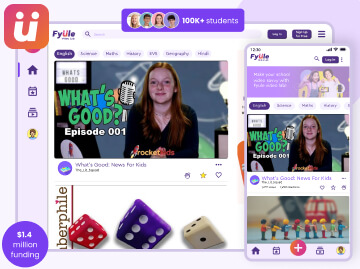
We created Fyule Video Lab, a video learning platform for an EdTech startup, funded by $1.4 million from an Angel syndicate including leaders from Google, Deloitte, Tata 1mg, and Axis Capital. We developed this platform for iOS, Android, and web using Flutter, PHP, Laravel, and MySQL.
AI Recruitment Software
GPT Vix is an AI recruitment software like Zoho Recruit built for a recruiting agency in the USA. We developed it using technologies like OpenAI’s ChatGPT for natural language processing, OpenAI’s Whisper for video-to-text conversion, and Synthesia for text-to-video generation.

eCommerce Solution Like Amazon for Somaliland
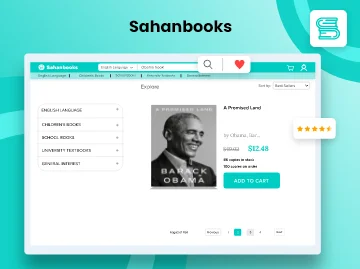
Our expert web developers built Sahanbooks, an Amazon-like ecommerce platform for online book sales in Hargeisa, Somaliland using React, Node.js, and MongoDB. Sahanbooks web app has features like product search, shopping cart, payment gateway integration, inventory and order management, and advanced reporting.
AI-powered eCommerce Search Bot
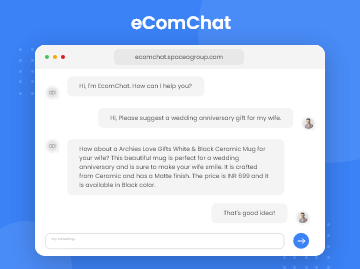
eComChat is an eCommerce search bot that provides relevant search results based on the user’s intent. Using OpenAI technology and NLP algorithms, we optimized website search functionality, which improved search speed by 23% and eliminated zero search result queries.
Let’s get in touch with us to discuss your ideas and get a detailed roadmap for your software project.
FAQs About Custom Software Development
What is custom software in simple terms?
Custom software is an application built from scratch for one organization’s exact needs, instead of a mass-market product sold to everyone. It is also called bespoke, tailor-made, or customised software. A bank’s transaction system or Uber’s dispatch app are examples — each was built for one business and no off-the-shelf tool could replace it.
What is the difference between custom software and off-the-shelf software?
Off-the-shelf software (COTS) such as Microsoft Office or SAP is ready-made and sold to many buyers, with fixed features and subscription pricing. Custom software is built only for you, contains only the features you need, integrates with your existing systems, and gives you full source-code ownership — for a higher upfront cost.
How much does it cost to develop custom software?
Cost depends on scope: basic projects range from $20,000 to $50,000, medium projects from $50,000 to $150,000, and complex enterprise systems from $150,000 to $500,000 or more. The exact cost depends on type, features, team location, and complexity. Consult a custom software development company like Space-O Technologies for a precise quote.
How long does custom software development take?
Timeline depends on complexity. Simple MVP projects take 2 to 4 months, medium-complexity projects 4 to 8 months, and complex enterprise systems 8 to 18 months or more. Agile methodology allows phased delivery, so you can release features incrementally instead of waiting for the whole project.
What are the best practices for building custom software?
Clearly define requirements and success metrics, involve stakeholders early, choose the right technology stack, prioritize UX from the start, follow agile methodology, conduct thorough testing at every phase, and document code, architecture, and processes comprehensively. These practices keep the software tailored to your needs.
What is the difference between software customization and custom development?
Software customization modifies existing off-the-shelf software to fit your needs, which is faster and cheaper. Custom development builds new software from scratch, offering more flexibility at a higher cost. Choose customization if 70 to 80% of an existing solution already meets your needs; choose custom development when you need something fundamentally different.
Why is custom software more secure than off-the-shelf?
Custom software is built with your specific security requirements and compliance needs in mind. Off-the-shelf solutions use standard security designed for broad audiences, so they are more widely targeted by attackers. Custom software can implement measures specific to your threat model and regulations such as HIPAA, GDPR, or PCI-DSS.
Do I own the source code and intellectual property of custom software?
Yes. With custom software you own the source code and the intellectual property. You can modify, extend, or migrate it at any time without vendor restrictions. This ownership is a key advantage over off-the-shelf software, where the vendor controls the code and your ability to change it.
Can custom software integrate with my existing systems?
Yes. A major reason businesses choose custom software is integration. It can be engineered to connect with your existing databases, legacy systems, CRMs, ERPs, and third-party APIs, so data flows without double entry. Integration depth is defined during the discovery and design phases.
Is custom software only for large businesses?
No. Small and mid-sized businesses use custom software too, often starting with an MVP or a single workflow tool. Engagement models like fixed-price or a dedicated team let smaller companies control budget and scope while still getting a solution built for their exact needs.
What are some examples of custom software?
Common examples include custom CRMs, custom ERP systems, content management systems, operations management tools, and proprietary platforms. Well-known cases are Uber’s dispatch system, Netflix’s recommendation engine, Amazon’s logistics platform, and McDonald’s POS and kiosk software.
What is bespoke software?
Bespoke software is another name for custom software — an application tailor-made from scratch for one organization. The terms bespoke, tailor-made, customised, and custom software are interchangeable. The opposite is off-the-shelf (COTS) software designed for a broad market.
What happens after custom software is deployed?
Post-deployment includes user training, documentation, and ongoing technical support. The development team monitors performance, fixes bugs, applies security patches, and helps scale features as your business grows. Most teams offer maintenance contracts so the software stays current and reliable after launch.
Can custom software be modified after it is built?
Yes. Flexibility is one of the biggest advantages of custom software. Because you own the source code, you can work with your development team to add features, change functionality, or integrate new technologies as your business evolves — without the vendor limits that come with off-the-shelf tools.
How do I find the right company to build custom software?
Look for industry experience and proven case studies, technical expertise and a relevant portfolio, transparent communication and fair pricing, an agile methodology with regular updates, post-launch support, and a security-first approach to quality assurance. You can talk to the software development experts at Space-O Technologies for tailored services.
What technologies are used to build custom software?
Common backend choices are Python, Java, PHP/Laravel, Node.js, and Go; frontend choices are React, Angular, and Vue.js; databases include PostgreSQL, MySQL, MongoDB, and Redis. Teams deploy on cloud platforms like AWS, Google Cloud, or Azure, using Git for version control and CI/CD tools for automation.
What is the difference between configuration and customization?
Configuration changes built-in settings (time zones, permissions, dark mode) through a no-code admin menu and is covered by vendor support. Customization writes new code — custom APIs, scripts, or dashboards — on top of the product to do things its settings cannot. Configuration is free of code; customization requires developers.
What is the custom software development process?
It has five phases: discovery and requirements gathering, design and architecture, development and coding, testing and quality assurance, and deployment with post-launch support. Together these are called the software development life cycle (SDLC), and most teams run them with Agile sprints.
Who needs custom software development?
Any organization whose workflow is its competitive edge — from a small business automating one process with an MVP to an enterprise replacing legacy systems. If no product fits and you keep building manual workarounds, or you must own proprietary features, custom software is worth the investment.
What engagement models are used for custom software development?
The three common models are fixed-price (best for well-defined scope, predictable budget), time and materials (billed hourly, flexible for evolving requirements), and a dedicated team (a monthly retainer for ongoing, long-term development). The right model depends on how defined your requirements are.
Should I build custom software in-house or outsource it?
In-house gives the most control but needs you to hire and retain a full engineering team. Outsourcing to a software company is faster to start, gives access to a broad skill set, and suits most businesses without an existing dev team. Many companies blend the two — an in-house product owner with an outsourced build team.



 All our projects are secured by NDA




 4.8
4.8