
 By
By 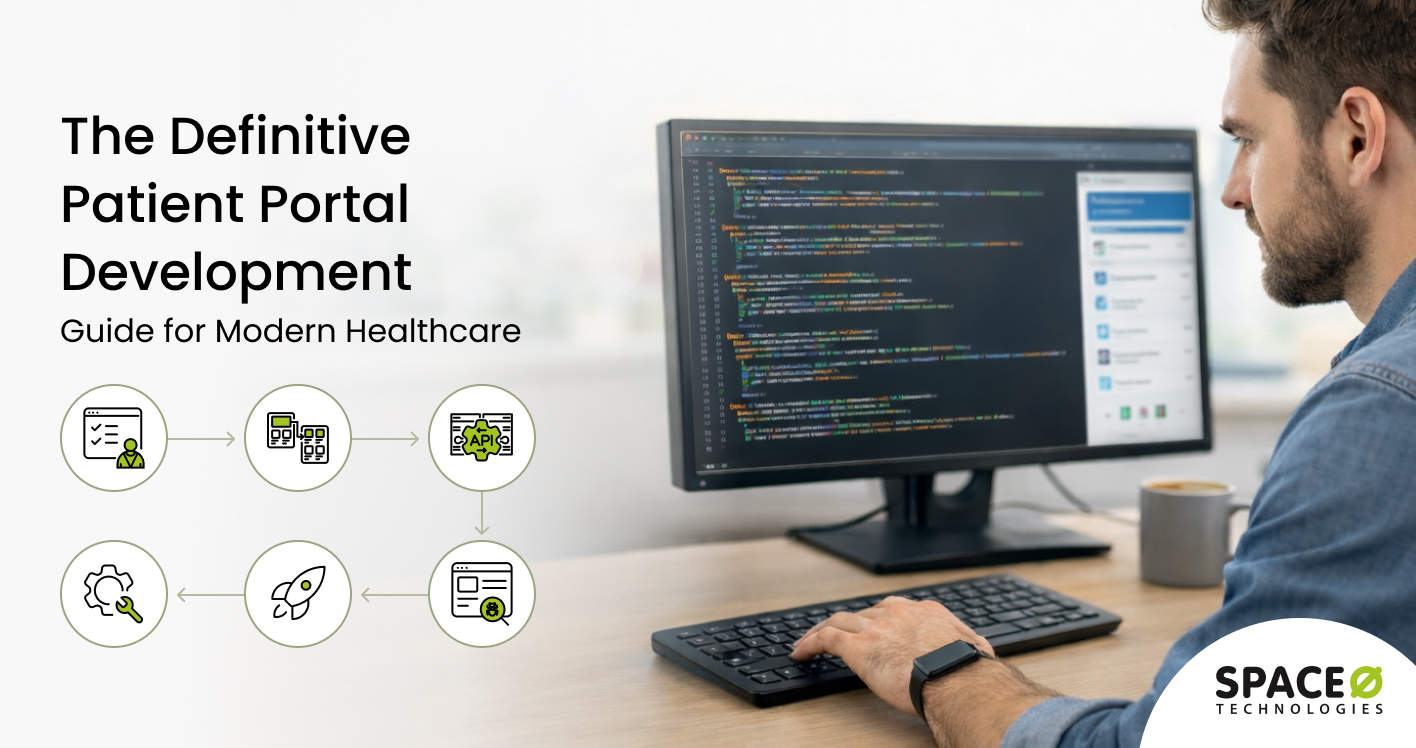
Contents
Patient portal development has become a strategic priority for healthcare providers looking to improve patient engagement, streamline operations, and support digital care delivery. Modern patient portals allow patients to access medical records, schedule appointments, communicate securely with care teams, and manage their healthcare journey from a single platform.
This rapid adoption is reflected in the market growth. According to Data Bridge Market Research, the global patient portal market, valued at USD 6.43 billion in 2025, is projected to reach USD 18.13 billion by 2033. As patient expectations continue to rise, healthcare organizations need portals that are not only functional but also secure, compliant, and easy to use.
This guide to patient portal development explains what it takes to build a successful portal. Drawing from our experience as a trusted patient portal development agency, we have shared insights on core features, key development considerations, and how to choose the right development partner to ensure long-term success.
What is Patient Portal Development?
Patient portal development is the process of creating secure web and mobile applications for healthcare organizations. These platforms give patients direct access to their personal health information. Users can view medical records, schedule appointments, and communicate with providers through one interface.
A well-designed portal acts as a digital gateway between patients and healthcare services. Development teams build features that automate routine tasks and reduce administrative workload. Modern portals integrate with electronic health record systems for real-time data synchronization.
Custom portal development addresses specific organizational needs that generic solutions cannot match. Development teams tailor features to match clinical workflows and patient populations. This approach ensures the platform truly enhances care delivery rather than creating new friction points.
Key Benefits of Patient Portal Development for Modern Healthcare
Building a custom patient portal delivers measurable advantages for healthcare organizations and their patients. These benefits extend far beyond simple convenience improvements. Organizations report significant operational savings and improved clinical outcomes after implementation.
1. Benefits for patients
Patients gain unprecedented control over their healthcare journey through portal access. These platforms remove traditional barriers that frustrated patients for decades.
- Patients access health records, lab results, and visit summaries around the clock from any device.
- Online appointment scheduling eliminates phone calls and reduces wait times for booking visits.
- Secure messaging enables direct communication with care teams without the need for phone tag.
- Prescription refill requests take seconds, rather than requiring separate pharmacy calls.
- Bill viewing and online payments simplify financial management for healthcare expenses.
- Educational resources help patients better understand their conditions and treatment plans.
Research shows that portal users demonstrate higher engagement with their healthcare. They attend more appointments and follow treatment plans more consistently.
2. Benefits for healthcare providers
Healthcare organizations experience transformative operational improvements after launching patient portals. Administrative teams shift focus from routine tasks to higher-value activities.
- Call volumes decrease by 30-50% as patients handle tasks independently online.
- Staff members save hours daily by eliminating manual appointment scheduling and reminder calls.
- Automated check-in and intake forms reduce paperwork processing before patient visits.
- Secure messaging creates a documentation trail that improves care coordination across teams.
- Online payments accelerate revenue cycles and significantly reduce billing department workloads.
- Patient satisfaction scores increase as convenience and communication improve measurably.
Portals also reduce human errors in data entry and information transfer between systems. Clinical teams access complete patient histories instantly during appointments.
Build a Patient Portal That Patients Actually Use
Leverage our 15+ years of patient portal development experience to create intuitive and secure patient portals.

Understanding the Different Types of Patient Portals in Healthcare
Understanding the different portal types helps organizations choose the right development approach. Each type serves distinct needs and requires different technical considerations.
1. Standalone patient portals
Standalone portals operate independently without direct connections to external clinical systems. These platforms store patient information within their own database architecture. They work well for smaller organizations without complex integration requirements.
Development costs remain lower because teams avoid complex API integrations. Smaller practices, private labs, and specialty clinics often choose this approach initially. However, standalone portals require manual data entry that can create workflow inefficiencies.
2. Integrated patient portals
Integrated portals connect directly to electronic health record and practice management systems. Real-time data synchronization ensures patients always see the most up-to-date information. These platforms provide the comprehensive functionality that larger organizations require.
Development complexity increases significantly due to API integrations and data mapping requirements. Teams must understand clinical data standards like HL7 FHIR for proper implementation. Hospitals, health systems, and established practices typically choose integrated portals.
| Aspect | Standalone Portal | Integrated Portal |
| Data Synchronization | Manual entry required | Real-time automatic sync |
| Development Cost | $40,000 to $80,000 | $100,000 to $300,000+ |
| Implementation Time | 2 to 4 months | 4 to 12 months |
| Best For | Small clinics, labs | Hospitals, health systems |
| EHR Connection | None or limited | Full bidirectional integration |
Core Features of a Patient Portal
Successful patient portals include specific features that drive adoption and deliver value. Development teams must prioritize capabilities based on organizational goals and patient needs.
1. Essential features of the patient portal
Every patient portal needs foundational capabilities that meet basic patient expectations.
- Secure Registration and Authentication: Patients create accounts that undergo identity verification processes compliant with healthcare regulations. Multi-factor authentication protects sensitive health information from unauthorized access.
- Personal Health Dashboard: Users can view comprehensive health profiles that include demographics, conditions, allergies, and medications. Dashboard layouts present critical information clearly without overwhelming patients.
- Medical Records Access: Patients review lab results, imaging reports, visit summaries, and clinical notes. Download capabilities allow users to save records for personal files or to share with other providers.
- Appointment Management: Online scheduling shows real-time availability across providers and locations. Patients reschedule or cancel appointments without calling the office during business hours.
- Secure Messaging: HIPAA-compliant communication channels enable patients to safely connect with care teams. Message threading organizes conversations by topic for easy reference later.
- Prescription Management: Refill requests flow directly to pharmacy systems or provider approval queues. Medication lists display current prescriptions with dosage and refill information.
- Billing and Payments: Patients view statements, payment history, and outstanding balances online. Integrated payment processing securely accepts credit cards and electronic bank transfers.
2. Advanced features of the patient portal
Organizations seeking competitive differentiation include advanced capabilities in their portals.
- Telehealth Integration: Video consultation capabilities connect patients with providers remotely. Integrated scheduling creates seamless virtual visit experiences.
- Remote Patient Monitoring: Wearable device integration captures health data between office visits. Providers receive alerts when readings fall outside established parameters.
- AI-Powered Chatbots: Intelligent assistants answer common questions and guide patients through portal features. Chatbots reduce support inquiries while improving patient self-service capabilities.
- Pre-Visit Digital Intake: Patients complete registration forms and health questionnaires before appointments. This preparation reduces check-in time and ensures providers have current information.
Choosing the right feature set requires balancing patient expectations with organizational capabilities. Start with essential features that address core patient needs, then expand into advanced capabilities as adoption grows. Working with an experienced healthcare software development partner like Space-O Technologies ensures your feature roadmap aligns with both clinical workflows and patient engagement goals.
Patient Portal Development Process Explained Step by Step
Building a patient portal requires a structured approach that addresses technical and regulatory requirements. Development teams follow proven methodologies to deliver successful healthcare applications.
Phase 1: Discovery and requirements analysis
Every successful portal project begins with thorough discovery work. Teams gather requirements from stakeholders across clinical, administrative, and technical departments.
This phase clearly defines project goals, feature priorities, and compliance requirements. Teams document user personas, workflow mappings, and integration specifications. Discovery work typically spans four to six weeks for comprehensive portal projects.
Phase 2: UI/UX design and prototyping
Design teams create interfaces that patients of all technical abilities can navigate easily. Healthcare portals must accommodate diverse user populations, including elderly patients.
Designers build wireframes and clickable prototypes for stakeholder review and validation. Accessibility compliance ensures portals meet ADA requirements for users with disabilities. User testing with actual patients reveals usability issues before development begins.
Phase 3: Development and integration
Engineering teams build frontend interfaces and backend systems in accordance with approved designs. Development typically follows agile methodologies with regular sprint deliveries.
Integration work connects portals with EHR systems, payment processors, and third-party services. Teams implement security controls, encryption, and audit logging throughout the codebase. Quality code reviews and automated testing catch defects early in the development cycle.
Phase 4: Quality assurance and testing
Dedicated QA teams verify that portals meet functional requirements and security standards. Testing validates user workflows, data accuracy, and system performance under load.
Security testing identifies vulnerabilities before malicious actors can exploit them. Compliance validation ensures portals meet HIPAA and other regulatory requirements. User acceptance testing involves actual healthcare staff and patients in final validation.
Phase 5: Deployment and launch
Production deployment follows careful planning to minimize disruption to clinical operations. Teams often use staged rollouts that initially introduce the portal to limited user groups.
Staff training ensures clinical and administrative teams can support patients effectively. Patient communication campaigns drive awareness and encourage portal registration.
Phase 6: Maintenance and continuous improvement
Patient portals require ongoing maintenance to remain secure and functional. Security patches address newly discovered vulnerabilities promptly.
Feature enhancements respond to user feedback and evolving organizational needs. Performance monitoring identifies issues before they impact patient experience. Successful organizations budget for ongoing maintenance from project inception.
Simplify Your Patient Portal Development Journey with Expert Guidance
Our team guides you through requirements, design, development, and compliance with clarity and confidence.
Compliance and Security in Patient Portal Development
Healthcare portals must meet strict regulatory requirements that protect patient information. Non-compliance exposes organizations to significant fines and reputational damage.
1. Regulatory frameworks governing patient portals
Multiple regulations govern patient portal development depending on your location.
- HIPAA (United States): The Health Insurance Portability and Accountability Act establishes standards for protecting patient health information. Portals must implement administrative, physical, and technical safeguards.
- HITECH Act (United States): This regulation strengthens HIPAA enforcement and expands breach notification requirements. Higher penalties apply for willful noncompliance.
- 21st Century Cures Act (United States): This law requires healthcare organizations to prevent information blocking. Patients must have access to their health information without unnecessary delays.
- GDPR (European Union): Organizations serving European patients must comply with strict data protection requirements. Patient consent and data portability requirements apply.
- PCI DSS: Payment card industry standards apply to portals that process credit card transactions. Compliance requirements protect patient financial information during payments.
2. Essential security measures for patient data protection
Robust security measures protect patient data from unauthorized access and cyber threats.
- Data Encryption: All patient data must be encrypted during transmission and storage. AES 256 encryption and TLS protocols protect information from interception.
- Multi-Factor Authentication: Login processes require multiple verification factors beyond just a password. This prevents unauthorized access even when credentials are compromised.
- Role-Based Access Control: System permissions limit each user to only the data and functions they need. Administrative controls prevent excessive access that creates unnecessary risk.
- Audit Logging: Comprehensive logs track all system access and data modifications. These records support compliance audits and security incident investigations.
Building a compliant and secure patient portal requires more than checking boxes on a regulatory checklist. It demands ongoing vigilance, regular security assessments, and a development partner who understands the evolving landscape of healthcare data protection. When you prioritize compliance and security from the start, you protect your patients, your reputation, and your organization from costly breaches and penalties.
Patient Portal Integration Requirements and Data Standards
Modern patient portals must connect with multiple clinical and business systems. These integrations enable real-time data synchronization and streamlined workflows.
Clinical system integrations for patient portals
Electronic health record integration forms the foundation of most patient portal projects.
- EHR/EMR Systems: Portals integrate with platforms such as Epic, Cerner, Meditech, and Allscripts to provide access to health data. Integration complexity varies by EHR platform.
- Practice Management Systems: Scheduling, billing, and patient registration data flows between portals and PM systems. These integrations streamline administrative workflows.
- Laboratory Information Systems: Direct connections deliver lab results to patient portals faster than manual processes. Patients receive notifications when new results become available.
Healthcare data standards for seamless interoperability
Development teams use established standards for healthcare data exchange.
- HL7 FHIR: This modern API standard enables flexible, secure health data exchange. FHIR simplifies integration development compared to older healthcare standards.
- HL7 v2: Many legacy systems still use this messaging standard for data exchange. Integration teams must support v2 when connecting with older clinical systems.
- SMART on FHIR: This framework enables third-party applications to securely access health data. Organizations use SMART on FHIR for advanced portal features.
Successful patient portal integration goes beyond technical connectivity. It requires a deep understanding of clinical workflows, data standards, and the unique requirements of each system in your healthcare ecosystem.
Patient Portal Development Cost: A Complete Breakdown
Understanding patient portal development cost factors helps organizations budget accurately for portal development. Pricing varies significantly based on scope, complexity, and development team location.
Key factors that influence patient portal development cost
Multiple factors combine to determine total patient portal development costs.
- Platform Choice: Web-only portals cost less than projects requiring native iOS and Android applications. Cross-platform frameworks can reduce costs while supporting multiple platforms.
- Feature Complexity: Basic portals with essential features cost far less than comprehensive platforms. Each additional feature adds design, development, and testing requirements.
- Integration Requirements: EHR integrations add significant complexity and cost to portal projects. The number and type of integrations directly impact development timelines.
- Compliance Requirements: HIPAA compliance adds security requirements that increase development costs. Additional regulations add further complexity.
- Development Team Location: North American developers command higher rates than teams in Eastern Europe or Asia. Geographic choices involve tradeoffs between cost, communication, and quality.
Patient portal development cost estimates by portal type
The following estimates provide general guidance for budget planning purposes.
| Portal Type | Estimated Cost | Timeline |
| Basic Standalone Portal | $40,000 to $80,000 | 2 to 4 months |
| Integrated Portal (Standard) | $100,000 to $200,000 | 4 to 8 months |
| Integrated Portal (Advanced) | $200,000 to $350,000 | 8 to 12 months |
| Enterprise Health System Portal | $350,000 to $500,000+ | 12 to 18 months |
These estimates include design, development, testing, and initial deployment. Ongoing maintenance typically costs 15-25% of the initial development cost annually.
The right investment in patient portal development depends on your organization’s size, patient volume, and strategic goals. While cost is an important consideration, focusing solely on the lowest price often leads to compromises in security, usability, or long-term scalability.
Get a Clear Patient Portal Cost Estimate
Receive a tailored development cost breakdown based on your features, integrations, and compliance needs.
Common Challenges in Patient Portal Development
Portal projects encounter predictable obstacles that threaten success if not addressed proactively. Partnering with experienced patient portal development companies helps organizations navigate these challenges through better planning and risk mitigation strategies.
Challenge 1: Low patient adoption rates
Many organizations launch portals that patients never use. Poor user experience, lack of awareness, and registration friction contribute to adoption failures.
How to overcome this challenge
- Design intuitive interfaces that patients of all ages can navigate easily.
- Simplify registration processes to reduce barriers to initial account creation.
- Train front desk staff to promote portal registration during patient visits.
- Send targeted communications that explain portal benefits and provide clear instructions.
Challenge 2: Integration complexity
EHR and practice management integrations often prove more difficult than initially estimated. Legacy systems may lack modern APIs required for seamless data exchange.
How to overcome this challenge
- Thoroughly assess integration requirements during the discovery phase before estimating timelines.
- Hire expert patient portal developers experienced in healthcare integrations and specific EHR platforms.
- Plan for integration testing time that matches the complexity of connected systems.
- Consider middleware solutions that simplify connections with multiple clinical systems.
Challenge 3: Compliance gaps
Organizations sometimes discover compliance deficiencies after portal launch. These gaps expose the organization to regulatory penalties and risks to patient data.
How to overcome this challenge
- Engage compliance experts during project planning to identify all applicable requirements.
- Conduct security assessments and penetration testing before production deployment.
- Implement comprehensive audit logging that supports compliance documentation needs.
- Schedule regular compliance reviews to ensure ongoing regulatory compliance.
Challenge 4: Staff resistance
Clinical and administrative staff sometimes resist adopting the portal due to workflow concerns. They may fear an increased workload from patient messages.
How to overcome this challenge
- Involve staff in portal planning to address concerns before development begins.
- Design workflows that genuinely reduce staff burden rather than shifting work.
- Provide comprehensive training that builds confidence with new systems.
- Demonstrate quick wins that show staff how portals save time on routine tasks.
Every patient portal project faces obstacles, but none are insurmountable. With careful planning, experienced development partners, and a commitment to user-centered design, your organization can launch a portal that patients actually use and staff genuinely embrace.
Best Practices for Successful Patient Portal Development
Building a patient portal that drives adoption and delivers measurable results requires more than technical expertise. Following proven best practices throughout the development lifecycle ensures your portal meets patient expectations while achieving organizational goals.
1. Prioritize user experience from the start
Patient portals succeed or fail based on usability. Design interfaces that feel intuitive for patients across all age groups and technical skill levels. Conduct user testing with actual patients during the design phase to identify friction points before development begins.
Simplify navigation, minimize clicks to complete common tasks, and ensure the portal works seamlessly on both desktop and mobile devices.
2. Start with core features and scale gradually
Resist the temptation to launch with every possible feature. Begin with essential capabilities that address your patients’ most pressing needs, such as appointment scheduling, secure messaging, and access to medical records.
Monitor usage patterns and gather patient feedback to guide future feature additions. This phased approach reduces initial development costs while allowing your portal to evolve based on real user behavior.
3. Involve stakeholders early and often
Successful portal projects include input from clinical staff, administrative teams, IT departments, and patients throughout the development process. Early involvement builds buy-in, surfaces potential workflow issues, and ensures the final product serves everyone who interacts with it. Regular feedback sessions keep the project aligned with organizational needs as development progresses.
4. Plan for ongoing optimization
Portal development does not end at launch. Establish processes for monitoring performance metrics, tracking adoption rates, and collecting user feedback. Schedule regular updates to address usability issues, add requested features, and maintain compliance with evolving regulations. Organizations that treat their portal as a living product see stronger long-term engagement and satisfaction.
5. Choose the right development partner
Your development partner’s experience directly impacts project success. Look for teams with proven healthcare expertise, a deep understanding of compliance requirements, and experience successfully integrating EHRs. The right partner, like Space-O Technologies, brings best practices from previous projects and helps you avoid common pitfalls that derail portal initiatives.
Following these best practices positions your organization for a successful patient portal launch and sustained adoption over time. The investment you make in thoughtful planning, user-centered design, and continuous improvement pays dividends through reduced administrative burden, stronger patient relationships, and a competitive advantage in an increasingly digital healthcare domain.
Space-O Technologies — Your Trusted Partner for Patient Portal Development
Patient portal development has become a strategic imperative for healthcare organizations seeking a competitive advantage. The right portal transforms patient engagement, reduces operational costs, and improves care outcomes. Organizations that invest in custom development gain platforms tailored to their specific needs.
Success requires more than technical expertise alone. Effective portal development demands a deep understanding of healthcare regulations, clinical workflows, and patient expectations. Choosing the wrong development partner leads to compliance failures and wasted investment.
Space-O Technologies specializes in HIPAA-compliant patient portal development for healthcare organizations of all sizes. Our experienced teams combine healthcare domain expertise with proven development methodologies. We deliver secure, scalable portals that integrate seamlessly with your existing clinical systems.
From initial discovery through deployment and ongoing support, we partner with you to build solutions that drive measurable results. Contact our team to discuss your patient portal development requirements and receive a detailed project assessment.
FAQs on Patient Portal Development
1. How long does patient portal development take?
Development timelines vary based on project scope and complexity. Basic standalone portals typically take 2 to 4 months to complete. Integrated portals with EHR connections usually take 4 to 8 months. Complex enterprise solutions may require 12 months or longer. Factors like integration requirements and compliance needs influence timeline estimates.
2. How much does patient portal development cost?
Costs range from $40,000 for basic standalone portals to $500,000 or more for enterprise health system solutions. Key cost factors include platform choices, feature complexity, integration requirements, and development team location. Most organizations should budget $100,000 to $250,000 for integrated portals with standard healthcare functionality.
3. What compliance requirements apply to patient portals?
Patient portals in the United States must comply with HIPAA, HITECH, and the 21st Century Cures Act. Organizations processing payments must meet PCI DSS requirements. Those serving European patients must comply with GDPR. Development teams implement security controls, encryption, and audit logging to meet these requirements.
4. Should we build a custom portal or buy an off-the-shelf solution?
Custom development suits organizations with unique workflows, specific integration requirements, or differentiation goals. Off-the-shelf solutions work for organizations with standard needs and limited budgets. Custom portals offer greater flexibility and competitive advantage but require higher investment. Many organizations start with commercial solutions and migrate to custom platforms as they grow.
5. What features should a patient portal include?
Essential features include secure authentication, medical records access, appointment scheduling, secure messaging, prescription management, and online billing. Advanced features like telehealth integration, remote patient monitoring, and AI chatbots enhance engagement. Feature prioritization should align with organizational goals and the needs of the patient population.
6. How do you ensure patient portal adoption?
Successful adoption requires intuitive design, streamlined registration, staff training, and ongoing patient education. Organizations should involve patients in usability testing during development. Front desk staff should promote registration during visits. Regular communication campaigns highlight portal benefits. Continuous improvement based on user feedback drives engagement growth.



 All our projects are secured by NDA




 4.8
4.8