

Hire Generative AI Developers: Skills, Costs & Vetting (2026)
Hire generative AI developers who have shipped production systems with large language models (LLMs), retrieval-augmented generation (RAG), and fine-tuning. Test their vector database and LangChain skills on a real build, not a demo. At Space-O Technologies, 30+ AI engineers have put 50+ AI systems into production. You can hire them as a dedicated team, on time and material, at a fixed cost, or through staff augmentation.
Three out of four enterprise GenAI initiatives never make it from pilot to production. The bottleneck is rarely the model. It is the engineering around it: RAG architecture, fine-tuning strategy, evaluation rigor, and inference cost control.
Startups, mid-sized product teams, and enterprises hire GenAI engineers from Space-O Technologies to skip trial-and-error cycles. We are an artificial intelligence development company serving 1,200+ clients since 2010, including Nike, McAfee, Toshiba, and HP. We are an OpenAI Select Partner and AWS Partner, with Claude Certified Architects on the team.


Dream It, We Build It


What Skills Should You Look for When You Hire Generative AI Developers?
Look for shipped production work across models, retrieval, fine-tuning, orchestration, evaluation, and guardrails, not API calls alone. Many companies hire with a generic AI checklist. They end up with a developer who can prompt but cannot ship. Use this checklist with any candidate, whether from Space-O Technologies or elsewhere. Every generative AI hire needs RAG with vector databases, fine-tuning judgment, and LLM orchestration.

Foundation models
Hands-on work with GPT-4o, GPT-5, Claude Sonnet 4.6, Gemini 3.1 Pro, Llama 3, and Mistral. Strong candidates explain when an open-source model beats a hosted API on cost or latency.

RAG and vector databases
Retrieval pipelines built on Pinecone, Weaviate, FAISS, Chroma, or pgvector. Strong engineers decide chunking, embedding models, hybrid search, re-ranking, and citation grounding.

Fine-tuning and alignment
Parameter-efficient fine-tuning with LoRA and QLoRA. They also know when reinforcement learning from human feedback (RLHF) or direct preference optimization (DPO) fits.
Fine-tuning restraint
Fine-tuning is expensive and often unnecessary. The right developer knows when prompt engineering plus RAG wins at a fraction of the cost.

Orchestration and agents
LangChain, LangGraph, LlamaIndex, AutoGen, and CrewAI for multi-step and multi-agent workflows with tool calls and step limits.

Languages and ML frameworks
Python or TypeScript, PyTorch, TensorFlow, and Hugging Face Transformers. They also need backend skills in FastAPI or Node.js.
Which skills show a developer can run GenAI in production?
Evaluation, operations, cost control, and security skills show a developer can keep a system reliable after launch.

Evaluation
Pipelines in RAGAS, DeepEval, LangSmith, or custom test suites. Candidates should show how they measured hallucination rate, answer relevance, and groundedness.

MLOps and LLMOps
Machine learning operations cover deployment, drift monitoring, and prompt versioning. Serving runs on vLLM, Text Generation Inference (TGI), or Ollama.

Cost and latency engineering
Model routing, caching, prompt compression, and response streaming keep inference spend predictable as usage grows.

Guardrails and security
Personally identifiable information (PII) filtering, prompt injection defense, and output validation through NeMo Guardrails or Guardrails AI. They review AI-generated code for Open Worldwide Application Security Project (OWASP) Top 10 risks.

Compliance
The developer handles data under the Health Insurance Portability and Accountability Act (HIPAA) for US health data. For EU users, they handle it under the General Data Protection Regulation (GDPR). Audit logging is part of the work.
Clients Love Space-O Technologies

Project Summary
AI System Development for Gift Search Company
Space-O Technologies has developed an AI system for a gift search company. The team has built a recommendation engine, implemented dynamic pricing, and created tools for personalized marketing campaigns.
Project Summary
AI System Development for Christian Church
Space-O Technologies developed a private AI system for a Christian church. The team built a system capable of uploading research information, allowing other church workers to query information in a natural way.
Project Summary
Mobile App Dev & UX/UI Design for Behavioral AI Company
Space-O Technologies has designed and developed a mobile app for a behavioral AI company. The team is responsible for integrating patient management features, appointment scheduling, and communication tools.
Project Summary
POC Design & Dev for AI Technology Company
Space-O Technologies developed the POC of an AI product for life coaching conversations. Their work included wireframing, app design, engineering, and branding.
How Much Does It Cost to Hire Generative AI Developers?
Generative AI hiring costs depend on the hiring route, seniority, and project scope. Model and API spend comes on top. Published figures vary widely, so one number can mislead your budget. These are the benchmarks buyers most often see.

US full-time salary
Commonly cited at $150,000-$250,000+ per year for experienced generative AI engineers. Benefits and recruiting costs are extra.

Freelance and talent marketplaces
Billed by the hour. Rates vary widely by seniority and by how much vetting the platform does.

Fine-tuned production model
Project budgets commonly cited at $50,000-$250,000+.

Enterprise GenAI platform
Multi-use-case platforms are commonly cited at $250,000-$1 million+.

Pilot or simple chatbot
Project budgets commonly cited at $10,00 to $50,000+.

Model and API spend
Token usage, inference, and vector database hosting recur monthly and grow with traffic. Budget them as a separate line.
How does Space-O Technologies price an engagement?
We price each engagement by scope, seniority, and engagement model, and you see a full breakdown before committing. Specialized roles, such as fine-tuning and multimodal experts, cost more than generalist LLM engineers. No fees are added after onboarding. For a scoped figure, describe your use case in our AI development cost calculator. Our AI consultants reply with a tailored, expert-reviewed estimate.
Where Can You Hire Generative AI Developers?
You can hire generative AI developers through talent platforms, specialized AI development firms, or direct full-time recruiting. Each route brings different work to your team: vetting, management, or a long recruiting cycle.
| Hiring route | What it requires from your team | Typical fit |
|---|---|---|
| Talent platforms (Upwork, Toptal, Arc) | You screen, contract, and manage each freelancer. | Short, scoped tasks with an in-house lead. |
| AI development firms (Space-O Technologies and others) | The firm scopes the work and supplies a dedicated team or staff augmentation. | Production builds needing QA and continuity. |
| Direct full-time hiring | You own sourcing, interviews, and onboarding, often four to six months. | Long-term in-house AI capability. |
Which Space-O Technologies Engagement Model Fits Your Team?
Choose part-time, full-time, or a full team based on your project stage. GenAI projects fail when teams are sized for the wrong phase. A startup validating a RAG prototype needs a different team from an enterprise rolling out compliance-grade LLM apps. All three options bill monthly, with a one-month minimum.
Part-Time Generative AI Developer
Part-time suits teams that need specialized GenAI expertise without full-time overhead.
- Schedule: 4 hours daily, 5 days a week.
- Flexibility: Monthly engagement, scale up anytime.
- Typical work: Prompt engineering, RAG refinement, model evaluation, LLM cost optimization, and GenAI maintenance.
Generative AI Development Team
A full team suits mid-sized and enterprise businesses launching several GenAI use cases.
- Roles: LLM engineers, RAG specialists, prompt engineers, ML engineers, and DevOps experts.
- Oversight: A dedicated tech lead, project manager, and QA, with daily updates.
- Typical work: Enterprise GenAI platforms, multi-use-case rollouts, and large-scale AI deployments.
Dedicated engineers can stay on long-term engagements. They join your sprints and own architecture and delivery decisions over multiple quarters.
How Do You Vet Generative AI Developers Before Hiring?
Vet generative AI developers with a practical build test and a production portfolio review, not coding puzzles. AI assistants now solve single-file coding puzzles instantly, so puzzles no longer separate strong candidates from weak ones.
01
Practical build test
Give candidates a set of real documents and ask for a working RAG question-answering system. Watch how they chunk, retrieve, and evaluate.
02
Production portfolio review
Ask for deployed systems with uptime records, monitoring dashboards, and drift tracking. Notebooks and thin API wrapper demos are not production-proof.
03
Architecture judgment
Ask when they would choose RAG over fine-tuning, and what evidence would change their mind.
04
Failure handling
Ask how they handled unsupported claims, inconsistent outputs, and rising inference costs in a live system.
05
Compliance references
Check with past clients how the developer handled HIPAA, GDPR, and data-access controls.
How does Space-O Technologies match you with a developer?
Our tech lead turns your brief into a matched, pre-vetted shortlist within 48 hours. Every developer is screened on production GenAI delivery, not academic knowledge of transformers. Senior LLM engineers on our bench bring 5+ years in production AI.
01
Share your project brief
Describe what you are building, your data sources, deployment environment, and constraints such as budget, latency, or compliance.
02
Requirement review
Our technical lead picks the approach, whether RAG, fine-tuning, prompt engineering, or a hybrid. An architecture call surfaces risks before you hire.
03
Developer matching
We shortlist engineers screened against your stack, your domain, and your GenAI subspecialty.
04
Your evaluation
You run the interview and technical assessment your way.
05
Security setup
We sign the non-disclosure agreement (NDA), intellectual property (IP) agreement, and data security protocols before work begins.
06
Kickoff
Your developer joins active sprints inside your tools, repositories, and code review process within the first week. From requirements to development kickoff, the process takes 4-6 days.
Which Generative AI Hire Fits Your Project?
The right hire depends on your project type, so match skills, role, and engagement model to the build. Most guides quote one blended number. Few separate talent cost from recurring model spend, and that split decides your real budget. Our rule of thumb: try better retrieval first, and fine-tune only when retrieval cannot solve it.
| Project type | Core skills | Role to hire | Engagement model | First-year talent cost (USD) | Recurring model and API spend |
|---|---|---|---|---|---|
| RAG chatbot or internal search | RAG, vector databases (Pinecone, pgvector), LangChain or LlamaIndex, RAGAS evaluation | RAG engineer or LLM engineer | Fixed-cost pilot, then a full-time developer | Scoped per engagement | Tokens plus vector database hosting |
| Fine-tuned domain model | LoRA, QLoRA, RLHF or DPO, Hugging Face, PyTorch, training data preparation | LLM engineer plus MLOps engineer | Dedicated team | Scoped per engagement | GPU training runs plus model hosting |
| AI agent or multi-agent workflow | LangGraph, AutoGen, CrewAI, tool integration, guardrails, step limits | AI agent developer plus LLM engineer | Dedicated team or time and material | Scoped per engagement | Multi-step calls multiply tokens per task |
| GenAI feature in an existing product | Model API integration (OpenAI, Anthropic, Google Gemini), Node.js or Python backend, output validation | LLM engineer joining your team | Staff augmentation, part-time or full-time | Scoped per engagement | API charge per call; grows with usage |

RAG chatbot or internal search
Start here for most knowledge use cases, because retrieval is cheaper to change than model weights.

Fine-tuned domain model
Choose this only when tone, format, or domain language fails after retrieval is tuned.

AI agent or multi-agent workflow
Hire for guardrails as much as orchestration, because agents act on your systems.

GenAI feature in an existing product
Add one engineer to your team instead of commissioning a separate build.
Get Your RAG Versus Fine-Tuning Recommendation Today
Not sure which row fits your project? Book a free 30-minute architecture review with our engineers and leave with a RAG versus fine-tuning recommendation for your data. Book Architecture Review
What Have Our Generative AI Developers Shipped to Production?
Our developers have shipped LLM systems in recruitment, eCommerce, and education, handling hallucination control, cost, and integration. A resume lists tools. A shipped system shows the judgment behind them.
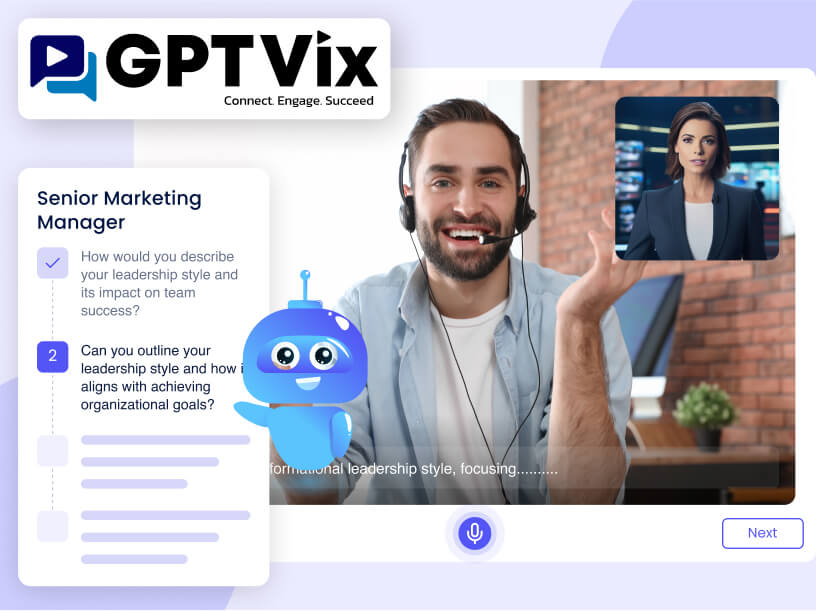
We built GPT Vix, an AI recruitment platform for a New Jersey recruiting agency. The stack uses React.js, Node.js, and AWS Lambda. OpenAI generates interview questions from job descriptions. Whisper transcribes candidate responses into text.
-
Key Results:
- AI avatar-led interviews delivered across 120+ languages through Synthesia integration.
- Automated interview question generation from job descriptions using OpenAI.
- Multi-channel candidate outreach via email, SMS, and WhatsApp from one recruiter dashboard.
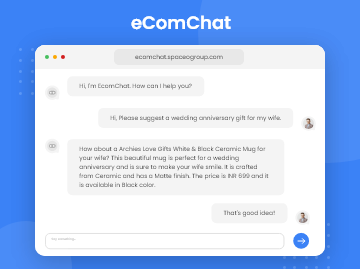
We built eComChat, a ChatGPT-like search solution for a US B2B and B2C store. It uses OpenAI and natural language processing (NLP) for semantic search, misspelled queries, and intent classification. It connects to Shopify, Magento, WooCommerce, and enterprise backends for real-time product retrieval.
-
Key Results:
- Increased online store speed through intent-driven semantic search.
- Eliminated zero-result searches across a large product catalog.
- Reduced operational costs through automated search and customer support handling.
We built ReadGenie, an iOS reading assistant using optical character recognition (OCR) and OpenAI GPT-3.5. It extracts, summarizes, and translates text from scanned documents. Students and professionals organize scans in folders and share them across platforms.
-
Key Results:
- 525+ downloads achieved within the first week of App Store launch.
- Supported 10+ content use cases from a single image scan.
- Enabled multilingual translation across English, French, Spanish, and Japanese.

What Generative AI Services Do Our Developers Deliver?
Our developers scope GenAI work around your data, budget, and business goals, from strategy to monitoring. Many projects stall because the use case was chosen before checking data readiness or return on investment.

Generative AI strategy and consulting
We assess your data and workflows to find high-impact LLM use cases. You get a roadmap with model choices and estimated costs.

LLM fine-tuning
Off-the-shelf models miss domain terminology and tone. We adapt them so output matches your domain’s voice.

RAG pipeline development
LLMs hallucinate outside their training data. We anchor answers to your verifiable sources.

Custom generative AI development
Pre-built tools lock you into someone else’s roadmap. We build around your data, outputs, and compliance constraints.

Chatbots and virtual agents
Rule-based bots break outside scripted intents. We build LLM agents with multi-turn memory, linked to your CRM, knowledge base, and ticketing.

Document processing
Contract analysis, invoice extraction, claims processing, and clinical note summarization using GPT, Claude, and OCR pipelines.

Image and visual generation
Systems on Stable Diffusion, DALL-E 3, and Midjourney APIs, fine-tuned on your brand assets.

Multimodal AI
Systems that ingest and generate text, images, audio, and video using GPT-4V, CLIP, BLIP, and Whisper.

AI agent development
Agents that plan, reason, and execute multi-step actions across tools and data sources.
GenAI integration into existing products
GenAI features added to your web apps, mobile apps, and enterprise software through secure APIs, in weeks.

Prompt engineering
Structured templates and version-controlled prompts in LangSmith and PromptLayer, so identical questions get consistent answers.

Evaluation, monitoring, and guardrails
Hallucination scoring with TruLens and peers, safety rails, and production tracing that catch quality drift early.
What Tech Stack Do Our Generative AI Developers Use?
Our developers work across ten layers of the 2026 GenAI stack, from foundation models to cloud platforms.
 GPT-5
- Claude Sonnet 4.6
- Gemini 3.1 Pro
- Llama 3
- Mistral
- Mixtral
- DeepSeek
- Command R+
 GPT-5
 Claude Sonnet 4.6
 Gemini 3.1 Pro
 Llama 3
 Mistral
 Mixtral
 DeepSeek
 Command R+
- DALL-E 3
- Stable Diffusion XL
- GPT-4V
- CLIP
- BLIP
- Flux
 Stable Diffusion XL
 BLIP
 Flux
- Whisper
- ElevenLabs
- Bark
- AssemblyAI
 Whisper
 ElevenLabs
 Bark
 AssemblyAI
- Hugging Face Transformers
- PEFT
- LoRA
- QLoRA
- Axolotl
- Unsloth
- TRL
- DeepSpeed
 Hugging Face Transformers
 PEFT
 LoRA
 QLoRA
 Axolotl
 Unsloth
 TRL
 DeepSpeed
- RLHF
- DPO
- ORPO
- Constitutional AI
- instruction tuning
 RLHF
 DPO
 ORPO
 Constitutional AI
 instruction tuning
- LangChain
- LangGraph
- LlamaIndex
- AutoGen
- CrewAI
- Semantic Kernel
- Haystack
 LangChain
 LangGraph
 LlamaIndex
 AutoGen
 CrewAI
 Semantic Kernel
 Haystack
- Pinecone
- Weaviate
- ChromaDB
- Qdrant
- pgvector
- Milvus
- FAISS
 Pinecone
 Weaviate
 ChromaDB
 Qdrant
 pgvector
 Milvus
 FAISS
- RAGAS
- DeepEval
- TruLens
- LangSmith
- PromptLayer
- Helicone
 RAGAS
 DeepEval
 TruLens
 LangSmith
 PromptLayer
 Helicone
- NeMo Guardrails
- Guardrails AI
- Llama Guard
- Prompt Shield
 NeMo Guardrails
 Guardrails AI
 Llama Guard
 Prompt Shield
- vLLM
- TGI
- Ollama
- FastAPI
- Triton Inference Server
- BentoML
 vLLM
 TGI
 Ollama
 FastAPI
 Triton Inference Server
 BentoML
- AWS Bedrock
- Google Vertex AI
- Azure OpenAI
- Amazon SageMaker
- Anyscale
 AWS Bedrock
 Google Vertex AI
 Azure OpenAI
 Amazon SageMaker
 Anyscale
- Claude Code
- GitHub Copilot
- Cursor
- Gemini Code Assist
 GitHub Copilot
 Cursor
Which Generative AI Specialists Can You Hire?
GenAI is several skill sets, so you can hire the subspecialist your problem needs.

LLM engineers
Production apps with context window management, structured outputs, retry logic, and fallback strategies.


Chatbot developers
Custom AI assistants for customer service, sales automation, and internal support.


AI agent developers
Autonomous systems with tool integration, memory architecture, and decision logic.

Who Hires Generative AI Developers from Space-O Technologies?
Startups, mid-sized companies, and enterprises hire from us, and each needs a different team shape.

How do startups ship a GenAI MVP without burning runway?
Startups need the lowest-cost viable architecture and the shortest path to a testable product. Our engineers help you avoid premature fine-tuning and expensive vector database commitments. You launch a working MVP in weeks, then scale when traction justifies it.

How do mid-sized companies add GenAI without a rebuild?
Mid-sized companies already have a product, customers, and a stack they cannot discard. Our developers integrate LLM features into your current app or backend through secure APIs. You avoid a multi-quarter platform overhaul.

How do enterprises roll out GenAI with governance?
Enterprises need engineers who plan for compliance, audit logging, and role-based access from day one. We support multi-region, on-premises, and private cloud deployments. Integration covers your existing identity and access management (IAM) and observability stacks.
Our engineers have shipped GenAI across recruitment, eCommerce, healthcare, fintech, education, and SaaS. They also build for on-demand delivery, real estate, travel, logistics, and media.
How do we protect your data, prompts, and models?
Your data, prompts, and model weights stay protected under an NDA, with responsible AI controls on by default. Sharing training data and model IP with an outside team is a real risk. We control it at every layer.

Contracts
We sign an NDA before any technical discussion. It covers your codebase, training data, prompts, fine-tuning datasets, model architecture, and workflows.

Certifications
ISO 27001-aligned, HIPAA-ready, and GDPR compliant, with data residency options in the US, EU, and India.

Responsible AI by default
No training on client data, PII masking, and hallucination and bias testing before release.

Human review
People approve consequential decisions through review checkpoints built into high-stakes workflows.

Data layer
We redact or tokenize sensitive inputs. Proprietary data never goes to public APIs without zero-retention guarantees.

Model layer
Prompt injection defenses, output validators, and guardrail frameworks such as NeMo Guardrails or Llama Guard.

Access layer
Role-based access control, API rate limiting, and audit logging.

Infrastructure layer
Virtual private cloud (VPC) isolation, encryption in transit and at rest, and secure key management.

Governance
Our policies are aligned with the NIST AI Risk Management Framework and ISO/IEC 42001 standards. We also apply the EU AI Act in any project where EU users are involved.
Frequently asked questions
How much does it cost to hire a generative AI developer?
In the US, experienced generative AI engineers are commonly cited at $150,000-$250,000+ per year in salary. Benefits and recruiting costs come on top of that salary, so the employer’s real cost is higher. Project budgets are commonly cited at $50,000-$250,000+ for a fine-tuned production model and $250,000-$1 million+ for an enterprise GenAI platform. Model and API spend (tokens, inference, vector database hosting) recurs monthly on top of that.


 All our projects are secured by NDA




 4.8


