
 By
By 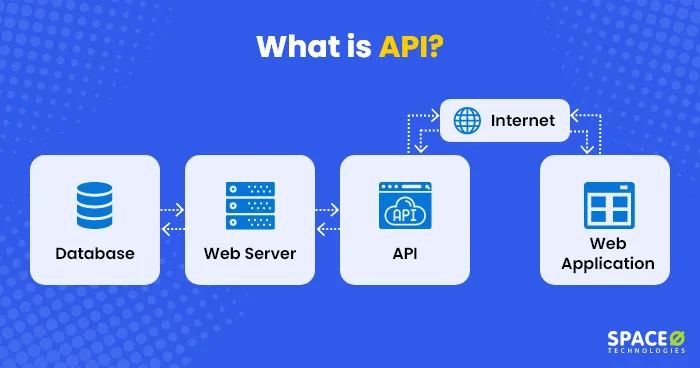
Contents
Every modern business depends on software systems that need to communicate with each other. Whether it is syncing customer data between a CRM and an ERP, processing payments through a gateway, or connecting IoT devices to a central dashboard, APIs make it all possible.
According to Verified Market Reports, the custom API development service market was valued at USD 3.5 billion in 2024 and is forecasted to reach USD 10.2 billion by 2033, growing at a CAGR of 12.5%. A major driver behind this growth is that businesses can no longer rely on pre-built, off-the-shelf APIs alone.
When standard solutions fall short of your specific requirements, API development services become the strategic choice. A tailored API designed around your unique data flows, security protocols, and integration needs gives you full control over how your systems exchange information and interact with each other.
In this guide, we cover everything you need to know about custom API development. You will learn what it is, why it matters for your business, the step-by-step development process, realistic cost breakdowns, security best practices, and how to choose the right development partner for your project. Let’s start with the fundamentals.
What is an API?
API is an application programming Interface, which defines a set of protocols, routines, and tools for software applications to interact with each other. It enables software applications to interact with each other, allowing them to share data, functionality, and services. For instance, an eCommerce app might use a payment gateway API to securely process online transactions.
In simple terms, you can consider an API as a telephone, which permits programs to communicate with each other. Such as Google maps API can be easily integrated to any website or mobile app, same way, majority of online transactions are powered using PayPal.
Is API free to use?
You should know that every API is not free. Some of the commercial API users either pay for the whole subscription or pay-as-you-go basics.
API is an intermediary that allows two applications to connect two devices. To help you clearly understand API development, we have discussed an example below.
For instance,
When you use Facebook, you need to log in. As soon as you enter your credentials, your Facebook homepage appears. The software that helps to connect these two pages is known as API.
Another common API usage example is a weather snippet. If you search “weather + location name” on Google, you will be directed to the top search results that give you the current weather status.
Now you might have got a clear idea of what an API is. Let us further dive into why you need API Development, its challenges, and its benefits.
What Is Custom API Development?
Custom API development is the process of designing, building, and deploying application programming interfaces tailored to a specific business’s needs. Unlike generic or third-party APIs that offer standardized functions, a custom API is built from scratch to handle your exact data structures, workflows, and integration requirements.
Off-the-shelf APIs provide pre-defined endpoints and data models. They work well when your needs align with what the provider offers. But when you need to connect proprietary systems, enforce specific security protocols, or handle unique data transformations, these generic solutions create bottlenecks.
Custom APIs give you full control over endpoint design, data formatting, authentication methods, and performance optimization. You decide what data flows where, how it is validated, and who has access.
Types of custom APIs businesses build
The API architecture you choose depends on your use case, performance requirements, and team expertise. The following table summarizes the main API types used in custom development:
| API Type | Best For | Key Characteristics |
| REST | General-purpose web services | HTTP-based, stateless, JSON format, widely adopted |
| GraphQL | Complex data queries | Client-defined queries, single endpoint, reduce over-fetching |
| gRPC | High-performance microservices | Protocol Buffers, bidirectional streaming, low latency |
| WebSocket | Real-time communication | Persistent connections, live updates, event-driven |
REST remains the most widely adopted standard for REST API integration across web and mobile applications, but GraphQL and gRPC adoption continue to grow for specific use cases.
When businesses need custom API solutions
Not every project requires a custom API. Here are the scenarios where building one makes clear business sense:
- Your business logic requires data transformations that no third-party API supports
- You need to connect legacy systems with modern applications
- Security and compliance requirements demand custom authentication flows
- Performance needs exceed what generic APIs can deliver
- You want full ownership of your integration layer without vendor dependency
Understanding what custom API development involves sets the foundation for recognizing its business value. Let’s explore the key benefits next.
Want an Accurate Estimate for Your Custom API Development Project?
Our team provides detailed project estimates based on your specific requirements and architectural needs. No guesswork, no hidden costs. Get a transparent cost breakdown within 24 hours.

Why Businesses Invest in Custom API Development
Building a custom API requires upfront investment, but the long-term returns often outweigh the costs. Here are the primary benefits.
Tailored integration for your specific systems
Custom APIs connect your specific systems without forcing data into generic formats. Endpoints match your exact business logic, eliminating workarounds and manual data handling.
Scalable architecture that grows with your business
A custom API grows alongside your business. You design the infrastructure for your expected load patterns, ensuring consistent performance as request volumes increase over time.
Enhanced security and compliance control
Full control over authentication, authorization, and data encryption means you implement the exact security protocols your industry demands without relying on third-party configurations.
Improved performance with optimized data transfer
Custom APIs eliminate unnecessary data transfers. Your endpoints return only what your applications need, reducing latency and bandwidth consumption across your entire technology stack.
Competitive advantage through proprietary integrations
Proprietary APIs create integrations your competitors cannot replicate. This builds a technology moat around your business processes and delivers unique customer experiences.
Reduced long-term costs and vendor dependency
Eliminating recurring third-party API subscription fees lowers operational expenses. You also remove dependency on external providers who may change pricing or deprecate features.
Working with experienced api development companies helps you realize these benefits faster. Let’s look at where custom API development delivers the most value across industries.
Best Tools and Technologies for Custom API Development
Choosing the right technology stack determines your API’s performance, maintainability, and scalability. Here is an overview of the most widely used technologies for custom API projects.
Top programming languages for API development
The language you choose depends on your team’s expertise, performance requirements, and existing infrastructure. The following table outlines the most used languages for API development:
| Language | Strengths | Common Frameworks | Best For |
| Node.js | Non-blocking I/O, large ecosystem | Express, Fastify, NestJS | Real-time apps, microservices |
| Python | Clean syntax, rich libraries | Django REST, FastAPI, Flask | Data-heavy APIs, ML integration |
| Java | Enterprise-grade, strong typing | Spring Boot, Quarkus | Large-scale enterprise APIs |
| Go | High performance, concurrency | Gin, Echo, Fiber | High-throughput services |
| C# | .NET ecosystem, enterprise support | ASP.NET Core | Windows and Azure environments |
| PHP | Widespread hosting, large community | Laravel, Symfony | Web application APIs |
Each language has a strong community and proven track record in production API environments. Your choice should align with your team’s existing skills and long-term maintenance capacity.
Frameworks and libraries for API development
Frameworks accelerate development by providing built-in routing, middleware, authentication, and database connectivity. Spring Boot dominates enterprise Java API development, while FastAPI has become the preferred choice for Python developers building high-performance APIs.
For businesses using Node.js development as their primary backend technology, Express remains the most popular framework, though NestJS offers a more structured approach for larger projects.
API testing and documentation tools
Quality api development tools ensure your API works as expected before deployment. The most widely adopted tools include:
- Postman for API testing, documentation, and team collaboration
- Swagger/OpenAPI for API specification and interactive documentation
- Insomnia for lightweight REST and GraphQL testing
- JMeter for performance and load testing
- SoapUI for comprehensive SOAP and REST testing
With your technology stack selected, the next step is understanding the development process itself.
How to Build a Custom API: Step-by-Step Process
A structured development process reduces risk and delivers consistent results. Here are the six key phases every custom API project should follow.
Step 1: Requirement analysis and API planning
Understanding business requirements before writing any code prevents costly rework later. This phase defines what your API needs to accomplish and how it fits into your existing architecture.
Action items
- Identify all systems the API must connect to
- Define data models, input/output formats, and validation rules
- Map user roles and access permissions
- Document performance benchmarks and scalability targets
- Establish compliance requirements (GDPR, HIPAA, PCI-DSS)
Step 2: API architecture and design
Designing your API’s structure before development ensures consistency and developer-friendliness. This phase produces the API specification that guides all subsequent work.
Action items
- Choose the API style (REST, GraphQL, gRPC) based on use case analysis
- Define endpoint naming conventions and URL structures
- Design authentication and authorization flows
- Create the OpenAPI/Swagger specification document
- Plan versioning strategy for future updates
Step 3: Development and coding
Building the API based on approved specifications turns designs into functional code. When you hire API developers, the team follows the architecture blueprint while implementing business logic and data handling.
Action items
- Set up the development environment and project structure
- Implement endpoint logic, data validation, and error handling
- Build database queries and data transformation layers
- Integrate authentication middleware and security controls
- Write unit tests alongside the code for each endpoint
Step 4: Testing and quality assurance
Thorough testing catches issues before they reach production. This phase validates functionality, performance, security, and reliability under various conditions.
Action items
- Run functional tests for every endpoint and edge case
- Execute load and stress tests to verify performance thresholds
- Perform security testing, including penetration testing and vulnerability scanning
- Conduct integration testing with all connected systems
- Validate error handling and response codes
Step 5: Deployment and monitoring
Moving the API to production requires careful infrastructure setup and monitoring configuration. This phase ensures a stable launch with full observability.
Action items
- Configure production servers, load balancers, and API gateways
- Set up monitoring dashboards for response times, error rates, and throughput
- Implement logging and alerting for anomalies
- Deploy using CI/CD pipelines for consistent releases
- Run smoke tests in the production environment
Step 6: Ongoing maintenance and versioning
APIs require continuous attention after launch. This phase covers updates, performance optimization, and backward-compatible changes over the API’s lifecycle.
Action items
- Monitor API usage patterns and optimize slow endpoints
- Release new versions while maintaining backward compatibility
- Apply security patches and update dependencies
- Update documentation to reflect changes
- Respond to developer feedback and feature requests
This structured process mirrors the software development process used across enterprise projects. With the development process understood, let’s address one of the most critical aspects of any API: security.
How to Secure Your Custom API
API security is not optional. With 99% of surveyed organizations experiencing at least one API security issue in 2024, protecting your endpoints requires deliberate, multi-layered security implementation. Every custom API must address authentication, encryption, rate limiting, and compliance from the design phase itself.
Authentication and authorization
Authentication verifies identity. Authorization determines what that identity can access. Implement both correctly to protect your custom API:
- OAuth 2.0 for delegated access between services and third-party applications
- JWT (JSON Web Tokens) for stateless authentication across microservices
- API keys for basic identification in lower-risk scenarios
- Mutual TLS (mTLS) for high-security service-to-service communication
- Role-Based Access Control (RBAC) to enforce granular permissions
Data encryption and HTTPS enforcement
Every API request and response must be encrypted in transit. Additionally:
- Enforce HTTPS/TLS for all communications without exception
- Encrypt sensitive data at rest in databases and storage
- Use strong encryption algorithms (AES-256 for data at rest, TLS 1.3 for transit)
- Implement proper credential management and secret rotation
- Never expose sensitive data in URL parameters or logs
Rate limiting and threat protection
Rate limiting prevents abuse and protects your infrastructure from both malicious attacks and accidental overloads:
- Set request limits per user, per IP, and per API key
- Implement throttling with appropriate HTTP 429 responses
- Use API gateways to enforce rate policies consistently
- Deploy Web Application Firewalls (WAFs) for threat detection
- Monitor for unusual traffic patterns indicating automated attacks
Industry-specific compliance requirements
Different industries have specific compliance requirements that affect API design:
- HIPAA for healthcare: PHI (Protected Health Information) handling, audit trails, access controls
- PCI-DSS for payments: cardholder data protection, quarterly vulnerability scans, encryption mandates
- GDPR for EU data: consent management, data portability, right to erasure through API endpoints
- SOC 2 for SaaS: security, availability, and confidentiality controls
Understanding the investment needed to implement these security measures is directly connected to the overall api development cost. Let’s break those numbers down next.
How Much Does API Development Cost?
The cost of API development varies significantly based on complexity, features, and team location. Here is a realistic breakdown to help you plan your budget.
Cost breakdown by complexity level
The following table outlines the typical cost ranges for different levels of API complexity:
| Complexity | Features Included | Timeline | Cost Range |
| Simple | Basic CRUD, minimal endpoints, standard auth | 2–4 weeks | $5,000–$20,000 |
| Moderate | User auth, rate limiting, multiple integrations, caching | 1–3 months | $15,000–$50,000 |
| Enterprise | Real-time updates, advanced security, microservices, and high availability | 3–6+ months | $50,000–$250,000+ |
These ranges represent fully loaded costs, including design, development, testing, and deployment.
Key factors that influence API development cost
Several variables influence your total investment:
- Number of endpoints: More endpoints mean more development and testing work
- Data complexity: Complex data transformations and validations increase development time
- Security requirements: Industry compliance (HIPAA, PCI-DSS) adds specialized development effort
- Integration count: Each third-party system connection requires custom mapping and testing
- Performance requirements: High-throughput APIs need optimized code and infrastructure
- Team location: US-based developers charge higher rates compared to offshore teams in India or Eastern Europe
Ongoing maintenance costs
API development is not a one-time investment. Plan for ongoing costs:
- Annual maintenance: 15–20% of the original development cost
- Infrastructure: Cloud hosting, API gateway fees, monitoring tools
- Security updates: Regular patches, dependency updates, compliance audits
- Version management: Supporting multiple API versions during migration periods
Understanding the full cost picture helps you budget accurately. But even with the right budget, development teams face common challenges. Let’s address those next.
Common Custom API Development Challenges and Solutions
Even experienced development teams encounter obstacles during API projects. Here are the most common challenges and practical solutions for each.
Handling versioning and backward compatibility
As your API evolves, existing consumers depend on current behavior. Introducing breaking changes without a versioning strategy disrupts all connected systems and damages developer trust. This is especially critical when undertaking API modernization services for legacy systems.
Solution
- Use URL-based versioning (/v1/, /v2/) for clear separation between API versions
- Maintain deprecated versions for a defined sunset period (minimum 6–12 months)
- Communicate changes through detailed changelogs and migration guides
- Run automated backward compatibility tests before every release
- Implement feature flags to gradually roll out new functionality
Ensuring performance at scale
APIs that perform well with 100 users can fail under production loads of 10,000 concurrent requests. Performance bottlenecks surface at the worst possible moments, typically during peak traffic periods.
Solution
- Design database queries with indexing and query optimization from the start
- Implement caching at multiple layers (application, API gateway, CDN)
- Use connection pooling and asynchronous processing for heavy operations
- Set up load testing early in development to identify bottlenecks before launch
- Plan a horizontal scaling strategy with load balancers and auto-scaling groups
Managing third-party dependencies
Custom APIs often need to connect with external services. When a third-party API changes its interface, raises prices, or goes offline, your system is directly affected.
Solution
- Abstract third-party integrations behind adapter patterns for easy replacement
- Implement circuit breakers to handle external service failures gracefully
- Cache external API responses where freshness requirements allow
- Monitor third-party API status and performance continuously
- Maintain fallback strategies for critical external dependencies
Maintaining API documentation and developer experience
Poor documentation forces developers to waste time through trial and error. Without clear API references, onboarding new developers and maintaining integrations becomes significantly harder.
Solution
- Generate interactive documentation from OpenAPI specifications automatically
- Include code examples in multiple programming languages
- Provide a sandbox environment for testing without production consequences
- Write clear error messages that tell developers exactly what went wrong
- Keep documentation in sync with API changes through automated pipelines
Balancing security with developer experience
Strict security measures can slow down development workflows and create friction for API consumers. Finding the right balance between protection and usability is an ongoing challenge for development teams.
Solution
- Automate security checks within CI/CD pipelines so they do not block developer velocity
- Provide clear, actionable error messages for authentication and authorization failures
- Use API gateways to handle security enforcement without adding complexity to application code
- Offer sandbox environments with relaxed security for testing and development purposes
- Document security requirements clearly so developers understand constraints upfront
Overcoming these challenges requires both technical expertise and a structured development approach. Let’s address the most common questions businesses have about custom API development.
Partner with a Proven Custom API Development Team Today
With 15+ years of experience, Space-O Technologies builds APIs that drive real business results. Start with a free consultation and expert guidance.
Let’s Build Your Custom API Solution with Space-O
Custom API development enables businesses to connect disparate systems, automate critical data exchange, and build competitive advantages through purpose-built integrations. This guide covered the complete journey from architecture design and technology selection through security implementation, cost planning, and partner evaluation.
Space-O Technologies is a trusted custom software development company with 15+ years of proven experience since 2010. Our dedicated team of 140+ in-house developers has delivered successful projects, serving 1,200+ satisfied clients worldwide across healthcare, fintech, and enterprise industries.
Our backend development team specializes in building secure, high-performance REST and GraphQL APIs using Node.js, Python, Java, and Go. We have successfully delivered custom API solutions for funded startups, growing mid-market companies, and Fortune 500 enterprise clients across diverse industries. Ready to start your custom API development project? Contact us today for a free consultation where our API specialists will evaluate your specific requirements, recommend the optimal architecture, and provide a detailed project estimate and development timeline at no cost.
Frequently Asked Questions About Custom API Development
How long does it take to build a custom API?
Timelines vary based on complexity. A simple API with basic endpoints takes 2–4 weeks. Moderately complex APIs with authentication, caching, and multiple integrations require 1–3 months. Enterprise-grade APIs with microservices architecture and advanced security can take 3–6 months or longer.
REST vs GraphQL: which is better for custom APIs?
REST is better for standard CRUD operations, public-facing APIs, and projects where caching and simplicity are priorities. GraphQL is better when clients need flexible queries, your data has complex relationships, or you want to reduce the number of API calls. Many businesses use both in different parts of their system.
How do you ensure API security?
API security requires multiple layers: OAuth 2.0 or JWT for authentication, RBAC for authorization, TLS encryption for data in transit, rate limiting for abuse prevention, and input validation for injection protection. Regular penetration testing and compliance audits are also essential.
Can custom APIs integrate with legacy systems?
Yes. Custom APIs are often the best approach for connecting legacy systems with modern applications. Techniques include building API facades around legacy services, implementing middleware for data transformation, and using message queues for asynchronous communication between old and new systems.
What industries benefit most from custom API development?
Healthcare, fintech, e-commerce, SaaS, manufacturing, and logistics benefit significantly from custom API solutions due to their need for integrations, real-time data exchange, and compliance requirements.
How do you maintain and update custom APIs?
API maintenance includes monitoring performance, applying security patches, updating dependencies, managing versioning, responding to developer feedback, and maintaining documentation. Annual maintenance typically costs 15–20% of the original development investment.



 All our projects are secured by NDA




 4.8
4.8