
 By
By 
Contents
Businesses today rely on web portals to centralize information, streamline operations, and deliver seamless digital experiences to customers, vendors, partners, and employees. Whether it is a customer portal, vendor portal, B2B portal, or enterprise portal, building the right solution requires careful financial planning.
One of the most common questions decision makers ask is, “How much does web portal development cost?”
The answer depends on multiple factors, including features, user roles, integrations, security requirements, UI UX complexity, and scalability needs. A basic portal with limited functionality will cost significantly less than a custom enterprise-grade solution with advanced integrations and automation capabilities.
In this guide, we break down web portal development costs in detail. Based on our 15+ years of experience as a trusted web portal development agency, we have shared insights to help you understand the key factors that influence pricing and practical strategies to build a high-performing portal within your budget.
Web Portal Development Cost Overview
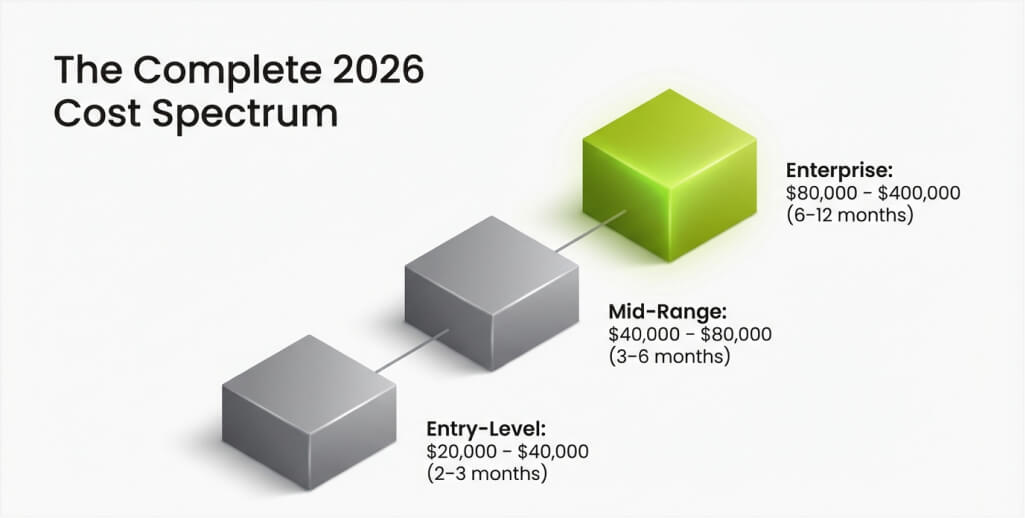
The cost to build a web portal ranges from $20,000 to $400,000, depending on complexity, features, team location, and the type of portal you need. Here is a quick summary of web portal development cost by complexity tier.
| Portal Complexity | Typical Features | Timeline | Cost Range |
|---|---|---|---|
| Entry-level | Basic UI, limited user roles, standard templates, basic search | 2–3 months | $20,000–$40,000 |
| Mid-range | Custom workflows, CRM/ERP integration, multi-role access, custom UI | 3–6 months | $40,000–$80,000 |
| Enterprise-grade | Advanced security, AI-powered features, analytics dashboards, multi-tenant architecture | 6–12 months | $80,000–$400,000 |
These ranges represent fully custom-built portals developed by professional teams. Here is what each tier typically includes.
Entry-level portals ($20,000–$40,000) suit small businesses with straightforward requirements. These portals typically include a basic login system, 1–2 user roles, a simple content dashboard, and a standard contact or inquiry form. Think of an internal knowledge base, a basic client-facing document hub, or a simple employee directory with role-based access.
Mid-range portals ($40,000–$80,000) serve companies that need integration with existing systems like CRMs or ERPs, custom workflows, and multi-role access with granular permissions. Examples include a vendor management portal with approval workflows, a customer self-service portal with ticketing and document sharing, or a B2B ordering platform with custom pricing tiers.
Enterprise-grade portals ($80,000–$400,000) cater to organizations with complex operations, regulatory compliance needs, and large user bases. These involve multi-tenant architecture, AI-powered analytics dashboards, advanced security layers, real-time data processing, and integration with multiple third-party systems.
Healthcare patient portals with HIPAA compliance, multi-vendor marketplace platforms, and financial services portals with PCI DSS requirements fall into this category.
Your actual cost depends on several specific factors beyond just complexity. Let’s break down each one.
Know What Your Web Portal Budget Should Cover
Understand the development, design, integrations, security, and infrastructure costs before setting a realistic budget for your portal project.

7 Factors That Determine Your Web Portal Development Cost
Several factors determine how much your web portal will cost. Understanding these helps you make informed decisions about scope, features, and team selection. Most businesses underestimate how much small decisions on design, integrations, and team structure can shift the total budget by 30–50%. Before diving into the specifics, it helps to understand what a web portal is and how it differs from a standard website or web application.
1. Portal complexity and feature scope
Portal complexity is the single biggest cost driver. A portal with five user roles, conditional workflows, and real-time notifications costs significantly more than one with basic login and static content. Every additional feature, user role, and workflow layer adds development hours.
- Simple portals (1–2 user roles, basic CRUD operations): $20,000–$40,000
- Medium portals (3–5 user roles, integrations, custom dashboards): $40,000–$80,000
- Complex portals (6+ user roles, AI features, analytics, compliance): $80,000–$400,000
2. UI/UX design requirements
Design impacts both user adoption and development cost. Template-based designs cost $2,000–$5,000, while fully custom UI/UX with user research, wireframing, prototyping, and usability testing ranges from $5,000–$15,000.
3. Technology stack selection
Your choice of frontend and backend technologies directly affects development speed, scalability, and cost.
- Frontend frameworks: React, Angular, and Vue.js each have different learning curves and ecosystem costs
- Backend technologies: Node.js, Laravel, Django, and .NET vary in development speed and hosting requirements
- Database: PostgreSQL, MongoDB, and MySQL have different licensing and scaling costs
Choosing a widely adopted stack ensures access to a larger talent pool and more competitive hourly rates.
4. Team size and composition
A typical web portal development team includes a project manager, UI/UX designer, frontend developer, backend developer, and QA engineer. Complex portals may require a DevOps engineer, security specialist, and database architect.
- Small team (3–4 members): Suitable for entry-level portals
- Medium team (5–7 members): Needed for mid-range portals with integrations
- Large team (8–12 members): Required for enterprise-grade portals
5. Development team location
Developer rates vary significantly by region. A US-based team charges $100–$250 per hour, while an equally skilled team in India charges $25–$80 per hour. We cover regional cost differences in detail in a dedicated section below.
6. Third-party integrations
Each integration adds complexity and cost to your portal project.
- CRM integration (Salesforce, HubSpot): $5,000–$15,000
- ERP integration (SAP, Oracle): $10,000–$25,000
- Payment gateway (Stripe, PayPal): $500–$5,000
- Email/notification service (SendGrid, Twilio): $1,000–$3,000
- Analytics (Google Analytics, Mixpanel): $1,000–$4,000
The number and complexity of integrations can add 20–40% to your base development cost.
Now that you understand the broad factors, let’s look at how individual features contribute to the overall web portal development cost.
What Each Portal Feature Costs: A Feature-Level Pricing Breakdown
Not every portal needs every feature. Understanding the cost of individual features helps you prioritize what to include in your first release and what to add later. This is where most budgeting mistakes happen: businesses either over-invest in features users do not need at launch, or under-scope critical functionality that requires expensive rework later.
The following table breaks down web portal development cost by feature so you can estimate your project based on your specific requirements.
| Feature | Cost Range | Key Considerations |
|---|---|---|
| User authentication and role-based access | $1,000–$5,000 | SSO and multi-factor authentication increase cost |
| Custom dashboard and analytics | $3,000–$12,000 | Complexity of charts, filters, and real-time data |
| Payment gateway integration | $500–$20,000 | Single gateway vs. multi-gateway with recurring billing |
| CRM/ERP integration | $5,000–$25,000 | Depends on system complexity and data mapping |
| Document management system | $2,000–$8,000 | Upload, version control, sharing, and permissions |
| Search and filtering | $1,500–$6,000 | Basic keyword search vs. AI-powered faceted search |
| Notification system (email/push) | $1,000–$4,000 | Scheduled alerts vs. real-time event-driven notifications |
| Chat/messaging module | $3,000–$10,000 | One-to-one messaging vs. group chat with file sharing |
| Custom UI/UX design | $5,000–$15,000 | Template-based vs. fully custom with user research |
| Mobile responsiveness | +10–20% of total | Responsive design vs. dedicated mobile-first approach |
| Multi-language/multi-currency support | $2,000–$8,000 | Number of supported languages and regional formats |
| Admin panel | $3,000–$10,000 | User management, content control, and analytics views |
These are individual feature costs. Your total depends on the combination you choose.
Basic vs. advanced feature set cost comparison
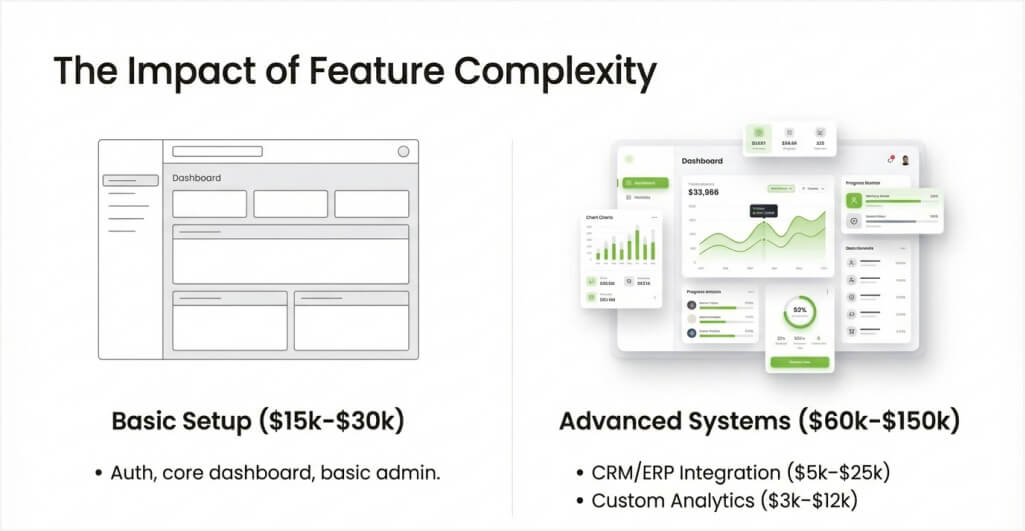
A basic feature set includes user authentication, a simple dashboard, basic search, and an admin panel. Combined, this costs approximately $15,000–$30,000 and suits small businesses launching their first portal.
An advanced feature set adds CRM/ERP integration, payment processing, real-time chat, document management, AI-powered search, and multi-language support. This combination ranges from $60,000–$150,000 and serves enterprises or businesses with complex workflows.
How to prioritize features to control costs
Start with a Minimum Viable Product (MVP) that includes only the features your users need most.
- Must-have features: Authentication, core dashboard, basic admin panel, search
- Should-have features: Notification system, document management, integrations
- Nice-to-have features: AI-powered search, chat module, multi-language support
Launch with must-have features first. Gather user feedback. Then add should-have and nice-to-have features in subsequent releases. This approach keeps your initial investment manageable while ensuring you build what users actually need.
With a clear picture of feature-level costs, let’s examine how the total price changes based on the type of portal you are building.
Prioritize Features That Matter Most
Space-O Technologies helps you identify essential portal features and phase out advanced functionality to maximize your development investment.
Web Portal Development Cost by Type
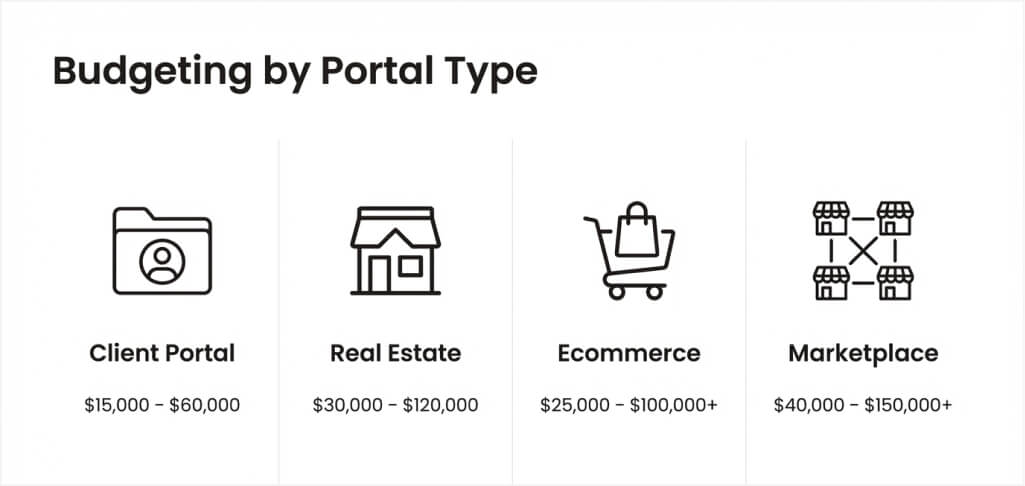
Different portal types require different feature combinations, integrations, and compliance measures. This directly affects the overall web portal development cost. A client portal for a law firm and a multi-vendor marketplace for an ecommerce company may both be “web portals,” but they differ significantly in architecture, complexity, and budget requirements.
1. Client portal development cost
Typical range: $15,000–$60,000
Client portals provide a secure, centralized platform for sharing documents, tracking project progress, and communicating with clients. Core features include secure file sharing, task management, messaging, and personalized dashboards.
Cost increases when you need:
- HIPAA or SOC 2 compliance for healthcare or finance ($5,000–$15,000 additional)
- Digital signatures and audit trails
- CRM integration for automated client workflows
- White-label branding for agency use
Industries that commonly invest in client portals include legal firms, accounting agencies, healthcare providers, and consulting companies.
2. Ecommerce portal development cost
Typical range: $25,000–$100,000+
Ecommerce portals go beyond standard online stores by supporting multi-vendor catalogs, bulk ordering, custom pricing, and complex inventory management. Space-O Technologies provides eCommerce website development services that cover both B2B and B2C portal requirements.
Major cost factors include:
- Payment gateway integration ($500–$20,000 depending on multi-gateway setup)
- Product catalog with advanced filtering and search
- Order management and shipping integration
- B2B-specific features like custom pricing tiers and bulk discounts
B2B ecommerce portals typically cost 30–50% more than B2C portals due to complex pricing rules, approval workflows, and ERP integration needs.
3. Marketplace portal development cost
Typical range: $40,000–$150,000+
Marketplace portals are among the most complex to build because they serve multiple stakeholders: platform admins, vendors, and buyers. Each requires a separate dashboard, permissions, and workflows.
Key cost drivers include:
- Vendor onboarding and management system
- Commission management and automated payouts
- Multi-vendor checkout with split payments
- Rating, review, and dispute resolution systems
- KYC verification for vendors
Businesses needing B2B portal development services with marketplace functionality should expect costs at the higher end due to complex vendor-buyer relationships.
4. Real estate portal development cost
Typical range: $30,000–$120,000
Real estate portals need property listing management, advanced map-based search, virtual tour integration, and lead management tools. Agent and broker dashboards add another layer of complexity.
Significant cost components include:
- IDX/MLS integration for real-time listing updates
- Map integration with neighborhood details and nearby amenities
- Virtual tour and 3D viewing capabilities ($5,000–$15,000)
- Lead capture and CRM integration
- Multi-currency support for international buyers
The table below summarizes cost ranges across all four portal types.
| Portal Type | Basic Version | Advanced Version | Enterprise Version |
|---|---|---|---|
| Client portal | $15,000–$25,000 | $25,000–$45,000 | $45,000–$60,000 |
| Ecommerce portal | $25,000–$40,000 | $40,000–$70,000 | $70,000–$100,000+ |
| Marketplace portal | $40,000–$60,000 | $60,000–$100,000 | $100,000–$150,000+ |
| Real estate portal | $30,000–$50,000 | $50,000–$80,000 | $80,000–$120,000 |
Each portal type has unique requirements that affect cost. The right approach depends on your business model, target users, and growth plans. Building on these type-specific costs, another major variable is where your development team is located. Let’s look at how regional pricing shapes your budget.
Get the Right Approach for Your Portal Type
We help you plan the architecture, features, integrations, and development scope around your specific portal requirements.
How Developer Location Impacts Web Portal Cost: Regional Comparison
Developer location is one of the most impactful cost variables. Hourly rates differ significantly across regions, and these differences compound across months of development work. A mid-range portal that costs $80,000 with a US-based team could be delivered for $35,000–$65,000 with an equally skilled team in India or Eastern Europe.
Businesses today have access to global talent pools with strong technical expertise, proven delivery frameworks, and real-time communication capabilities. The key is not simply choosing the cheapest option but finding a team that combines competitive rates with a strong portal development track record and transparent project management.
The table below compares web portal development costs by region for different complexity levels.
| Region | Hourly Rate | Entry-Level Portal | Mid-Range Portal | Enterprise Portal |
|---|---|---|---|---|
| USA | $100–$250/hr | $40,000–$80,000 | $80,000–$150,000 | $150,000–$400,000 |
| UK | $80–$200/hr | $35,000–$70,000 | $70,000–$120,000 | $120,000–$300,000 |
| Australia | $90–$220/hr | $38,000–$75,000 | $75,000–$130,000 | $130,000–$350,000 |
| India | $25–$80/hr | $15,000–$35,000 | $35,000–$65,000 | $65,000–$150,000 |
India offers 60–70% cost savings compared to the USA and UK without compromising quality. Many Indian development firms employ teams with the same certifications, Agile processes, and technology expertise as their Western counterparts.
When evaluating offshore teams, look beyond hourly rates. Assess their portal project portfolio, communication processes, time zone overlap, and post-launch support capabilities.
That said, the total cost also depends on how you split work between frontend and backend development. Let’s examine this breakdown next.
Frontend vs. Backend: Where Does Your Portal Development Budget Go?
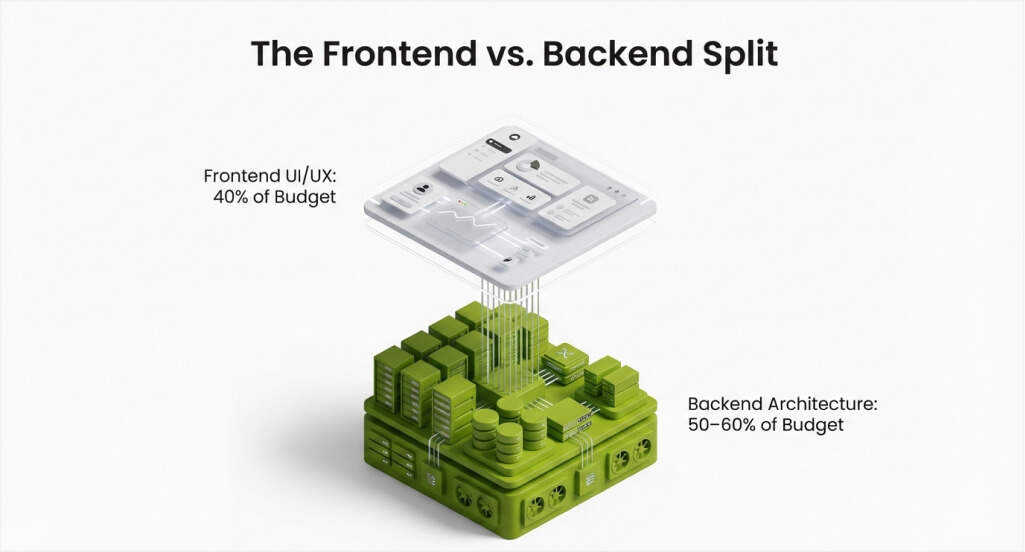
Understanding how costs are split between frontend and backend helps you allocate your budget accurately and identify where to optimize. In most portal projects, backend development accounts for 50–60% of the total spend, yet many businesses overfocus on frontend aesthetics without adequately budgeting for the server-side logic that powers their core workflows.
1. Frontend development costs ($5,000–$20,000)
Frontend development covers everything users see and interact with: layouts, navigation, forms, dashboards, and responsive design. Framework choice affects both cost and timeline.
- React: Most popular for portals with complex, interactive UIs. Large developer pool keeps rates competitive.
- Angular: Preferred for enterprise portals with structured codebases. A steeper learning curve may increase hourly rates slightly.
- Vue.js: Lightweight and fast for simpler portals. A smaller talent pool can make hiring harder.
Using component libraries and design systems (Material UI, Ant Design) reduces frontend costs by 20–30% compared to building every component from scratch.
2. Backend development costs
Backend development handles server logic, database design, API creation, authentication, and integrations. This typically accounts for 50–60% of the total portal development cost.
- Node.js: Fast development cycles, ideal for real-time features like chat and live updates
- Laravel (PHP): Excellent for portals with complex business logic and a large ecosystem of packages
- Django (Python): Strong for data-heavy portals with analytics and reporting needs
- .NET: Enterprise standard for organizations already invested in Microsoft infrastructure
Cloud infrastructure setup (AWS, Azure, Google Cloud) adds $1,000–$5,000 to initial costs, plus ongoing monthly hosting fees.
3. Full-stack cost considerations
For mid-range portals, hiring full-stack developers who handle both frontend and backend can reduce costs by 15–25% compared to assembling separate specialists. However, enterprise portals with complex requirements benefit from dedicated frontend and backend specialists for better code quality and faster parallel development.
Build Your Portal With the Right Team
Space-O Technologies combines experienced developers, structured processes, and competitive development rates to help you maximize your portal budget.
With development costs covered, an important decision remains: should you build a custom portal or use a ready-made solution? Let’s compare the options.
Custom Portal vs. SaaS vs. Open Source: Which Option Costs Less?
This is one of the most common decisions businesses face when planning a portal project. The right choice depends on your customization needs, growth trajectory, and how much control you need over the user experience and underlying architecture. If you want a detailed guide on the development process itself, our guide on how to create a web portal walks you through each step. Here, we focus specifically on cost implications.
Open-source portal platforms
Open-source platforms like Liferay, WordPress (with portal plugins), and Odoo offer free core software. However, total costs include:
- Hosting: $20–$600/month, depending on traffic and performance needs
- Customization: $5,000–$30,000 for theme modifications, plugin development, and workflow setup
- Maintenance: $2,000–$10,000/year for updates, security patches, and compatibility fixes
Best for: Small businesses with limited budgets and straightforward portal needs.
Proprietary/SaaS platforms
SaaS platforms like Zoho Creator, Salesforce Experience Cloud, and Portal.io offer subscription-based pricing.
- Monthly subscription: $50–$500+ per month based on users and features
- Setup and configuration: $2,000–$10,000
- Customization limitations: Limited to the platform’s built-in options
Best for: Businesses needing a quick launch with standard features and no unique workflow requirements.
Custom-built portals
Custom development offers full control over architecture, features, and scalability.
- Initial investment: $20,000–$400,000
- Customization: Unlimited, built to your exact specifications
- Long-term cost: Lower per-feature cost over 3–5 years as you avoid recurring subscription fees
Best for: Businesses with unique workflows, growth plans, integration needs, or compliance requirements.
The table below compares all three approaches across key criteria.
| Criteria | Open-Source | SaaS Platform | Custom-Built |
|---|---|---|---|
| Initial cost | Low ($5,000–$30,000) | Low ($2,000–$10,000) | High ($20,000–$400,000) |
| Monthly cost | $20–$600 hosting | $50–$500+ subscription | $20–$600 hosting |
| Customization | Moderate | Limited | Unlimited |
| Scalability | Limited by platform | Platform-dependent | Fully scalable |
| Time to launch | 1–3 months | 2–6 weeks | 3–12 months |
| Long-term ROI | Moderate | Low (recurring fees) | High (full ownership) |
| Vendor lock-in | Low | High | None |
For businesses with specific requirements, custom-built portals deliver the strongest long-term return on investment despite the higher upfront cost.
Beyond the visible development costs, several expenses often catch businesses off guard. Let’s address these hidden costs next.
Hidden Costs in Web Portal Development
Many businesses budget for development alone and overlook costs that emerge during or after the build. These overlooked expenses can add 20–40% to your original estimate if not planned for upfront, turning a well-scoped project into a budget overrun. Here are the most common hidden costs and how to manage them.
1. Data migration ($5,000–$25,000)
Migrating data from legacy systems, spreadsheets, or existing databases into your new portal requires mapping, cleaning, and validation. The cost depends on data volume, format inconsistencies, and the number of source systems.
- Plan data migration early in the project scope
- Allocate 5–10% of the total budget for migration
- Test migration in a staging environment before going live
2. User authentication and security hardening ($1,000–$5,000)
Basic login functionality is inexpensive. However, adding SSO, multi-factor authentication, encryption, and IP-based access control increases both development time and cost.
- Define security requirements during the planning phase
- Factor in compliance certifications (HIPAA, GDPR, PCI DSS) early
- Budget for third-party security audits if handling sensitive data
3. Custom UI/UX design ($5,000–$15,000)
Beyond template customization, custom design involves user research, wireframing, prototyping, and usability testing. Skipping this step often results in poor adoption and costly redesigns later.
- Invest in UX research upfront to avoid expensive rework
- Use design systems to balance custom aesthetics with development efficiency
4. Mobile responsiveness (+10–20% of total cost)
Responsive design ensures your portal works across devices. With over half of all web traffic now coming from mobile devices, a portal that does not perform well on phones and tablets risks losing a significant share of its user base.
- Decide between responsive design (adapts to screen size) and mobile-first (designed for mobile, scaled up)
- Test across multiple devices and browsers before launch
5. Third-party API licensing
Some integrations require ongoing licensing fees. Payment gateways charge transaction fees (1.5–3.5%). Map APIs (Google Maps) have usage-based pricing. Analytics and email services have tiered plans based on volume.
- List all third-party services during the planning phase
- Calculate monthly recurring costs based on projected usage
- Negotiate volume discounts where possible
6. Compliance costs ($5,000–$20,000)
If your portal handles healthcare data (HIPAA), financial data (PCI DSS), or EU user data (GDPR), compliance adds development complexity, documentation requirements, and audit costs.
- Identify applicable regulations before development begins
- Build compliance into the architecture from day one, not as an afterthought
Understanding hidden costs helps you build a realistic budget. But development is only the beginning. Let’s look at what it costs to keep your portal running after launch.
Avoid Surprises in Your Portal Budget
Plan for security, migration, integrations, compliance, and post-launch requirements with a development budget built around your complete project scope.
Post-Launch Costs: What Web Portal Maintenance Really Costs Per Year
A web portal is not a one-time investment. After launch, your portal needs regular maintenance to stay secure, perform well, and evolve with your business needs. Neglecting post-launch maintenance is one of the most common reasons portals degrade in performance and lose user trust within the first year. Use our web cost calculator to estimate both development and maintenance costs for your specific requirements.
The table below breaks down typical ongoing maintenance costs by activity.
| Maintenance Activity | Frequency | Estimated Annual Cost |
|---|---|---|
| Security patches and updates | Monthly | $3,000–$8,000 |
| Performance monitoring and optimization | Ongoing | $2,000–$6,000 |
| Bug fixes and minor improvements | As needed | $3,000–$10,000 |
| Feature additions and enhancements | Quarterly | $5,000–$20,000 |
| Hosting and infrastructure | Monthly | $240–$7,200 ($20–$600/month) |
| SSL certificates and domain renewal | Annual | $100–$500 |
| Backup and disaster recovery | Ongoing | $1,000–$3,000 |
As a general rule, budget 15–20% of your initial development cost for annual maintenance. For a portal that cost $50,000 to build, plan for $7,500–$10,000 per year.
Support rates typically range from $50–$100 per hour for on-demand fixes and feature updates. Dedicated support retainers offer better rates and guaranteed response times. Proactive maintenance prevents costly downtime and protects user trust.
Now that you have a complete picture of both upfront and ongoing costs, here are proven strategies to get the most value from your portal budget.
Don’t Let Unexpected Hidden Costs Derail Your Web Portal Development Budget
Space-O Technologies provides transparent cost estimates covering development, infrastructure, maintenance, and compliance so you can plan your portal budget with complete confidence.
7 Proven Ways To Reduce Your Web Portal Development Cost
Smart budgeting does not mean cutting corners. It means spending strategically to get the highest return on your investment. The businesses that get the best results from their portal budgets are those that plan for iterative delivery, pick the right engagement model, and invest in requirements clarity before writing a single line of code. Here are seven proven approaches. Compare different engagement models to find the pricing structure that best fits your project.
1. Start with an MVP and iterate
Launch with only the features your users need most. An MVP typically costs 40–60% less than a full-featured portal. This lets you validate your concept and gather real user feedback before committing to advanced features.
- Identify 5–7 core features for your first release
- Set a launch target of 8–12 weeks
- Plan a feedback loop to guide the next development sprint
2. Use phased development
Break your portal into phases tied to business milestones and revenue targets. Each phase delivers usable functionality while spreading the investment over time and reducing financial risk.
- Phase 1: Core portal with authentication, dashboards, and basic features
- Phase 2: Integrations, advanced search, and notification systems
- Phase 3: AI features, analytics, and mobile optimization
3. Prioritize features with time-boxed iterations
Use sprint-based delivery (2–4 weeks’ sprints) to prevent scope creep. Each sprint delivers a tested, deployable set of features with a fixed time and cost boundary, giving you full control over spending.
- Define sprint goals before development starts
- Review and approve deliverables at the end of each sprint
- Adjust priorities based on progress and user feedback
4. Use revenue from initial releases to fund future phases
If your portal generates revenue (subscriptions, transactions, advertising), reinvest early revenue into development. This creates a self-sustaining cycle that reduces dependency on upfront capital and aligns development with market demand.
- Launch monetization features in Phase 1 where possible
- Track revenue per feature to prioritize high-ROI additions
5. Choose a cost-effective development region
Outsourcing to India saves 60–70% compared to US and UK rates. Many Indian development firms deliver the same quality with Agile processes, dedicated project managers, and transparent communication across time zones.
- Evaluate at least 3–5 firms before committing
- Request portal-specific case studies and client references
6. Pick the right engagement model
Different pricing models suit different project scopes. Fixed-price works for well-defined scopes. Time-and-material suits evolving requirements. Dedicated teams offer the best value for long-term, ongoing portal development.
- Match the engagement model to your project’s clarity and duration
- Negotiate milestone-based payments to protect your investment
7. Document requirements thoroughly
Clear, detailed requirements reduce rework, change requests, and miscommunication. Invest time upfront in writing a comprehensive requirements document or product brief. This alone can save 15–25% of the total project cost.
- Create wireframes or mockups before development begins
- Define acceptance criteria for every feature
- Maintain a shared requirements document updated by all stakeholders
With these strategies in place, you can build a high-quality web portal within your budget. Let’s address some common questions businesses ask about web portal development costs.
Make Every Dollar Count on Your Portal
Space-O Technologies helps you phase development, prioritize high-value features, and choose an engagement model that supports your budget.
Build Cost-Effective Web Portals With Space-O Technologies
Web portal development cost ranges from $20,000 to $400,000, depending on complexity, features, portal type, and team location. This guide covered feature-level pricing, type-specific breakdowns, regional comparisons, hidden costs, and budget optimization strategies to help you plan your investment with clarity and confidence.
Space-O Technologies is a trusted web portal development company with 15+ years of experience since 2010. We have delivered 350+ projects for clients worldwide, building custom, secure, and scalable portals for startups, SMEs, and enterprises across healthcare, finance, education, and ecommerce. Check out our developed portfolio to see how we’ve transformed complex business requirements into intuitive and secure web portal solutions.
Fyule Video Lab: Online Learning Platform
A collaborative learning solution that helps educators deliver engaging lessons through videos, projects, and student challenges. Built using Flutter, Laravel, PHP, and MySQL.
Learn More
Parts Express: eCommerce Marketplace
A digital commerce platform connecting buyers and sellers of waste industry equipment with streamlined ordering and pricing management. Developed with Laravel, PHP, MySQL, and AWS.
Learn More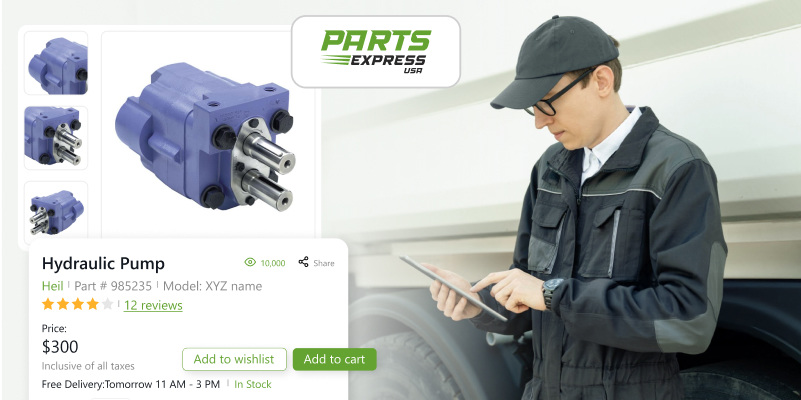
RaeCRM: NDIS Fund Management Software
A purpose-built NDIS management platform that simplifies funding oversight, invoice processing, and service provider coordination. Built on Laravel, MySQL, and Amazon S3.
Learn More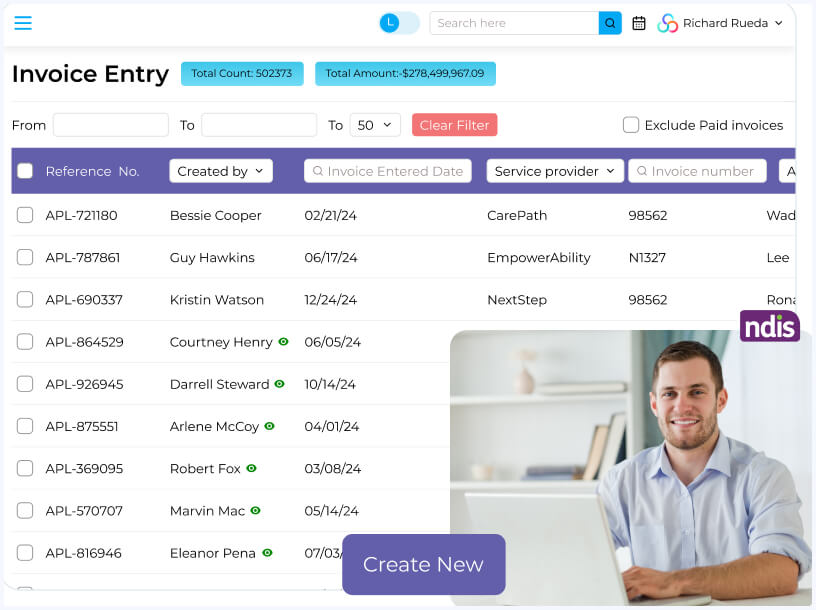
Our team of 80+ in-house developers builds client portals, ecommerce portals, marketplace platforms, and enterprise solutions using React, Angular, Node.js, Laravel, and .NET. Explore our portfolio to see how we have helped businesses across industries launch high-performance portals with measurable results.
Turn Your Portal Budget Into Business Value
Our developers build scalable web portals with the right features, technology, integrations, and development strategy for long-term growth.
Frequently Asked Questions on Web Portal Development
1. How much does it cost to build a simple web portal?
A simple web portal with basic authentication, a standard dashboard, and limited user roles costs between $20,000 and $40,000. This covers template-based design, essential features, and basic admin functionality. The timeline is typically 2–3 months with a small development team of 3–4 members. Adding integrations or custom UI design can push costs toward the higher end of this range.
2. What is the average timeline for web portal development?
The timeline depends on complexity and scope. Entry-level portals take 2–3 months, mid-range portals with CRM/ERP integrations take 3–6 months, and enterprise-grade portals with advanced features take 6–12 months. Factors like team size, technology stack, third-party integrations, and compliance requirements directly affect duration. Starting with an MVP approach can get your core portal live in as little as 8–12 weeks.
3. How much does web portal maintenance cost annually?
Annual maintenance typically costs 15–20% of the initial development investment. For a portal built for $50,000, expect $7,500–$10,000 per year covering security patches, performance optimization, bug fixes, hosting, and minor feature enhancements. Portals with compliance requirements like HIPAA or GDPR may incur additional audit and monitoring costs. Proactive maintenance prevents costly downtime and protects user trust over the long term.
4. Which technology stack is most cost-effective for portal development?
For most portals, a combination of React (frontend) and Node.js or Laravel (backend) offers the best balance of development speed, performance, and cost. These technologies have large developer communities, keeping hiring costs competitive and ensuring long-term support availability. For data-heavy portals with analytics needs, Django pairs well with React. Enterprise organizations already using Microsoft infrastructure often benefit from choosing .NET for backend development.
5. Is it cheaper to build a custom portal or use a ready-made solution?
Ready-made solutions cost less upfront ($2,000–$30,000) but carry recurring subscription fees, limited customization, and potential vendor lock-in. Custom portals cost more initially ($20,000–$400,000) but provide full control, unlimited scalability, and lower long-term costs over 3–5 years. For businesses with unique workflows, compliance needs, or ambitious growth plans, custom development delivers stronger ROI and eliminates dependency on third-party platform limitations.
6. How does portal complexity affect the overall development cost?
Each additional user role, workflow, and integration increases development hours and testing requirements. A portal with two user roles and basic features costs 3–5 times less than one with six roles, AI-powered search, real-time chat, and compliance needs. Complexity also affects ongoing maintenance costs. Feature scope, integration depth, and security requirements are the three biggest cost drivers in any portal project.
7. Can I build a web portal in phases to manage costs?
Yes. Phased development is one of the most effective cost management strategies for portal projects. Start with an MVP containing 5–7 core features, launch it, gather real user feedback, and add advanced functionality in subsequent phases. This approach spreads investment over time, reduces financial risk, and ensures you build features users actually need rather than ones based on assumptions.



 All our projects are secured by NDA




 4.8
4.8