
 By
By 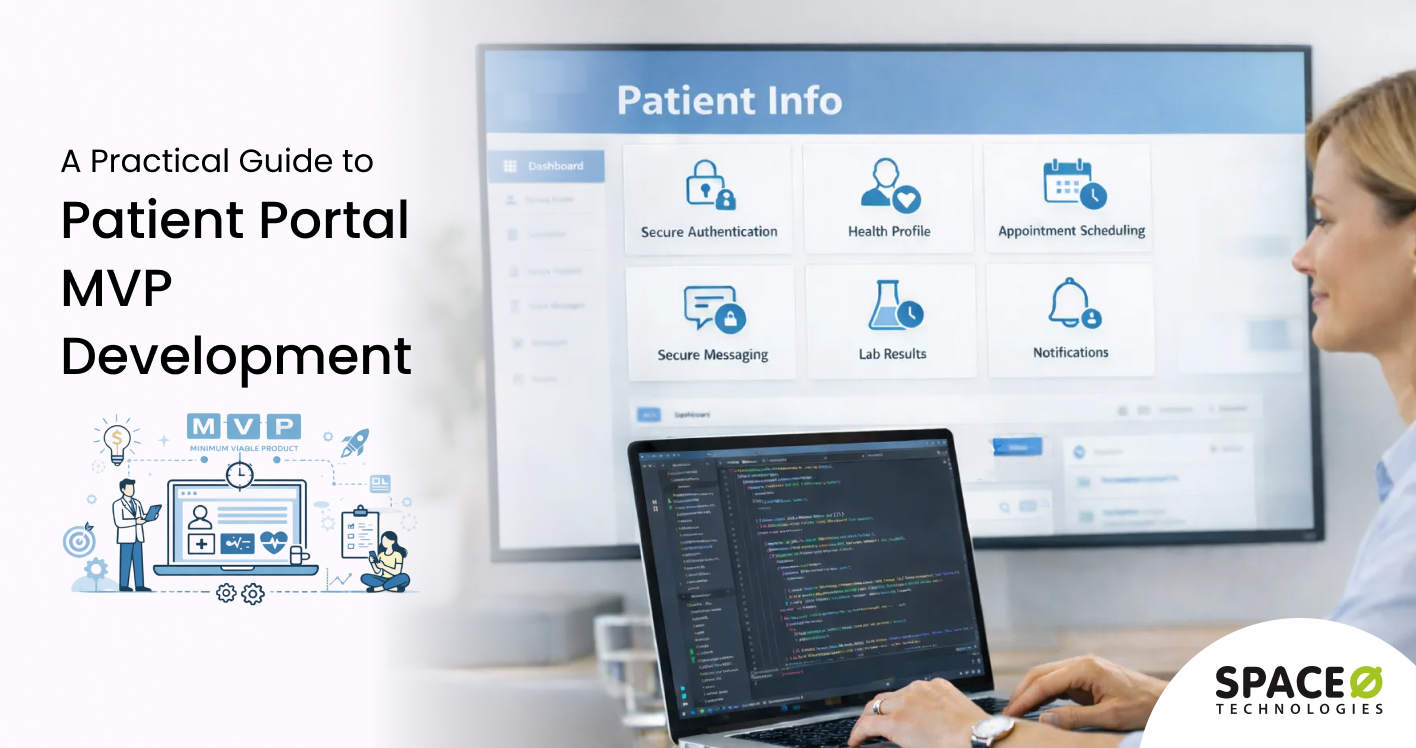
Contents
Healthcare organizations are under growing pressure to deliver faster, more transparent, and more convenient digital experiences for patients. From online appointment scheduling and access to medical records to secure messaging with care teams, patients now expect the same level of ease they experience in other digital services. This shift toward patient-centric care has made patient portals a critical component of modern healthcare delivery.
This demand is also reflected in market growth. According to Grand View Research, the global patient portal market size was valued at USD 3.4 billion in 2023 and is expected to reach USD 11.8 billion by 2030, highlighting how rapidly healthcare providers are investing in digital engagement platforms. As competition increases and patient expectations continue to rise, launching a robust patient portal is no longer optional for healthcare organizations looking to stay relevant.
At the same time, building a full-scale patient portal from day one can be costly, time-consuming, and risky if user needs are not fully validated. This is where patient portal MVP development becomes a smart and strategic approach.
By starting with a minimum viable product, healthcare providers can focus on core features, validate functionality with real users, ensure compliance, and collect feedback before committing to a large-scale rollout.
In this blog, we explore what patient portal MVP development involves, its key benefits, essential features to prioritize, cost considerations, development challenges, and best practices. Get insights from our experience as a trusted patient portal development partner on how to build effective patient portal MVPs that validate ideas and deliver patient care.
What is Patient Portal MVP Development?
Patient portal MVP development focuses on building the smallest functional product that delivers core value. This approach prioritizes essential features over comprehensive functionality in initial releases. Healthcare organizations launch MVPs to validate assumptions and gather user feedback efficiently.
An MVP contains just enough features to satisfy early adopters and prove your concept works. Development teams strip away nice-to-have capabilities to focus on must-have functionality. This lean approach accelerates time-to-market while conserving limited startup resources.
Healthcare MVPs must balance speed with compliance requirements that cannot be compromised. Teams build HIPAA-compliant foundations even in minimum viable products. Security and privacy protections remain mandatory regardless of feature scope limitations.
The goal is to learn from real users as quickly as possible with minimal investment. Successful MVPs generate feedback that shapes future development priorities and directions. This iterative approach reduces the risk of building products nobody actually wants. For a broader look at the planning and technical foundations behind portal development, explore our guide on how to develop a web portal.
Why Build an MVP Version of Your Patient Portal Before Investing in a Full-Scale Platform?
Healthcare startups face unique pressures that make MVP development particularly valuable. Limited funding, regulatory complexity, and competitive markets demand efficient product strategies. Understanding these drivers helps organizations commit confidently to the MVP approach.
1. Validate market assumptions before major investment
Healthcare founders often build products based on assumptions about patient and provider needs. These assumptions may prove incorrect once real users interact with the platform. MVP development tests your hypotheses with minimal upfront financial exposure.
Real user feedback reveals whether your core value proposition resonates with target audiences. You discover usability issues and missing features before investing in complete development. This validation prevents expensive pivots late in the product development lifecycle.
2. Accelerate time to market significantly
Full patient portal development typically takes 6 to 18 months. Healthcare startups cannot afford to wait that long for market entry. MVP approaches compress timelines to three to six months for initial launches.
Faster launches help you establish market presence before competitors claim your space. Early market entry generates revenue and customer relationships that sustain further development. Speed matters especially in rapidly evolving digital health markets.
3. Conserve limited startup funding
Healthcare startups typically operate with tight budgets and limited runways between funding rounds. Complete portal development cost can range from $150,000 to $500,000 or more in resources. MVP budgets range from $50,000 to $150,000 for focused initial products.
Preserved capital funds for marketing, sales, and operational needs alongside product development. You maintain financial flexibility to pivot based on market feedback received. Investors appreciate capital efficiency that extends the runway and reduces dilution.
4. Attract investor interest with working products
Investors increasingly demand working products before committing significant funding. Slide decks and mockups no longer suffice for competitive healthcare funding rounds. MVPs demonstrate execution capability and provide tangible evidence of progress.
Working products generate user metrics that effectively validate market opportunity claims. Investors can interact with your solution and understand the user experience directly. This tangible evidence dramatically improves fundraising success rates.
5. Reduce technical and market risk
Building complete products based on untested assumptions exposes substantial risk. Months of development effort may produce solutions that miss market needs entirely. MVP development reduces both technical and market risk through incremental validation.
Technical risks surface early during real-world testing of smaller codebases. Market risks decrease as user feedback guides feature prioritization decisions. This risk reduction protects both financial investments and team morale.
These benefits combine to make MVP development the preferred approach for healthcare innovators. Organizations that embrace this methodology consistently outperform those that build in isolation.
Validate Your Patient Portal Idea with an MVP
Develop a focused patient portal MVP to test workflows, collect real user feedback, and make informed product decisions without heavy upfront investment.

Core Features for Your Patient Portal MVP
Selecting the right features for developing a patient portal requires careful analysis of user needs and business goals. Include too few features and users find no value in your product. Include too many and you sacrifice the speed and cost benefits MVPs provide.
1. Essential MVP features
Every patient portal MVP needs certain foundational capabilities to function effectively. These features address both basic user needs and regulatory requirements.
- Secure user registration and authentication: Patients create accounts with proper identity verification, meeting healthcare security standards. Multi-factor authentication protects sensitive health information from unauthorized access.
- Basic health profile management: Users view and update personal information, including demographics, allergies, and medications. This data foundation supports all other portal functionality and clinical workflows.
- Appointment scheduling functionality: Patients book, reschedule, or cancel appointments without calling during business hours. This feature delivers immediate value by solving a universal patient pain point.
- Secure messaging capability: HIPAA-compliant communication enables patients to connect safely and conveniently with care teams. Messaging reduces phone call volume and documents all patient interactions.
- Lab results viewing: Patients access test results directly through the portal upon provider release. This feature ranks among the most requested capabilities in patient portal research.
- Basic notification system: Alerts inform users about appointment reminders, new messages, and available results. Notifications drive engagement and ensure patients stay connected with their care.
2. Features to defer for later phases
Not every valuable feature belongs in your initial MVP release. These capabilities add significant value but can wait until after market validation succeeds.
- Telehealth video consultation integration requires complex technical implementation as part of comprehensive patient portal integration.
- Remote patient monitoring and wearable device connections add development time.
- AI-powered chatbots need extensive training data and ongoing refinement.
- Advanced analytics dashboards provide insights but are not essential initially.
- Complex billing and insurance verification workflows add substantial scope.
- Full bidirectional EHR synchronization demands extensive integration work.
Deferring these features does not mean abandoning them permanently. Your MVP roadmap should outline when and how advanced features will be added. Users appreciate transparency about planned enhancements and future capabilities.
3. Feature prioritization framework
Use a structured approach to decide which features make the MVP cut.
| Priority Level | Criteria | Examples |
|---|---|---|
| Must Have | Essential for delivering core values and ensuring compliance. | Authentication, secure messaging, and basic records. |
| Should Have | Important but not critical for initial launch. | Prescription refills, payment integration. |
| Could Have | Valuable additions when time and budget permit. | Educational content, symptom checkers. |
| Will Not Have | Explicitly excluded from MVP scope. | AI chatbots, video visits, and device integration. |
Document your prioritization decisions and the reasoning behind them clearly. This documentation guides development teams and appropriately sets stakeholder expectations.
Patient Portal MVP Development Process
Building a healthcare MVP follows a structured process adapted for speed and compliance. Each phase serves specific purposes that contribute to overall project success. Understanding this process helps organizations plan effectively and set realistic expectations.
Phase 1: Discovery and requirements definition
Every successful MVP begins with thorough discovery work despite timeline pressures. Teams define target users, core problems, and success metrics during this phase. Skipping discovery leads to products that solve the wrong problems entirely.
Conduct user research through interviews with potential patients and healthcare providers. Document user personas that represent your primary target audience segments. Define the specific pain points your MVP will address for these users.
Establish clear success criteria that will determine whether your MVP achieves its goals. These metrics guide development decisions and provide benchmarks for measuring outcomes. Discovery typically requires two to four weeks for MVP-scoped projects.
Phase 2: Compliance planning and architecture
Healthcare MVPs must address compliance requirements before writing any code. HIPAA violations carry penalties that can destroy early-stage healthcare companies. Build compliance into your architecture rather than retrofitting it later.
Engage compliance expertise to identify all applicable regulatory requirements early. Document security controls, encryption standards, and access management approaches. Design database architectures that support required audit logging and data protection.
Plan for Business Associate Agreements with all third-party service providers involved. Cloud infrastructure choices must strictly align with healthcare compliance requirements. This phase typically overlaps with discovery and extends two to three weeks.
Phase 3: UI/UX design and prototyping
Design healthcare interfaces that patients of all ages and abilities can use successfully. Accessibility requirements apply even to MVP-stage healthcare products. User testing with actual patients reveals usability issues before development begins.
Create wireframes that illustrate page layouts and user navigation flows simply. Build interactive prototypes that stakeholders and test users can evaluate directly. Iterate designs based on feedback before committing to a development effort.
Healthcare design must balance simplicity with the information density clinical workflows require. Avoid cluttered interfaces that overwhelm users with too much information simultaneously. Design sprints typically require three to four weeks for MVP projects.
Phase 4: Agile development and iteration
Development teams build MVPs using agile methodologies that support rapid iteration. Sprint-based delivery provides regular opportunities to assess progress and adjust priorities. Stakeholders see working software incrementally rather than waiting for final delivery.
Build core authentication and security infrastructure first as your foundation. Add patient-facing features in priority order based on your requirements analysis. Conduct code reviews and security assessments continuously throughout development.
Integration with EHR systems or other clinical platforms happens during this phase. Focus on essential integrations that enable core functionality for launch. Development typically spans eight to twelve weeks for focused MVP projects.
You can partner with an experienced healthcare software development partner like Space-O Technologies to build your patient portal solution effectively without getting involved in the technicalities.
Phase 5: Quality assurance and security testing
Testing healthcare applications requires extra rigor due to regulatory and safety implications. Functional testing verifies that features work correctly under various conditions. Security testing identifies vulnerabilities that could expose protected health information.
Conduct penetration testing with qualified security professionals before launch. Validate HIPAA compliance through formal assessment against regulatory requirements. User acceptance testing involves actual patients and providers using the system.
Document all testing results carefully for compliance records and audit purposes. Address critical issues before launch and plan remediation for lower-priority findings. Testing requires two to three weeks for MVP-scoped healthcare projects.
Phase 6: Deployment and launch
Launch MVPs to controlled user groups before broad public availability. Beta programs generate feedback from real users while limiting exposure during early operation. Monitor system performance and user behavior closely during initial deployment.
Train support staff to assist users encountering issues with new systems. Prepare help documentation and user guides that proactively address common questions. Plan communication campaigns that drive awareness and encourage registration.
Collect user feedback systematically to inform real-time development priorities. Successful launches generate the validation data your startup needs for the next steps. Post-launch iteration begins immediately based on real user feedback.
Need Help Building a Patient Portal MVP?
We create a HIPAA-compliant patient portal MVP that supports rapid testing, early adoption, and smooth transition to a scalable production platform.
Compliance Requirements for Patient Portal MVP
Regulatory compliance cannot be treated as optional for healthcare applications at any stage. HIPAA requirements apply to MVPs just as strictly as to full-featured products. Working with experienced patient portal development agencies ensures understanding of these requirements and helps teams build compliant foundations from the start of each project.
1. HIPAA compliance essentials
The Health Insurance Portability and Accountability Act governs the use and disclosure of protected health information. Patient portals process, store, and transmit PHI that HIPAA protects strictly. Violations carry penalties of up to $1.5 million per violation category per year.
- Implement encryption for all data at rest and in transit using strong algorithms.
- Establish access controls that limit data exposure to authorized users only.
- Create audit logs that fully track all access to protected health information.
- Develop policies and procedures that govern PHI handling by all team members.
- Execute Business Associate Agreements with every third-party service provider involved.
HIPAA compliance requires ongoing attention beyond initial implementation efforts. Regular risk assessments identify new vulnerabilities as your platform evolves. Staff training ensures everyone understands their compliance responsibilities clearly.
2. Security measures for MVP development
Robust security protects both patients and your organization from serious consequences. Healthcare data breaches damage patient trust and create massive liability exposure. MVPs must implement security controls appropriate to the sensitivity of the data they handle.
- Use multi-factor authentication for all user accounts accessing health information.
- Implement role-based access control, limiting each user to only the data they need.
- Deploy intrusion detection systems that quickly identify suspicious access patterns.
- Establish incident response procedures to rapidly address potential security events.
- Conduct regular vulnerability scans and penetration testing throughout development.
Security investments in the MVP stage prevent expensive remediation later in the product lifecycle. Retrofitting security into existing applications costs far more than building it initially. Treat security as a core feature, not an afterthought.
3. Additional regulatory considerations
Depending on your market and functionality, additional regulations may apply to your portal.
- HITECH Act: Strengthens HIPAA enforcement and significantly expands breach notification requirements.
- 21st Century Cures Act: Requires preventing information blocking and ensuring patient data access.
- PCI DSS: Applies if your portal processes credit card payments for healthcare services.
- State Regulations: Many states impose additional healthcare privacy requirements beyond federal law.
Consult healthcare compliance experts to identify all applicable regulations. Non-compliance creates risks that can destroy early-stage healthcare companies entirely.
Common Challenges in Patient Portal MVP Development
MVP projects encounter predictable obstacles that threaten success if not addressed proactively. Anticipating these challenges enables better planning and risk mitigation from the project start. Below are the most frequent issues and proven approaches for overcoming them.
Challenge 1: Balancing speed with compliance requirements
Healthcare MVPs face pressure to launch quickly while meeting strict regulatory obligations. Compliance activities add time and cost that conflict with lean development goals. Teams struggle to find the right balance between speed and thoroughness.
How to overcome this challenge
- Engage compliance experts during project planning to accurately scope requirements.
- Build compliance into your architecture from day one rather than retrofitting later.
- Use pre-built compliant components and infrastructure where available.
- Prioritize compliance requirements based on actual risk levels and launch criticality.
- Accept that some compliance activities cannot be accelerated without creating risk.
Challenge 2: Scope creep during development
Stakeholders continuously identify additional features they want included in the MVP. Each addition extends timelines and increases costs beyond original estimates. Projects lose their MVP character and become full product development efforts.
How to overcome this challenge
- Document the MVP scope clearly during planning, with stakeholder sign-off obtained.
- Use formal change request processes for any proposed scope additions.
- Evaluate every proposed addition ruthlessly against the MVP success criteria.
- Maintain a future-features backlog for good ideas that do not belong here yet.
- Remind stakeholders regularly that deferred features will come in future releases.
Challenge 3: Integration complexity exceeds expectations
Connecting patient portals with EHR systems often proves more difficult than anticipated. Healthcare systems use varied data standards and API implementations. Teams underestimate integration effort during planning and face timeline impacts.
How to overcome this challenge
- Assess integration requirements thoroughly before committing to estimates.
- Partner with developers experienced in specific EHR platforms involved, or hire patient portal developers who have proven integration expertise with your existing systems.
- Consider read-only integrations initially rather than full bidirectional sync.
- Plan for integration testing time that matches actual complexity levels.
- Use healthcare data standards like HL7 FHIR wherever possible.
Challenge 4: Achieving meaningful user feedback
MVPs are designed to generate user feedback, but healthcare users can be difficult to engage. Patient populations may lack technical sophistication or motivation to provide feedback. Feedback received may not accurately reflect broader user needs.
How to overcome this challenge
- Define your target user segment clearly and recruit specifically from it.
- Offer incentives for beta participation and for submitting feedback.
- Use simple feedback mechanisms integrated directly into the product experience.
- Supplement user feedback with usage analytics that reveal behavior patterns.
- Conduct follow-up interviews to better understand the feedback context.
Challenge 5: Funding constraints limit technical quality
Budget pressures lead teams to cut corners on code quality and technical architecture. Technical debt accumulated during MVP development slows future enhancement work. Poor foundations create expensive problems as products scale.
How to overcome this challenge
- Invest in architecture planning even under tight budget constraints.
- Write tests for critical functionality that will persist through future changes.
- Document technical decisions and their rationale for future team members.
- Accept that some technical debt is acceptable if explicitly tracked and planned.
- Build relationships with development partners who understand the constraints of startups.
Addressing these challenges proactively dramatically improves MVP success rates. Teams that anticipate obstacles navigate them more effectively than those caught by surprise.
Accelerate Patient Portal MVP Development and Go Live
At Space-O Technologies, we build a lean, secure patient portal MVP that launches quickly, validates demand, and supports future integrations as your healthcare product evolves.
Patient Portal MVP Development Cost
Understanding cost factors helps healthcare startups budget accurately for MVP development, including the cost to build patient portal features. Pricing varies based on scope, complexity, and development team composition. Realistic cost expectations prevent funding shortfalls during critical development phases.
Cost breakdown by component
Different development components contribute varying amounts to total MVP costs.
| Component | Cost Range | Description |
|---|---|---|
| Discovery and Planning | $5,000 to $15,000 | Requirements gathering, compliance planning, and architecture design. |
| UI/UX Design | $10,000 to $30,000 | User research, wireframes, prototypes, and visual design work. |
| Frontend Development | $15,000 to $40,000 | Web application or cross-platform mobile development work. |
| Backend Development | $20,000 to $50,000 | Server infrastructure, APIs, and database implementation. |
| Basic EHR Integration | $15,000 to $40,000 | Read-only connection with the primary clinical system. |
| Compliance Implementation | $10,000 to $25,000 | Security controls, encryption, and audit logging. |
| Testing and QA | $8,000 to $20,000 | Functional testing, security assessment, and user acceptance testing. |
Total MVP Investment Range: $50,000 to $150,000
These estimates assume a focused scope, with only essential features included. An expanded scope or complex integrations can push costs into the upper ranges. The geographic location of development teams also significantly impacts pricing.
Factors affecting MVP costs
Several variables determine where your project falls within cost ranges.
- Feature Scope: More features require more design, development, and testing effort.
- Integration Complexity: EHR connections vary dramatically in difficulty and cost.
- Platform Requirements: Native mobile apps cost more than web-only solutions.
- Team Location: North American developers charge more than offshore alternatives.
- Compliance Rigor: Stricter security requirements increase implementation costs.
Timeline considerations for MVP development
MVP development timelines typically range from 3 to 6 months.
| Phase | Duration |
|---|---|
| Discovery and Planning | 2 to 4 weeks |
| Design and Prototyping | 3 to 4 weeks |
| Development | 8 to 12 weeks |
| Testing and Compliance | 2 to 3 weeks |
| Deployment and Launch | 1 to 2 weeks |
Aggressive timelines compress these phases, but they also increase the risk of quality issues. Realistic planning sets appropriate stakeholder expectations from project inception.
Best Practices for Patient Portal MVP Success
Following proven practices significantly increases your likelihood of MVP success. These guidelines are based on lessons learned from hundreds of healthcare product launches. Implement them from the project start rather than learning through painful experience.
1. Define success metrics before building
Establish clear criteria for determining whether your MVP achieves its objectives. These metrics guide development decisions and effectively prevent scope creep. Without defined success criteria, projects drift without focus or direction.
Common MVP success metrics include user registration rates and active engagement levels. Feature adoption rates reveal which capabilities deliver real user value. Patient satisfaction scores and Net Promoter Scores indicate overall experience quality. When you outsource patient portal development, tracking these metrics becomes essential for validating your investment and ensuring the solution meets both clinical and business objectives.
2. Involve healthcare stakeholders throughout development
Clinical input ensures your portal actually fits healthcare workflows and user needs. Patients and providers offer perspectives that pure technologists often miss entirely. Regular stakeholder involvement catches issues before they become expensive problems.
Include healthcare professionals in requirements definition and design review sessions. Conduct usability testing with actual patients before finalizing user interfaces. Clinical advisory relationships provide ongoing guidance as products evolve.
3. Choose development partners with healthcare experience
General software developers often significantly underestimate the complexity of healthcare development. Healthcare-specific expertise prevents compliance failures and workflow mismatches. Partners with relevant experience deliver better outcomes faster.
Evaluate potential partners based on their healthcare portfolio and client references. Ask about specific compliance processes and security practices they employ. Verify understanding of EHR integrations and healthcare data standards.
4. Plan for iteration from day one
MVPs, by definition, represent starting points rather than finished products. Plan your product roadmap beyond initial launch from project inception. Users need confidence that the platform will grow and improve over time.
Allocate budget for post-launch iteration based on user feedback received. Build technical architectures that support future enhancements without major rework. Communicate your roadmap transparently to build user trust and patience.
5. Focus on user experience excellence
Healthcare users include elderly patients and those with limited technical skills. Complex interfaces drive abandonment and undermine adoption efforts completely. Exceptional user experience differentiates successful health tech products.
Test designs with actual users who accurately represent your target demographic. Simplify workflows by eliminating unnecessary steps and reducing cognitive load. Accessibility compliance ensures usability for patients with disabilities.
6. Build feedback loops into your product
Systematic feedback collection effectively informs future development priorities. Make providing feedback easy and integrated into the user experience. Act on feedback visibly to demonstrate responsiveness to user needs.
Include feedback mechanisms on key screens throughout the portal experience. Analyze usage analytics to identify pain points users may not articulate directly. Close feedback loops by communicating changes made based on input received.
These practices distinguish successful healthcare MVPs from failed experiments. Organizations that embrace these guidelines consistently achieve better outcomes.
Partner with Space-O Technologies for Patient Portal MVP Development
Patient portal MVP development enables healthcare organizations to move quickly, validate assumptions, and reduce product and investment risks. By focusing on core features and real-world use cases, an MVP helps teams make informed decisions before scaling to a full-featured patient portal.
A successful MVP still requires careful planning around security, compliance, and scalability. Working with an experienced development partner ensures your MVP is built on a strong foundation that supports future growth.
Space-O Technologies is an expert patient portal MVP development company with over 15 years of experience in patient portal and telemedicine development. We have served 1,200+ clients globally and delivered 300+ custom software solutions across healthcare and digital health domains.
Our team helps healthcare providers and startups plan, design, and build patient portal MVPs that are secure, compliant, and ready to scale. From feature prioritization and rapid development to post-MVP optimization, Space-O Technologies supports your journey from idea validation to full product success.
Browse our successful web portal projects to see how we help organizations improve engagement, collaboration, and service delivery.
Conduet-Med
We developed a cloud-based telemedicine platform that connects concierge patients with certified healthcare professionals.
Learn More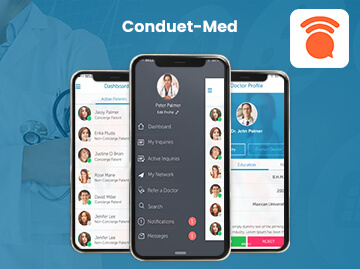
FIYA Workout Tracking Platform
We developed FIYA to simplify workout planning, exercise tracking, and progress monitoring through one seamless fitness platform.
Learn More
If you are planning to build a patient portal MVP, Space-O Technologies offers the expertise and proven processes needed to launch with confidence. Connect with us today for a free strategy session and get guidance on building impactful patient portal MVPs.
FAQs on Patient Portal MVP Development
1. How much does it cost to develop a patient portal MVP?
MVP development costs typically range from $50,000 to $150,000, depending on scope and complexity. Key cost factors include feature scope, integration requirements, and development team location. Basic MVPs with essential features cost less than those requiring EHR integrations. Organizations should budget additional funds for post-launch iteration based on user feedback.
2. How long does it take to develop a patient portal MVP?
Most patient portal MVPs require three to six months from project start to launch. The discovery, design, development, and testing phases each contribute to the total timeline. Integration complexity and compliance requirements directly influence development timelines. Rushed timelines increase the risk of quality issues and compliance gaps.
3. What features should a patient portal MVP include?
Essential MVP features include secure authentication, health profiles, appointment scheduling, and secure messaging. Lab results viewing and notification systems are also part of most healthcare MVPs. Advanced features like telehealth and AI chatbots should be deferred until after validation. Feature selection should align with specific user needs and business goals.
4. Can an MVP be HIPAA compliant?
Yes, patient portal MVPs must be HIPAA compliant from initial launch, regardless of feature scope. Compliance requirements apply equally to minimum viable products and full-featured platforms. Teams implement security controls, encryption, and audit logging even in early-stage products. Non-compliance creates legal and reputational risks that can destroy startups.
5. What is the difference between MVP and full patient portal development?
MVPs focus on essential features needed to validate market assumptions with minimal investment. Full development creates comprehensive platforms with advanced functionality and extensive integrations. MVP timelines range from 3 to 6 months, compared to 12 to 18 months. Cost differences typically range from $50,000 to $150,000 versus $150,000 to $500,000.
6. How do you validate a patient portal MVP?
Validation involves launching to early adopters and measuring engagement against defined success criteria. User registration rates, feature adoption, and satisfaction scores indicate market fit. Usage analytics reveal which features deliver real value to patients and providers. Follow-up interviews provide qualitative insights that complement quantitative metrics.



 All our projects are secured by NDA




 4.8
4.8