
 By
By 
Contents
Patient portal modernization has become essential for healthcare organizations operating on legacy platforms that struggle to meet today’s performance, security, and usability expectations. As patient engagement tools evolve, outdated portals often face issues such as slow performance, limited scalability, poor user experience, and increasing compliance risks.
Modernizing a patient portal goes beyond a simple interface upgrade. It involves improving system architecture, updating technology stacks, strengthening security controls, and ensuring seamless integration with EHRs and other healthcare systems. A well-executed modernization strategy helps healthcare providers deliver better digital experiences while maintaining regulatory compliance. Partnering with custom patient portal development services ensures that modernization efforts align with specific organizational needs and industry standards.
This guide explains what patient portal modernization involves, when it becomes necessary, and how healthcare organizations can approach modernization without disrupting ongoing operations. We have shared insights from our experience as a trusted patient portal development agency on modernization strategies and approaches to help you modernize your legacy patient portal successfully.
What is Patient Portal Modernization?
Patient portal modernization is the process of upgrading an existing patient portal to meet current healthcare technology, security, and user experience standards. It focuses on improving performance, usability, interoperability, and compliance without disrupting ongoing care delivery.
Unlike a complete rebuild, modernization typically enhances the existing portal by updating outdated architectures, replacing legacy technologies, and introducing modern features that support evolving patient and provider needs. The goal is to extend the portal’s lifecycle while aligning it with today’s digital healthcare expectations.
By modernizing a patient portal, healthcare organizations can reduce technical debt, improve system scalability, enhance patient engagement, and stay compliant with changing regulatory requirements. A well-planned app modernization approach helps transform an outdated portal into a reliable, future-ready digital platform.
6 Signs Your Patient Portal No Longer Meets Modern Healthcare Needs
Recognizing when your portal requires modernization helps you plan upgrades before problems escalate. Several warning signs indicate that your current platform no longer meets organizational needs. Addressing these issues proactively prevents patient frustration and competitive disadvantage. In some cases, patient portal MVP development offers a strategic approach to testing new features and functionalities before committing to a full-scale modernization.
1. Low patient adoption and engagement rates
Your portal registration numbers look decent, but active usage tells a different story. Patients log in once or twice, then never return to the platform. Analytics reveal declining session times and increasing abandonment rates.
Low engagement often stems from poor user experience and missing functionality. Patients find workarounds like phone calls rather than struggle with clunky interfaces. Modern portals make common tasks simple enough that patients prefer digital self-service.
2. Mobile experience frustrates users
Patients access your portal from smartphones but encounter tiny text and broken layouts. Buttons sit too close together on mobile screens, making accurate tapping difficult. Forms require excessive scrolling and zooming to complete basic tasks.
Over 60 percent of patients prefer accessing health information from mobile devices. Portals without responsive design or native mobile apps fail to meet these expectations. Modernization delivers mobile-first experiences that work seamlessly across all devices.
3. Integration limitations block clinical workflows
Your portal cannot connect with the newer clinical systems your organization has adopted. Data entry requires manual duplication between the portal and EHR platforms. Staff members waste hours copying information that should flow automatically.
Legacy systems often lack support for modern healthcare data standards, such as HL7 FHIR. Integration limitations prevent real-time data synchronization that patients expect today. Modern architectures enable flexible connections with any clinical system through standard APIs.
4. Security vulnerabilities create compliance risks
Security assessments reveal outdated encryption protocols and authentication weaknesses. Your platform lacks multi-factor authentication that regulators increasingly require. Penetration testing uncovers vulnerabilities that could expose protected health information.
Healthcare data breaches cost organizations millions in fines, remediation costs, and reputational damage. Legacy portals built before today’s threat landscape lack modern security controls. Modernization implements zero-trust architectures and contemporary security frameworks.
5. Patients demand features you cannot deliver
Users request telehealth integration, online prescription refills, or mobile check-in capabilities. Your current platform architecture prevents adding these features without a complete rebuild. Competitors offer functionality that your patients increasingly expect from healthcare providers.
Patient expectations continue rising as consumer technology improves digital experiences everywhere. Portals that felt modern five years ago now seem outdated and limited. Modernization creates extensible platforms that accommodate new features as needs evolve.
6. Maintenance costs exceed reasonable thresholds
Your IT team spends excessive time maintaining legacy portal infrastructure. Vendor support for underlying technologies has ended or costs premium rates. Each minor update requires extensive testing due to brittle, interconnected components.
Legacy systems often run on deprecated technology stacks that few developers understand. Finding qualified talent to maintain older platforms becomes increasingly difficult and expensive. Modern architectures reduce maintenance overhead while improving system reliability.
These warning signs indicate that incremental patches no longer address fundamental platform limitations. Comprehensive modernization lays the foundations for long-term success rather than perpetuating workarounds.
Modernize Your Patient Portal Without Disruption
Work with Space-O Technologies to upgrade performance, security, and usability while keeping your existing systems running smoothly.

Benefits of Modernizing Your Patient Portal Solutions
Patient portal modernization goes beyond technology upgrades. It directly impacts operational performance, patient outcomes, and financial health. Healthcare organizations that outsource patient portal development can leverage specialized expertise to accelerate these improvements. Organizations that invest in modern portals see tangible improvements across multiple areas of their practice.
1. Operational efficiency gains
Modern patient portals automate routine administrative tasks that once consumed staff hours. Digital intake forms eliminate manual data entry and significantly reduce check-in times. Automated appointment reminders cut no-show rates, helping practices maintain fuller schedules with less effort. Staff can redirect their focus from repetitive tasks to higher-value patient interactions.
2. Improved patient engagement and satisfaction
Patients expect convenient digital access to their healthcare information. Modernized portals provide 24/7 access to lab results, visit summaries, and medication lists. Secure messaging enables quick communication with care teams without phone tag. Patients who actively use portals report higher satisfaction scores and feel more involved in their care decisions. This engagement strengthens patient loyalty and reduces attrition to competitors.
3. Better clinical outcomes
Connected portals give care teams complete visibility into patient health data. Providers make more informed decisions when they access real-time information from integrated systems. Patients who review their records and follow care plans through portals show improved adherence to treatment protocols. Timely access to test results enables faster interventions when health issues arise. These factors contribute to measurable improvements in clinical outcomes.
4. Enhanced care coordination
Modern portals break down communication barriers between providers, specialists, and care teams. Shared access to patient records ensures everyone involved in a patient’s care stays informed. Referral management becomes streamlined when information flows seamlessly between systems. Patients experience smoother transitions between care settings, reducing gaps that lead to complications or readmissions.
5. Data analytics and reporting capabilities
Modernized portals capture valuable data on patient behavior, engagement patterns, and health trends. Organizations can track portal adoption rates, identify underutilized features, and measure patient satisfaction. These insights inform strategic decisions and help practices optimize their digital offerings. Population health analytics enable proactive outreach to at-risk patients before conditions worsen.
6. Telehealth and virtual care integration
Updated portals seamlessly connect with telehealth platforms, creating unified digital experiences. Patients can schedule virtual visits, join video consultations, and access follow-up notes from a single platform. This integration supports hybrid care models that blend in-person and remote services. Organizations expand their reach while offering patients greater flexibility in how they receive care.
7. Revenue and cost impact
Modernization delivers clear financial benefits. Reduced administrative burden lowers operational costs. Fewer missed appointments protect revenue streams. Faster billing cycles improve cash flow. Patient retention increases when digital experiences meet expectations. Many organizations recover their modernization investment within 12 to 18 months through combined savings and revenue protection.
8. Compliance and security advantages
Updated portals incorporate current security standards and regulatory requirements. Built-in audit trails simplify compliance reporting. Modern encryption and authentication protect sensitive patient data. Organizations reduce their risk exposure while meeting evolving HIPAA and state-level privacy mandates.
9. Competitive differentiation and market positioning
Patients increasingly choose providers based on the quality of their digital experience. A modern, user-friendly portal sets your organization apart from competitors still relying on outdated systems. Positive digital interactions strengthen your brand reputation and generate word-of-mouth referrals. In a competitive healthcare market, portal modernization becomes a key differentiator for attracting and retaining patients.
Patient Portal Modernization Approaches
Organizations can pursue modernization through different strategic approaches based on their current platform status. Each approach offers distinct advantages and tradeoffs worth careful consideration. Selecting the right strategy depends on existing infrastructure, budget constraints, and timeline requirements.
Approach 1: Incremental enhancement
This approach upgrades existing portal components progressively over time. Organizations add new features and improve interfaces while maintaining current infrastructure foundations.
Incremental enhancement works best when existing platforms remain fundamentally sound architecturally. Lower initial investment spreads costs across extended timeframes. However, this approach cannot address deep architectural limitations inherited from legacy designs.
Approach 2: Platform migration
Migration involves moving existing functionality to a new technology platform entirely. Development teams rebuild the portal using modern frameworks while preserving established features.
Platform migration suits organizations with outdated technology stacks that limit enhancement options. Teams gain modern architectures that support future growth and integration needs. Migration requires careful data transfer planning to prevent information loss during transition.
Approach 3: Complete rebuild
Full rebuilds create entirely new portals from scratch to meet current requirements. Organizations rethink features, workflows, and user experiences without legacy constraints.
Complete rebuilds make sense when existing portals no longer align with organizational direction. Fresh starts enable optimal architectures without compromise or workaround. However, rebuilds require the largest investments and longest implementation timelines.
| Approach | Best For | Investment Level | Timeline | Risk Level |
|---|---|---|---|---|
| Incremental Enhancement | Sound architecture needs feature updates | Low to Medium | 3 to 6 months | Low |
| Platform Migration | Outdated technology requires modern infrastructure | Medium to High | 6 to 12 months | Medium |
| Complete Rebuild | Fundamentally inadequate current platforms | High | 9 to 18 months | Medium to High |
Many organizations combine approaches, enhancing some components while rebuilding others. The right strategy emerges from a thorough assessment of current platform strengths and limitations.
Key Features to Include in a Modernized Patient Portal
Successful modernization projects prioritize features that drive adoption and deliver genuine value. Development teams must balance comprehensive functionality with intuitive user experiences. Feature selection should align with organizational goals and the specific needs of the patient population.
1. Essential features for modern portals
Every modernized portal should include foundational capabilities that patients now expect as standard.
- Responsive Mobile Design: Interfaces adapt automatically to any screen size and orientation. Patients complete all tasks equally well from phones, tablets, or computers.
- Biometric Authentication: Fingerprint and facial recognition provide secure, convenient login options. Patients bypass complex passwords while maintaining strong account security.
- Real-Time Data Synchronization: Health records, appointments, and messages update instantly across all systems. Patients always see the latest information without manual refreshes.
- Smart Appointment Scheduling: Intelligent booking shows available slots based on appointment type and provider preferences. Waitlist functionality notifies patients when earlier appointments open up.
- Secure Video Consultations: Integrated telehealth enables virtual visits without separate applications. Patients launch video calls directly from their portal appointment details.
- Digital Intake and Consent: Patients complete registration forms and sign documents electronically before visits. Staff receive information in advance rather than processing paperwork at check-in.
- Medication Management: Comprehensive prescription views show dosages, refill status, and pharmacy information. One-click refill requests flow directly to the appropriate approval queues.
- Integrated Bill Pay. Clear statements display charges with detailed explanations that patients can understand. Multiple payment options include credit cards, bank transfers, and payment plans.
2. Advanced features for competitive differentiation
Organizations seeking market leadership include advanced capabilities that exceed standard expectations.
- Remote Patient Monitoring: Wearable device integration captures vitals and activity data between visits. Care teams receive alerts when readings indicate potential health concerns.
- AI-Powered Health Assistants: Intelligent chatbots answer common questions and guide portal navigation. Natural language processing understands patient queries without rigid keyword matching.
- Personalized Health Content: Educational materials are tailored to individual diagnoses and treatment plans. Relevant articles and videos help patients better understand their conditions.
- Family Access Management: Parents and caregivers can easily manage permissions for dependent family members. Proxy access enables portal use while maintaining appropriate privacy boundaries.
- Care Plan Tracking: Patients view treatment goals, upcoming milestones, and progress indicators. Visual dashboards motivate adherence to prescribed care plans.
Feature prioritization should emerge from patient feedback and organizational strategic objectives. Not every portal needs every advanced feature immediately.
How to Modernize Your Patient Portal
Successful portal modernization follows a structured process that minimizes risk while maximizing results. Healthcare organizations should approach transformation systematically rather than rushing into development, ideally partnering with specialized patient portal development firms. The following steps provide a roadmap for executing modernization projects effectively.
Step 1: Assess your current portal state
Begin by evaluating your existing portal thoroughly to understand its strengths and weaknesses. Document current features, usage patterns, and technical architecture in detail. Identify specific pain points that patients and staff experience regularly.
This assessment reveals whether incremental enhancement or complete replacement makes more sense. Gather feedback from actual users through surveys, interviews, and usage analytics. Understanding the baseline helps measure improvement after modernization is complete.
Step 2: Define clear modernization goals
Establish specific objectives for modernization that your organization should achieve. Goals might include increasing patient adoption rates, reducing call volumes, or enabling telehealth services. Prioritize objectives based on organizational strategy and patient population needs.
Clear goals guide feature selection and help evaluate project success later. Avoid vague objectives like “make it better” that lack measurable outcomes. Document goals in writing and secure stakeholder agreement before proceeding further.
Step 3: Gather requirements from all stakeholders
Collect input from patients, clinical staff, administrative teams, and IT departments systematically. Each group brings unique perspectives on what the modernized portal should accomplish. Requirements gathering prevents costly changes during development phases.
Create detailed user stories that describe specific functionality from each stakeholder’s viewpoint. Prioritize requirements into must-have, should-have, and nice-to-have categories. Document technical requirements, including integrations, security standards, and performance expectations.
Step 4: Select the right development partner
Choose a partner with proven healthcare software development expertise and relevant experience. Evaluate vendors based on their understanding of HIPAA compliance and clinical workflows. Request case studies and references from similar modernization projects.
The right app modernization agency brings both technical skills and domain knowledge in healthcare to your project. Thoroughly assess communication practices, project management methodologies, and support capabilities. A strong partnership determines success more than any other single factor.
Step 5: Design the user experience carefully
Create intuitive interfaces that patients of all technical abilities can navigate easily. Design processes should include actual patients and staff in usability testing sessions. Mobile-first design ensures optimal experiences across all devices patients use.
Accessibility compliance ensures portals serve patients with disabilities appropriately. Prototype testing reveals usability issues before expensive development work begins. Invest adequate time in design because poor interfaces doom even feature-rich portals.
Step 6: Plan data migration thoroughly
Legacy healthcare system migration requires meticulous planning to preserve patient information integrity. Map every data field from old systems to its precise location on the new platform. Plan validation procedures that verify completeness and accuracy after migration.
Data migration often proves more complex than organizations initially expect. Include contingency time for unexpected issues that may arise during the actual migration. Never underestimate the importance of protecting historical patient data throughout transition.
Step 7: Execute development in phases
Break modernization into manageable phases that deliver value incrementally. Agile development methodologies enable regular feedback and course corrections throughout the project. Phase approaches reduce risk by validating progress before committing to subsequent work.
Prioritize core functionality in early phases to establish a working foundation quickly. Add advanced features in later phases after essential capabilities prove stable. Regular demonstrations keep stakeholders informed and engaged throughout development.
Step 8: Test thoroughly before launch
Comprehensive testing validates that modernized portals meet all functional and security requirements. Include performance testing to ensure systems handle expected user loads without degradation. Security testing identifies vulnerabilities before production deployment, which exposes real patient data.
User acceptance testing involves actual patients and staff in final validation activities. Compliance testing confirms adherence to HIPAA and other applicable regulations. Never rush testing phases regardless of pressure to meet launch deadlines.
Step 9: Launch strategically with proper support
Plan launch activities that minimize disruption while maximizing adoption success. Consider phased rollouts that introduce modernized portals to limited user groups initially. Training programs prepare staff to support patients effectively during transition.
Communication campaigns inform patients about new capabilities and provide clear instructions. Support resources help users navigate changes without frustration. Monitor systems closely after launch to quickly identify and address issues.
Step 10: Measure results and iterate continuously
Track key metrics that indicate whether modernization achieved its intended objectives. Compare adoption rates, user satisfaction, and operational metrics against pre-modernization baselines. Gather ongoing feedback to identify opportunities for further improvement.
Successful modernization represents a starting point rather than a final destination. Continuous improvement based on user feedback keeps portals aligned with evolving needs. Budget for ongoing enhancements that build on the initial modernization investment.
Plan and Execute Patient Portal Modernization Confidently
Hire our team for a successful, zero-downtime modernization. From assessment to phased migration, Space-O Technologies ensures a structured and risk-controlled modernization process.
Technology Considerations for Portal Modernization
Modern patient portals leverage contemporary technology approaches that enable scalability, flexibility, and performance. Development teams must make architectural decisions that support both current needs and future growth. Understanding key technology considerations helps organizations evaluate vendor proposals effectively.
1. Cloud-based infrastructure
Cloud platforms eliminate the burden of maintaining on-premises servers and infrastructure. Healthcare organizations gain automatic scaling that handles usage spikes without performance degradation.
Major cloud providers offer HIPAA-compliant services designed specifically for healthcare workloads. Cloud architectures reduce capital expenditure while providing enterprise-grade reliability and security. Disaster recovery and backup capabilities come built into cloud platform services.
2. Healthcare microservices architecture
Microservices decompose portal functionality into independent, loosely-coupled components. Each service handles specific capabilities like scheduling, messaging, or billing separately.
This architecture enables teams to update individual features without affecting the entire platform. Scaling occurs at the component level, directing resources precisely where demand increases. Microservices also facilitate integration with external systems through well-defined interfaces.
3. Modern API standards
Contemporary portals communicate via APIs that adhere to established healthcare data exchange standards. HL7 FHIR provides flexible, modern approaches to clinical data interoperability.
SMART on FHIR frameworks enable secure third-party application integration with portal platforms. RESTful API designs simplify patient portal development while maintaining security and performance. Organizations should prioritize vendors that demonstrate strong API capabilities and compliance with industry standards.
4. Progressive web applications
Progressive web apps combine the reach of websites with the engagement of native mobile applications. Patients install portals on home screens without downloading from app stores.
PWA technology enables offline access to previously loaded health information. Push notifications alert patients about appointments, messages, and test results. This approach reduces development costs compared to maintaining separate native applications.
Security and Compliance in Portal Modernization
Modernization projects must strengthen security postures while maintaining regulatory compliance throughout transitions. Healthcare data attracts cyber criminals seeking valuable personal health information. Organizations face serious consequences when modernization introduces security gaps or compliance failures.
1. Security enhancement priorities
Effective modernization improves security substantially beyond legacy platform capabilities.
- Zero-Trust Architecture: Modern portals verify every access request regardless of network location. This approach assumes no user or system should be trusted automatically.
- Advanced Encryption: AES-256 encryption protects data at rest while TLS 1.3 secures information in transit. End-to-end encryption prevents unauthorized access even if systems are compromised.
- Adaptive Authentication: Risk-based authentication adjusts security requirements based on access context. Unusual login patterns trigger additional verification steps automatically.
- Continuous Monitoring: Automated systems detect and alert on suspicious activities in real time. Security teams respond to threats before significant damage occurs.
- Regular Penetration Testing: Scheduled security assessments identify vulnerabilities proactively. Organizations fix weaknesses before malicious actors discover and exploit them.
2. Compliance considerations
Modernization must maintain compliance with healthcare regulations throughout transformation projects.
- HIPAA Requirements: All technical safeguards must remain intact during migration activities. Business associate agreements must be updated when new vendors join.
- 21st Century Cures Act: Modern portals must prevent information blocking and provide patient access. APIs enabling third-party access require implementation in accordance with this regulation.
- State Privacy Laws: Various states impose additional requirements beyond federal regulations. Organizations must understand applicable state laws affecting their patient populations.
- Data Migration Compliance: Transferring patient data between systems requires careful controls. Audit trails must document all data movements throughout modernization projects.
Engaging compliance experts early in modernization planning prevents costly remediation later. Security and compliance considerations should influence architecture decisions from project inception.
Common Challenges in Patient Portal Modernization
Modernization projects encounter predictable obstacles that threaten success unless they are properly mitigated. Anticipating these challenges enables proactive planning rather than reactive crisis management. Organizations that address challenges early complete projects more successfully.
Challenge 1: Data migration complexity
Transferring years of patient data from legacy systems introduces significant risks. Data formats may differ substantially between old and new platforms. Incomplete or corrupted migrations leave patients without access to historical information.
How to overcome this challenge
- Conduct thorough data audits to understand the contents of legacy systems before migration planning.
- Develop comprehensive mapping documents linking old data fields to new system locations.
- Implement validation processes that verify data integrity after each migration phase.
- Plan parallel operation periods where both systems run simultaneously for verification.
- Create rollback procedures to enable recovery if migration problems arise after cutover.
Challenge 2: User adoption after changes
Patients accustomed to legacy portals may resist learning new interfaces and workflows. Staff members comfortable with existing systems sometimes undermine modernization efforts. Poor change management leads to adoption rates worse than before modernization.
How to overcome this challenge
- Design intuitive interfaces requiring minimal learning for common patient tasks.
- Provide multiple training resources, including videos, guides, and live support options.
- Communicate benefits clearly so users understand why changes improve their experience.
- Gather user feedback during development to address concerns before launch.
- Implement changes gradually rather than overwhelming users with everything simultaneously.
Challenge 3: Integration with existing clinical systems
Legacy EHR platforms may lack modern APIs that new portals require for data exchange. Custom integration development adds cost and complexity to modernization projects. Poor integration performance undermines user experience despite improved portal interfaces.
How to overcome this challenge
- Thoroughly assess integration requirements during discovery before selecting approaches.
- Engage vendors with specific experience connecting to your EHR platform version.
- Consider middleware solutions that bridge legacy systems with modern architectures.
- Budget adequate time for integration testing that validates data accuracy thoroughly.
- Plan for incremental integration improvements if immediate full integration proves impractical.
Challenge 4: Budget and timeline overruns
Modernization projects frequently exceed initial cost and schedule estimates by a significant margin. Hidden complexity in legacy systems emerges during implementation. Scope creep adds features that extend timelines and inflate budgets.
How to overcome this challenge
- Conduct detailed discovery work before finalizing budgets and timelines.
- Include contingency allocations for unexpected challenges that inevitably arise.
- Define scope boundaries clearly and manage change requests through formal processes.
- Prioritize features ruthlessly to deliver core functionality within original constraints.
- Select experienced partners who estimate accurately based on similar project history.
Challenge 5: Maintaining operations during transition
Healthcare organizations cannot simply shut down portals while implementing modernization projects. Patients need continuous access to health information and communication capabilities. Staff members cannot tolerate extended downtime that disrupts clinical workflows.
How to overcome this challenge
- Plan phased implementations that modernize components incrementally rather than all simultaneously.
- Schedule major transitions during lower-volume periods when possible.
- Maintain legacy systems operational until new platforms prove stable and complete.
- Develop communication plans that prepare patients for temporary service adjustments.
- Create support resources addressing questions users have during transition periods.
Successful organizations treat challenge mitigation as an essential project component rather than an afterthought. Budget and schedule allocations should reflect realistic expectations for resolving obstacles.
What Does Patient Portal Modernization Cost?
Understanding modernization costs helps organizations budget appropriately and evaluate vendor proposals. Pricing varies based on current platform status, modernization approach, and desired outcomes. Here’s a breakdown of patient portal modernization costs.
Budget estimates based on the modernization approach
The following ranges provide general guidance for budget planning purposes.
| Modernization Type | Estimated Cost | Typical Timeline |
|---|---|---|
| Incremental Enhancement | $50,000 to $150,000 | 3 to 6 months |
| Platform Migration | $150,000 to $300,000 | 6 to 12 months |
| Complete Rebuild | $250,000 to $500,000+ | 9 to 18 months |
| Enterprise Health System Modernization | $400,000 to $750,000+ | 12 to 24 months |
These estimates include planning, development, testing, data migration, and initial deployment. Ongoing maintenance typically costs 15-25% of the initial investment annually. Organizations should budget for training, communication, and change management activities separately.
Return on investment calculations should consider operational savings from improved efficiency. Reduced call volumes, automated workflows, and decreased maintenance costs offset modernization investments. Higher patient satisfaction and competitive positioning provide additional strategic value.
Key factors that influence modernization pricing
Multiple variables significantly influence the pricing of modernization projects.
- Current Platform Condition: Severely outdated systems require more extensive work than relatively modern platforms. Technical debt accumulated over the years adds remediation costs.
- Modernization Approach: Incremental enhancements cost less than complete platform rebuilds. Migration complexity falls between these extremes depending on specific circumstances.
- Feature Scope: Adding advanced capabilities, such as telehealth or remote monitoring, increases costs. Organizations must balance desired features against budget constraints.
- Integration Requirements: EHR integration complexity significantly impacts project costs. Multiple integrations multiply development and testing requirements.
- Development Team Location: North American developers charge premium rates compared to offshore alternatives. Geographic choices involve tradeoffs between cost, communication, and quality.
Understanding the cost of developing patient portal modernization requires careful evaluation of all these factors to create an accurate budget aligned with your organization’s specific needs and goals.
Get a Clear Cost Estimate for Patient Portal Modernization
Understand modernization costs based on your current system, features, and compliance needs with expert guidance from Space-O Technologies.
Modernize Your Patient Portal with Space-O Technologies — 15+ Years of Patient Portal Development Experience
Patient portal modernization has become essential for healthcare organizations competing for patient loyalty. Space-O Technologies brings 15+ years of healthcare expertise to modernize patient portals. Our team understands EHR integrations, clinical workflows, and regulatory compliance requirements.
We build HIPAA-compliant solutions tailored to your organization’s specific needs, whether you require incremental enhancements or a complete platform rebuild. From initial assessment through deployment, we partner with healthcare organizations to transform outdated portals into modern, patient-centered platforms.
Explore our proven track record through a portfolio of web portal solutions built to enhance productivity, security, and user satisfaction.
Conduet-Med
A virtual care platform designed to deliver remote medical consultations through secure communication channels, improving patient access to healthcare.
Learn More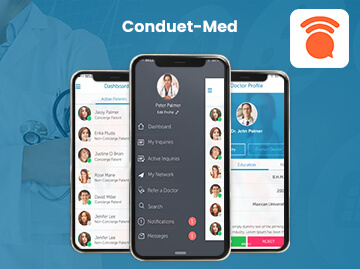
FIYA Personalized Fitness App
FIYA brings workout programs, HD exercise videos, and fitness tracking together to support consistent training across devices.
Learn More
Our modernization approach prioritizes both immediate improvements and long-term scalability. We design architectures that grow with your organization and leverage industry-standard protocols like HL7 FHIR for seamless data exchange. Contact our team to discuss how we can modernize your patient portal while maintaining the security and reliability your organization demands.
If your patient portal no longer meets today’s expectations, Space-O Technologies can help you modernize it with confidence and clarity. Connect with us today for a free consultation and get expert insights on modernizing your patient portal solution.
FAQs on Patient Portal Modernization
1. How do I know if my patient portal needs modernization?
Common signs include low patient adoption rates, poor mobile experiences, and integration limitations. Security vulnerabilities, excessive maintenance costs, and missing features also indicate the need for modernization. If patients complain about your portal or prefer calling, modernization should be a priority.
2. How long does patient portal modernization take?
Timelines depend on your modernization approach and the current status of your platform. Incremental enhancements typically take 3 to 6 months to complete. Platform migrations usually take 6 to 12 months. Complete rebuilds may require 12 months or longer, depending on scope and complexity.
3. How much does patient portal modernization cost?
Costs range from $50,000 for incremental enhancements to $500,000 or more for enterprise rebuilds. Key factors include current platform condition, modernization approach, and feature scope. Most mid-size healthcare organizations should budget $150,000 to $300,000 for comprehensive modernization projects.
4. Should we modernize our existing portal or build a new one?
This decision depends on your current platform architecture and organizational goals. Fundamentally sound systems often benefit from incremental modernization approaches. Severely outdated platforms with deep architectural problems may require complete rebuilds. Assessment of current system capabilities should guide this strategic decision.
5. What features should we prioritize in modernization?
Essential priorities include mobile-responsive design, modern authentication, and improved EHR integration. Patient scheduling, secure messaging, and billing functionality form the core experience. Advanced features such as telehealth and remote monitoring should be implemented based on the patient population’s needs.
6. How do we ensure successful patient adoption after modernization?
Successful adoption requires intuitive design, comprehensive training resources, and clear communication. Involve patients in usability testing during development to address concerns early. Train staff members to promote the modernized portal during patient visits. Gradual rollouts help users adjust without overwhelming them with changes.



 All our projects are secured by NDA




 4.8
4.8