
 By
By 
Your engineering team is stretched thin. That senior Node.js position has been open for months now. Your product roadmap keeps getting pushed back while competitors ship features faster. The challenge is clear: finding experienced Node.js developers is more complex than ever.
Node development outsourcing has evolved into a strategic solution for businesses worldwide. Companies now use outsourcing partners to access world-class engineering talent quickly. This approach accelerates development cycles and scales teams without lengthy hiring processes. Startups and enterprises alike benefit from specialized expertise and reduced overhead costs.
However, not all outsourcing partnerships deliver on their promises. The wrong partner brings communication breakdowns, security concerns, and endless project delays. The right node.js development partner becomes a seamless extension of your team. They help you ship faster, scale smarter, and build better products.
This comprehensive guide helps you navigate the Node outsourcing journey successfully. You’ll discover proven frameworks for finding and vetting the right partners. We’ll cover engagement models, collaboration structures, and common pitfalls to avoid. Whether you’re a startup founder or a technical leader, this guide provides everything you need to succeed with outsourcing.
Contents
What is Node Development Outsourcing?
Node development outsourcing involves partnering with specialized external teams for backend projects. These remote experts bring deep knowledge of the Node.js runtime environment. Companies delegate specific tasks, complete applications, or augment their existing internal staff.
This strategic approach provides access to senior engineers without recruitment challenges. External partners handle everything from architecture design through deployment and ongoing maintenance. Modern service providers integrate seamlessly using agile methodologies and continuous delivery practices.
Benefits of Node Development Outsourcing
Outsourcing Node.js development delivers tangible advantages that extend far beyond simple cost savings. Companies unlock access to specialized talent while significantly accelerating their time-to-market. These benefits transform how businesses approach software development and scale their technical capabilities.
1. Access to specialized expertise
Outsourcing connects you with developers who live and breathe Node.js technology daily. These specialists stay current with the latest frameworks, libraries, and best practices. They bring proven experience building scalable applications across multiple industries and use cases.
2. Significant cost reduction
External teams eliminate expenses related to recruitment, onboarding, benefits, and office infrastructure. You convert fixed salary costs into flexible variable expenses based on project needs. This approach typically saves 30 to 60 percent compared to hiring locally.
3. Faster time to market
Pre-vetted development squads start contributing to your projects within weeks, not months. They work with established processes and proven methodologies that accelerate delivery timelines. Your products reach customers faster while maintaining high-quality standards throughout development.
4. Flexible scalability options
Outsourcing allows you to rapidly scale your technical capacity up or down. Add specialists like QA engineers, DevOps experts, or UI designers as requirements evolve. Reduce team size after major releases without the complications of layoffs or hiring freezes.
5. Focus on core business activities
External partners handle the technical complexities while your internal staff concentrates on strategy. Product managers, marketers, and executives dedicate energy to growth initiatives and customer relationships. This division of labor maximizes productivity across your entire organization.
6. Reduced technical risk
Experienced outsourcing firms bring development processes and quality assurance protocols. They’ve encountered and solved common technical challenges across numerous client engagements previously. Their expertise helps you avoid costly mistakes and architectural decisions you might regret later.
7. Round-the-clock development cycles
Teams in different time zones can maintain development momentum even when your local staff is asleep. This follow-the-sun approach accelerates project completion and enables faster bug fixes. Critical updates and feature releases happen more efficiently with extended working hours coverage.
These benefits work together to create a competitive advantage for forward-thinking organizations. Outsourcing transforms constraints like limited budgets and talent shortages into strategic opportunities. The key lies in selecting the right partner and properly structuring the relationship.
Need a Dedicated Node.js Development Team?
Access pre-vetted senior Node.js developers who integrate seamlessly with your workflow. Scale your development capacity fast without recruitment delays. Start building your ideal team today.

Types of Node Development Outsourcing Models You Should Know
Choosing the right outsourcing model directly impacts your project’s success and team dynamics. Each engagement type serves different business needs, budgets, and control preferences. Understanding these models helps you select the approach that aligns with your goals.
The wrong model can lead to misaligned expectations, budget overruns, and frustrating collaboration issues. Different project stages often require different outsourcing approaches for optimal results. Many successful companies switch between models as their needs evolve.
| Model | Best For | Control Level | Flexibility | Cost Structure |
|---|---|---|---|---|
| Staff Augmentation | Filling specific skill gaps in existing teams temporarily | High – you manage directly | Very High – scale up/down quickly | Hourly or monthly per developer |
| Dedicated Team | Long-term projects requiring exclusive focus and commitment | Medium – partner provides management | High – adjust team size as needed | Monthly fixed rate per team |
| Project-Based | Well-defined projects with clear scope and deliverables | Low – vendor manages execution | Low – fixed scope and timeline | Fixed price for the entire project |
| Managed Services | Ongoing maintenance, support, and incremental development work | Low – vendor handles operations | Medium – flexible task prioritization | Monthly retainer or service package |
Staff augmentation works best when you have strong internal project management capabilities. Your existing leaders direct the work while outsourced talent executes under supervision. This model suits companies with a clear technical vision but insufficient execution capacity.
Dedicated teams excel at complex products that require sustained attention over many months. The external squad becomes intimately familiar with your codebase and business logic. This approach builds long-term partnerships rather than transactional vendor relationships.
Project-based arrangements fit initiatives with well-defined requirements and firm deadlines ahead. The vendor assumes complete responsibility for delivery, timeline management, and quality assurance. This hands-off approach appeals particularly to non-technical founders and resource-constrained organizations.
Managed services provide ongoing support after initial development phases conclude successfully. Teams regularly handle bug fixes, performance optimization, security updates, and minor enhancements. This model ensures your application remains stable, secure, and up to date with technology changes.
Searching for a Reliable Node.js Development Partner?
Collaborate with dedicated Node.js developers vetted for performance and scalability. Strengthen your development capabilities without the complexity of recruitment. Start building with expert Node.js talent today.
When Should You Outsource Node.js Development?
Timing outsourcing decisions correctly maximizes benefits while minimizing transition friction and risk. Certain business situations strongly indicate outsourcing as the optimal path forward. Recognizing these scenarios helps you move decisively when external expertise delivers the most significant value.
1. Your product roadmap outpaces internal hiring capacity
Sprint goals consistently slip because your team lacks bandwidth to implement planned features. Senior engineering positions remain unfilled for months despite active recruitment efforts. Competitors launch similar capabilities faster, eroding your market position through execution gaps.
Outsourcing immediately expands development capacity without waiting for lengthy hiring processes. Pre-vetted teams start contributing within weeks, not months. Your product roadmap returns to realistic timelines aligned with business objectives and market windows.
2. You need specific Node.js expertise unavailable locally
Your project requires advanced capabilities like microservices architecture, real-time data streaming, or high-concurrency handling. Local candidates lack the specialized experience needed for these implementations. Training existing staff would delay launches unacceptably while competitors gain ground.
Specialized outsourcing partners bring engineers who have built these exact systems multiple times previously. They implement proven patterns, avoiding costly trial-and-error learning on your critical projects. Expertise that takes years to develop internally becomes available immediately through strategic partnerships.
3. Budget constraints limit full-time hiring
Fully loaded costs for senior Node.js developers in major markets exceed $150,000 annually, including benefits and infrastructure. Startup budgets or departmental allocations cannot support the team size your ambitions require. Fixed employment costs create financial rigidity, limiting strategic flexibility.
Outsourcing provides world-class development capabilities at 40-60% of equivalent in-house costs. Variable expense structures align spending with actual development needs and funding availability. Capital preserved through outsourcing fuels growth initiatives, delivering competitive advantage.
4. Your project timeline demands immediate execution
Market opportunities require rapid application development and launch within compressed timeframes. Building in-house teams from scratch consumes months that your business cannot spare. Delayed entry risks competitors establishing market dominance before your solution becomes available.
Established outsourcing teams mobilize within days, providing immediate development velocity. They bring processes, tools, and collaboration patterns already proven effective. Projects launch in half the time required for gradual in-house team assembly and process development.
5. You’re validating concepts before larger investments
MVP development tests market hypotheses before committing extensive resources to complete product development. Hiring permanent teams for experimental projects creates future obligations if concepts fail validation. You need flexibility to pivot or terminate without personnel complications.
Outsourcing enables rapid prototyping and testing without long-term employment commitments or severance costs. Teams disband naturally at project conclusion if concepts fail or transition seamlessly to full development if validation succeeds. This risk mitigation proves invaluable during early product exploration phases.
6. Scaling challenges exceed current technical capabilities
Your application experiences growth requiring architectural changes beyond the current team’s expertise. Performance bottlenecks emerge as user bases expand beyond initial design assumptions. Scaling expertise requires specialized knowledge your team hasn’t yet developed.
Outsourcing partners who’ve scaled similar systems bring battle-tested solutions to your specific challenges. They identify optimal scaling strategies based on experience with high-traffic applications. Your system gains enterprise-grade performance characteristics without years of painful learning through production incidents.
Need Expert Support for Your Node.js Project?
Work with Space-O Technologies to build secure, scalable Node.js solutions tailored to your business needs. Discuss your requirements with our experts and move forward with confidence.
Common Challenges in Node Development Outsourcing
Even well-planned outsourcing initiatives encounter obstacles that test partnerships and threaten project success. Anticipating these challenges enables proactive mitigation strategies rather than reactive crisis management. Below are the most frequent issues and proven approaches for overcoming them.
Challenge 1: Communication barriers and misalignment
Geographical distance, time zone differences, and cultural differences create communication friction. Requirements get misunderstood, leading to implementations that miss intended functionality. Daily coordination becomes difficult when teams operate on opposite schedules.
How to overcome this challenge
- Establish overlapping working hours where both teams are available for real-time collaboration and quick decisions.
- Use comprehensive project management tools such as Jira, Asana, or Trello to track all tasks with detailed descriptions.
- Schedule regular video calls, including daily standups, sprint planning, and retrospectives, to maintain team cohesion.
- Document everything in writing, including decisions, requirements, and technical specifications, avoiding verbal-only agreements.
- Designate dedicated points of contact on both sides to streamline communication and prevent information fragmentation.
Challenge 2: Quality control and code standards
Remote teams may follow coding standards, testing practices, or architectural patterns that differ from expectations. Inconsistent quality emerges when oversight proves insufficient or standards remain undefined. Technical debt accumulates when shortcuts are taken under deadline pressure.
How to overcome this challenge
- Define explicit coding standards, naming conventions, and architectural principles before development starts.
- Implement mandatory code reviews with your internal technical leads approving all significant changes.
- Require minimum test coverage thresholds, such as 80% unit test coverage, before accepting deliverables.
- Use automated linting tools and static analysis to catch issues before human review.
- Conduct regular technical audits assessing architecture decisions and long-term system maintainability.
Challenge 3: Data security and intellectual property risks
Sharing sensitive business logic, proprietary algorithms, and customer data with external teams exposes them to security risks. Inadequate protection measures risk data breaches, intellectual property theft, or regulatory violations. Remote access to production systems requires careful control to prevent unauthorized actions.
How to overcome this challenge
- Sign comprehensive NDAs and intellectual property assignment agreements before sharing any confidential information.
- Implement role-based access controls to limit each developer to only the systems and data they need.
- Require secure development practices, including encrypted communications and protected code repositories.
- Conduct security audits of the partner’s infrastructure and development practices before engagement.
- Monitor access logs and establish incident response procedures to address potential security events quickly.
Challenge 4: Time zone coordination difficulties
Significant time zone differences mean one team finishes their day as the other starts. Critical questions remain unanswered for 12-16 hours, slowing decision-making and progress. Synchronous collaboration becomes impossible without someone regularly working inconvenient hours.
How to overcome this challenge
- Choose outsourcing partners with a reasonable time zone overlap to enable daily real-time communication.
- Rotate meeting times so neither team always has to accommodate the other’s schedule.
- Document decisions thoroughly so work continues during non-overlapping hours without blocking issues.
- Establish clear escalation paths for urgent matters that require immediate attention, regardless of time zones.
- Leverage asynchronous communication tools like Slack, enabling questions and answers across time zones.
Challenge 5: Scope creep and requirement changes
Projects evolve as business needs change or initial requirements prove incomplete. Uncontrolled scope expansion without corresponding timeline or budget adjustments creates tension. Partners may resist changes, viewing them as scope creep, while clients see necessary adaptations.
How to overcome this challenge
- Define formal change request processes and document all scope modifications with impact assessments.
- Establish clear boundaries between bug fixes included in the original scope versus new feature development.
- Budget contingency time and money for inevitable requirement refinements during development.
- Prioritize features rigorously, ensuring core functionality is delivered before expanding to nice-to-have capabilities.
- Maintain product backlog with stakeholder agreement on prioritization, preventing endless feature additions.
Challenge 6: Knowledge transfer and documentation gaps
External teams build systems without adequate documentation explaining architectural decisions or implementation details. When engagements end, internal teams struggle to understand and maintain the codebase. Critical knowledge remains trapped in departing contractors’ heads.
How to overcome this challenge
- Require comprehensive technical documentation as formal project deliverables alongside working code.
- Conduct knowledge-transfer sessions in which external teams explain the architecture and key components.
- Maintain living documentation updated throughout development rather than creating it post-facto.
- Involve internal developers in code reviews and build understanding during development, not after.
- Record video walkthroughs of complex systems, providing reference material for future maintenance.
Struggling with Node.js Project Delays?
Our experienced teams deliver production-ready Node.js applications on time and within budget. Leverage our proven processes and technical expertise to get your project back on track.
Best Practices for Successful Node Development Outsourcing
Following proven practices dramatically increases outsourcing success rates while avoiding common pitfalls. These guidelines represent accumulated wisdom from hundreds of successful engagements. Implement them from day one rather than learning through painful mistakes.
1. Start with precise, detailed requirements
Document your vision, user stories, technical constraints, and success criteria before engaging partners. Ambiguous requirements lead to misaligned implementations, resulting in expensive rework. Invest time upfront creating comprehensive specifications, saving multiples of that time during development.
Include mockups, workflow diagrams, and example scenarios that illustrate the expected functionality. Visual aids communicate intent far more effectively than text descriptions alone. The clearer your vision, the more accurately teams can execute it.
2. Begin with pilot projects before full commitment
Test partnerships through small, defined projects before committing to large-scale engagements. Pilot projects reveal communication effectiveness, technical capabilities, and cultural fit with limited risk. Successful pilots build confidence and refine collaboration patterns before significant investments.
Choose pilot projects that represent core capabilities you’ll need long-term, rather than trivial throwaway work. Meaningful pilots demonstrate the partner’s ability to handle your actual challenges. Poor pilot performance predicts worse outcomes on critical projects.
3. Maintain continuous client involvement
Outsourcing doesn’t mean abandoning oversight and involvement in your product development. Participate actively in sprint reviews, architecture discussions, and key technical decisions. Your business context and user understanding remain essential throughout implementation.
Schedule regular check-ins beyond formal sprint ceremonies to maintain continuous alignment and detect issues early. Engaged clients receive better outcomes because teams understand context and receive rapid feedback. Passive clients discover problems only at the final delivery stage, when corrections become expensive.
4. Foster team integration and relationship building
Treat outsourced developers as team members, not external vendors. Include them in company communications, celebrations, and team-building activities where practical. Strong relationships improve communication quality and create mutual investment in success.
Facilitate direct communication between outsourced and internal team members, avoiding bottlenecks by establishing a single point of contact. Distributed teams function best when everyone collaborates naturally. Artificial communication barriers slow progress and reduce knowledge sharing.
5. Establish transparent metrics and reporting
Define key performance indicators that objectively measure progress, quality, and business outcomes. Track metrics like sprint velocity, defect rates, test coverage, and feature completion consistently. Data-driven conversations replace subjective opinions, creating accountability.
Create dashboards providing real-time visibility into project status, blockers, and risks. Transparency builds trust and enables proactive problem-solving before minor issues escalate. Partners who resist measurement often hide performance problems.
6. Plan for knowledge transfer from day one
Structure engagements to ensure knowledge flows to internal teams throughout development, not just at the conclusion. Involve internal developers in code reviews, architecture sessions, and technical discussions continuously. Gradual knowledge accumulation prevents long-term dependency on external teams.
Create documentation standards and templates at project inception, requiring consistent application throughout. Retrospective documentation is found to be incomplete and inaccurate compared to concurrent creation. Make documentation a definition of done requirement for every feature.
7. Build long-term partnerships over transactional relationships
View outsourcing as strategic partnerships rather than cost-cutting transactions focused solely on price. Long-term relationships enable deeper business understanding and increasingly efficient collaboration. Partners invested in your success deliver discretionary effort beyond contractual minimums.
Provide feedback regularly, helping partners improve and better serve your needs. Constructive criticism strengthens relationships when delivered respectfully with specific improvement suggestions. Partners who resist feedback lack commitment to excellence and continuous improvement.
Cost Analysis: In-House vs Outsourced Node.js Development
Understanding the actual cost differences between in-house and outsourced development helps make smarter budget decisions. Many organizations focus solely on salary figures while overlooking hidden expenses that inflate total costs. A comprehensive cost analysis reveals the complete financial picture beyond surface-level comparisons.
Outsourcing Node.js development typically delivers 40 to 60 percent cost savings compared to building internally. These savings come from reduced overhead, eliminated recruitment expenses, and flexible resource allocation. However, the right choice depends on your strategic priorities, project scope, and long-term goals.
In-house Node.js development costs
Building an internal Node.js team involves substantial fixed and hidden expenses beyond salaries.
- Salaries and Benefits: According to ZipRecruiter, the average Node.js developer salary in the United States reaches around $121,124 annually. Benefits add another 20 to 30 percent on top of base compensation.
- Recruitment Expenses: Hiring involves a $300 cost per job posting. Recruitment agency fees consume 15-25% of the first-year salary. HR managers and technical leaders invest significant time conducting interviews and evaluating candidates.
- Operational Overheads: Ongoing expenses include office space, hardware, software licenses, and training programs. Retention efforts and HR management add further costs to maintain team stability. These operational expenses accumulate whether developers are fully utilized or not.
- Scalability Challenges: Scaling an in-house squad up or down is time-consuming and challenging in practice. Long recruitment cycles prevent quick adjustments when project needs fluctuate unexpectedly. Overstaffing during slow periods or understaffing during peak demand creates inefficient resource allocation.
- Control and Intellectual Property: The primary advantage remains the ability to maintain maximum control over the development process and protocols. Organizations maintain direct oversight of intellectual property, security measures, and cultural alignment. This control matters most for core products and sensitive proprietary technology.
Outsourced Node.js development costs
Outsourcing offers a variable-cost model in which businesses pay only for the services they need.
- Regional Hourly Rates: Asia and India typically offer rates between $15 and $50 per hour. Eastern Europe generally pays developers $30 to $75 per hour. Latin America charges $35 to $80 per hour for comparable expertise. The United States and Canada command $70 to $150+ per hour for specialized consultants.
- Reduced Overhead Expenses: Outsourcing eliminates costs related to recruitment, employee benefits, office infrastructure, and equipment. Companies redirect resources toward core business activities and strategic growth initiatives. External partners assume all training, management, and retention responsibilities.
- Scalability and Flexibility: External squads can be rapidly scaled up or down in response to shifting project demands. This flexibility suits short-term projects, MVP development, and fluctuating workload requirements perfectly. Organizations avoid long-term commitments while maintaining the capacity to adjust resources quickly.
- Access to Specialized Expertise: Businesses gain immediate access to global talent pools with proven Node.js experience. Established development processes and best practices come built into outsourcing partnerships. This expertise might not be available or affordable in local markets at the moment.
- Potential Challenges: Limited direct control over daily operations requires trust in your outsourcing partner. Communication issues may arise across different time zones and cultural contexts. Robust contracts and NDAs are essential for managing security and protecting intellectual property.
Cost comparison summary
| Aspects | In-House Development | Outsourced Development |
|---|---|---|
| Cost Model | High fixed costs, including salaries, benefits, and overhead | Variable costs based on service, project, or hourly rates |
| Potential Savings | Baseline cost with no savings | 40 to 60 percent potential savings |
| Hiring Timeline | Long recruitment and onboarding cycles | Quick team assembly within 1 to 3 weeks |
| Control Level | Maximum direct control over process and IP | Limited direct control managed by the vendor |
| Scalability | Difficult and slow to scale effectively | Easy and rapid to scale up or down |
| Best Suited For | Core products, long-term projects, IP-sensitive work | MVPs, short-term projects, niche expertise |
The optimal choice depends on your business’s strategic priorities and risk tolerance levels. In-house development suits companies building core products requiring maximum control and security. Outsourcing is best for organizations that need flexibility, speed, and access to specialized talent. Many successful businesses use hybrid approaches, strategically combining both models for different project types.
See What Your Node.js Build Will Really Cost
Share your requirements in our Node.js cost calculator, and our experts will translate every detail into an accurate project cost.
Hire Expert Node Developers from Space-O Technologies for End-to-End Assistance
Node development outsourcing has evolved from a cost-cutting tactic to a strategic imperative for competitive organizations. The combination of global talent access, cost efficiency, and execution speed creates advantages difficult to replicate through in-house teams alone. Companies that master outsourcing partnerships deliver better products faster than competitors constrained by local hiring markets.
Success requires more than selecting the cheapest provider or signing contracts quickly. Strategic outsourcing demands careful partner evaluation, clear communication frameworks, and continuous engagement throughout development. Organizations treating outsourcing as true partnerships rather than vendor transactions consistently achieve superior outcomes and build lasting competitive advantages.
Space-O Technologies specializes in Node.js development tailored to your specific business requirements and technical challenges. Our experienced teams combine deep Node.js expertise with proven delivery methodologies that ensure reliable, scalable solutions. From initial architecture through deployment and beyond, we partner with you to build applications that drive measurable business value and position you for sustained growth.
AI-Driven Recruitment Automation Platform
Our team built GPT Vix, a recruitment automation tool powered by AI models such as ChatGPT, Synthesis, and Whisper. The platform streamlines hiring tasks including candidate interviews, applicant evaluation, and talent discovery.

Smart NFC Jewelry App for Preserving Cherished Moments
We created Momento Locket, the first smart NFC jewelry app of its kind, built with React Native, Node.js, and MongoDB. Users can save and share photos, videos, and voice memories straight from NFC-enabled jewelry, and the app has crossed 1,000+ downloads since its release.

AI eCommerce Search Bot Built to Drive Revenue
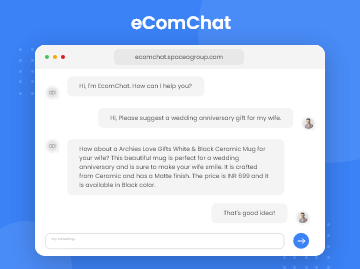
We built eComChat, a ChatGPT-style search bot for eCommerce, using Node.js, Python, and OpenAI’s GPT-3 model. Powered by NLP algorithms, eComChat interprets shopper intent, removes zero-result searches, and improves on-site search speed by 23%.
FAQs About Node Development Outsourcing
When should a business consider Node development outsourcing?
A business should consider Node development outsourcing when it needs to accelerate product development, scale engineering capacity quickly, or access specialized Node.js expertise that is not available in-house. Outsourcing is also ideal for startups and enterprises looking to reduce recruitment costs, manage fluctuating workloads, or focus internal teams on strategic initiatives rather than day-to-day development tasks.
How does Node development outsourcing impact project timelines?
Node.js development outsourcing can significantly improve project timelines by eliminating lengthy hiring processes and enabling faster team onboarding. Experienced outsourced teams often work with established development frameworks, agile workflows, and reusable components, which helps speed up delivery while maintaining code quality and consistency across releases.
Can Node development outsourcing support long-term product development?
Yes, Node development outsourcing is well-suited for long-term product development, primarily through dedicated team or extended team models. These approaches ensure continuity, deeper product understanding, and stable collaboration over time. Outsourced developers can evolve alongside the product, contributing to feature enhancements, performance optimization, and ongoing maintenance.
How do outsourced Node.js teams collaborate with in-house developers?
Outsourced Node.js teams collaborate closely with in-house developers using shared communication channels, project management tools, and agile practices. Regular stand-ups, sprint planning, code reviews, and progress reporting ensure alignment. This collaborative setup allows outsourced teams to function as a seamless extension of internal engineering teams.



 All our projects are secured by NDA




 4.8
4.8