
 By
By 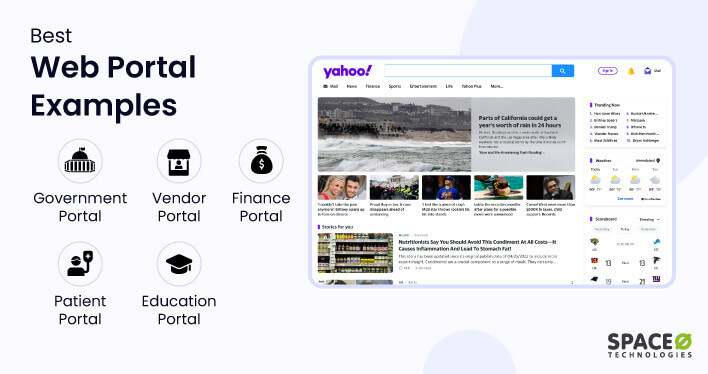
In this comprehensive guide, we explore 25 of the best web portal examples across industries, including government, healthcare, education, finance, and vendor management. Whether you’re researching web portal development for your business or looking for inspiration, these real-world examples demonstrate what makes a successful portal.
15 Top Web Portal Examples for Your Online Business
As a leading web portal development services provider, we have experience in developing types of web portals of various industries like education, healthcare, and travel. However, in case you have any web portal ideas and don’t know where to start you can check our blog on how to build a web portal. From these 7 simple steps, you get an idea of developing a web portal from scratch with cost and timeline.
In this blog, we have shared real-life examples of web portals with their features and web application types.
Let’s start with the basics and then understand the web portal examples with their types.
Table of Contents
What is a Web Portal? Definition and Key Features
A web portal is a centralized online platform that aggregates information, services, and resources from multiple sources into a single access point. Portals provide users with personalized content, authentication, and tools for communication, collaboration, and task completion within a unified interface. Web portals offer users a centralized hub where they can access a range of content, tools, and functionalities in one place. Some common online portal examples are Yahoo and MSN.
Web portals consolidate various resources or information you might need – such as articles, videos, and tools – all in one place. Designed to offer a user-friendly experience, a web portal enables you to access everything easily from a single location.
There are various types of portals that include:
- Vendor portals
- Patient portals
- Employee portals
- Government portals
- Intranet portals
- Customer portals
- Insurance portals
- Financial portals
- Ecommerce portals
- Partner portals
Having introduced you to the various types of web portals, let’s understand specific examples with their features.
Why Do You Need a Web Portal?
Whether you are a startup or an enterprise, an online web portal can directly impact your operations, customer satisfaction, and bottom line. Here are the key reasons why businesses across industries are investing in web portals:
1. Centralized access to information and services
A web portal brings together data, tools, and resources from multiple systems into a single access point. Instead of switching between different applications, users get everything they need from one dashboard.
2. Improved communication and collaboration
Online portals replace scattered emails and phone calls with structured communication channels. Features like secure messaging, document sharing, and real-time notifications keep all stakeholders aligned.
3. Reduced operational costs
By enabling self-service functionality, web portals reduce the volume of support tickets, phone calls, and manual administrative tasks. When users can find answers, submit requests, and track statuses on their own, your team can focus on higher-value work.
4. Enhanced user experience through personalization
Modern web portals deliver role-based, personalized experiences. Each user sees content, tools, and data relevant to their role, which increases engagement and drives repeat usage.
5. Stronger data security and compliance
Unlike sharing information through emails or spreadsheets, web portals provide a controlled environment with user authentication, role-based access, data encryption, and audit trails.
6. Scalability for business growth
As your business grows, an online web portal scales with you. A well-built portal architecture supports growth without requiring a complete rebuild. Many of the top web portals listed below started with basic functionality and expanded over time.
Now that you understand the business value, let’s look at a list of top web portals across different industries.
Ready to Build a Web Portal That Drives Real Results for Your Business?
Our experienced team has delivered 350+ custom web solutions across industries. Share your requirements and get a detailed project estimate within 48 hours.

Top 25 Web Portal Examples by Industry
Here is our curated list of web portals from government, vendor management, banking, healthcare, and education sectors. These are some of the most popular web portals that demonstrate how different industries use them to streamline operations and serve their users better.
Government Portal Examples
A government portal is an online web portal that offers citizens access to government information, services, forms, and resources, promoting transparency and engagement. Most fully functional government portals help citizens access various services, schemes, and information from one centralized platform.
Here are the 3 examples of government portals:
-
Data.gov – Government Web Portal

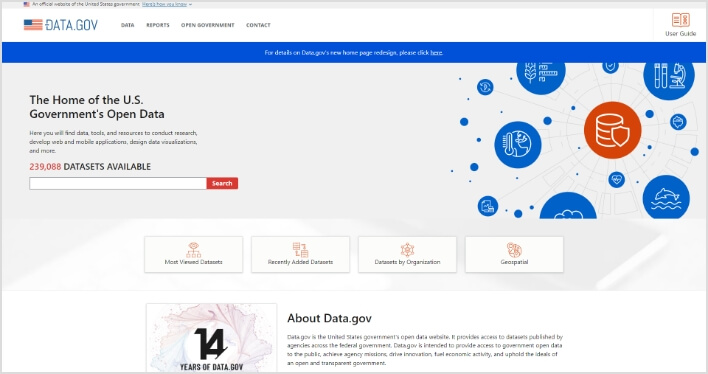
Data.gov is a portal that is the home of the US government’s open data. Here you can access 242,088 datasets, tools, and resources to conduct research, software development, and design data visualizations. You can access relevant information of data from the weekly, monthly, and yearly dataset that helps users with all the latest and past information.
Here are the features of data.gov portal.
- Dataset downloads
- Interactive dashboard
- Data quality indicators
- Dataset browsing
- Data licensing information
- API access
-
General Services Administration – Government Independent Agency Web Portal
The General Services Administration (GSA) is an independent agency of the U.S. government. GSA is a web portal that serves as a centralized web-based platform for federal agencies to access a range of services and solutions, including procurement, technology, and real estate.
While the portal provides comprehensive information about the GSA’s offerings, its primary focus is to facilitate efficient government operations and support other federal agencies.
Here are the features of the General Services Administration portal.
- Buy and sell products
- Per diem lookup tool
- Search functionality
- Emergency customer support
-
Bloomberg Government – Government’s Insights and Analysis Web Portal
The Bloomberg Government portal is a single, centralized solution for government news, updates, and insights. This government portal offers tracking of new laws, email alerts, and expert opinions, and provides secure access to confidential information. The Bloomberg Government is a convenient hub for understanding and staying updated on government actions and policies.
Here are the features of the Bloomberg Government web portal.
- Legislative tracking
- Dashboard and reporting
- Custom alerts
- User collaboration tools
- Public opinion analysis
- Social media monitoring
-
SAP Business Network – Digital Vendor’s Web Portal
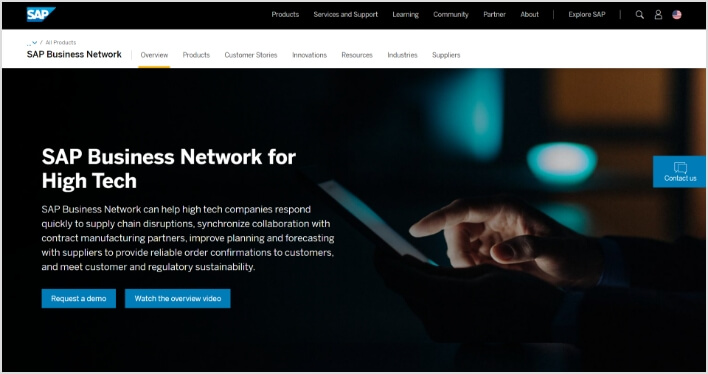
The SAP Business Network web portal is a robust and user-friendly digital platform offered by SAP, a global leader in enterprise solutions. This portal serves as a gateway to the comprehensive suite of tools and services within the SAP Business Network ecosystem.
It empowers businesses, suppliers, partners, and customers to seamlessly connect, collaborate, and streamline their operations in one unified platform for enhanced efficiency and informed decision-making.
Here are the features of SAP Business Network.
- Electronic catalogs
- eSourcing
- Analytics and reporting on purchases and sales
- eInvoicing
- Procurement automation
- Multi-language and multi-currency support
-
Oracle Procurement Cloud
Oracle Procurement Cloud is a centralized hub or portal that serves as a comprehensive hub where businesses can efficiently manage their procurement processes, collaborate with suppliers, and drive effective supply chain operations.
With its robust features and user-friendly interface, the portal contributes to enhanced procurement efficiency, stronger supplier relationships, and informed decision-making within supply chain management.
Here are the features of Oracle Procurement Cloud.
- Automated Invoice Processing
- Real-time analytics and reports
- Inventory level management
- Supplier risk identification
-
IBM – Supplier Web Portal
The IBM Supplier portal is where suppliers and buyers exchange goods and ideas in one virtual hub. The site facilitates buyers to scroll through, browse the offerings, place orders, and discuss terms virtually.
Here are the features of the IBM Supplier Portal.
- Offers collaborative forecasting
- Integrates marketplace
- Provides supplier training resources
- Shares important documents
- Multi-language support
- Real-time collaboration
-
Chase Bank – Online Banking Web Portal
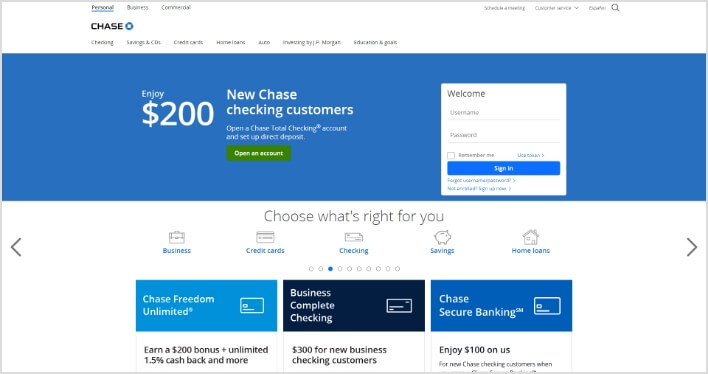
Chase, part of JPMorgan Chase & Co., is a global financial powerhouse offering a vast array of services. The website acts as a gateway to its diverse portfolio, from everyday banking needs like checking and savings accounts to more specialized services such as investment planning and business banking.
With a user-friendly interface, it not only facilitates transactions but also educates users on financial opportunities, ensuring they make informed decisions.
Here are the features of the Chase Online web portal.
- Cardless ATM access
- Budget and expense insights
- Biometric authentication
- Investment tracking
- Debt management tools
- Wire transfer
-
Bank of America – Online Banking Portal
Bank of America online banking brings banking to the digital age, providing a seamless and secure way to manage your finances. Access your accounts, pay bills, and more, all from the comfort of your device from one centralized portal. The portal also provides complete retail banking features and manages all banking features from one standard website.
Here are the features of Bank of America’s online banking portal.
- Cardless ATM access
- Digital receipts
- Customizable dashboard
- Document storage
- Mortgage tracker
- Auto loan payment calculator
-
Citi Bank – Online Banking
Citi Online Banking offers a seamless platform for personal finance management, empowering you to take charge of your financial future. From overseeing funds to paying bills, this platform ensures convenient control over your finances. Manage grant funds online and access a suite of unique features for a comprehensive banking experience from the single portal.
Here are the features of the Citi Online Banking web portal.
- Track federal grants
- Financial insights dashboard
- AI-Powered alerts
- Real-time expense analysis
- Secure document vault
- Intelligent bill payment
-
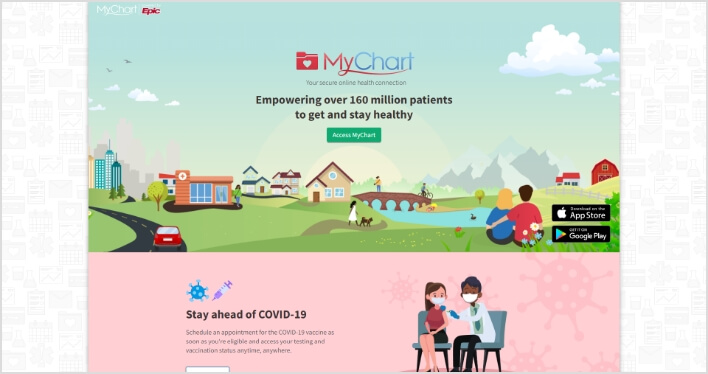
MyChart – Online Healthcare Web Portal
MyChart is a digital health platform that provides patients with centralized access to their health information. This portal has over 160 million patients, enabling patients to take control of their health data, schedule appointments, and communicate with healthcare providers. Whether it’s viewing lab results, managing medications, or understanding medical bills, everything is available at your fingertips.
Here are the features of the MyChart patient portal.
- Medical records access
- Test results viewing
- Appointment scheduling
- Health reminders
- Educational resources
- Secure messaging
-
FollowMyHealth – Patient Web Portal
FollowMyHealth is one of the best patient portals designed to empower individuals to manage their health information securely and conveniently. This patient web portal offers a centralized location for patients to access their medical records, communicate with healthcare providers, and take control of their health journey.
Here are the features of the FollowMyHealth patient portal.
- Medical history access
- Direct messaging to healthcare professionals
- Online lab results
- Appointment reminders
- Telehealth options
- Secure document sharing
-
Oracle Cerner – Patient’s Engagement Web Portal:
Cerner’s patient portal is designed to provide patients with a secure and convenient way to access patients’ personal health information and engage in effective communication with their medical professionals. This digital platform serves as a bridge between patients and healthcare providers, enhancing the overall healthcare experience.
Here are the features of the Cerner patient portal.
- Medication management
- Medical records access
- Device connectivity
- Data analytics
-
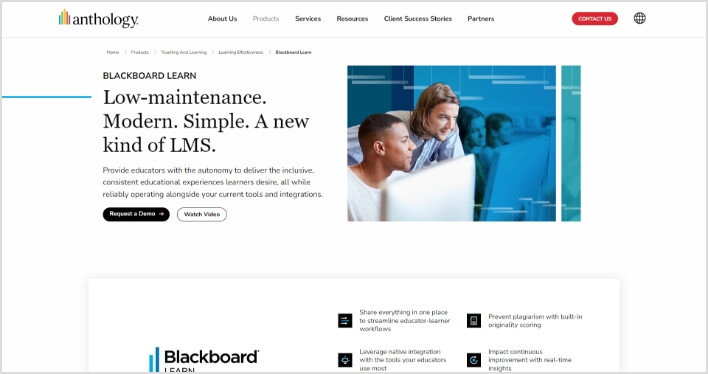
Blackboard Learn – Student and Faculty Web Portals
Blackboard Learn serves as a consolidated student and faculty portal to engage in modern and interactive learning experiences. Developed by Blackboard Inc., this portal serves as a comprehensive hub where educators and students can engage in interactive and collaborative learning experiences, access course materials, and facilitate communication.
Here are the features of the Blackboard Learn web portal.
- Virtual classrooms
- Content sharing
- Course materials access
- Calendar and reminders
- Portal login
- Attendance tracking
-
Canvas Network– Educator’s E-learning Web Portal
Canvas Network’s educator’s e-learning web portal empowers educators with access to professional development courses and programs that help them thrive and succeed in their careers. Its interface offers interactive forums, easy course access, and effective communication tools, enhancing education through collaboration and seamless interaction.
Here are the features of the Canvas web portal.
- Online courses
- Peer review
- Multimedia integration
- Discussion boards
-
Moodle – eLearning Platform
Moodle is an open-source learning platform that offers educators and learners a toolset to create personalized learning environments. With a global presence, Moodle is utilized by educational institutions, organizations, and individuals to facilitate online learning, collaboration, and communication.
Here are the features of the Moodle web portal.
- Content sharing
- Moodle roadmap
- Progress tracking
- Feedback mechanisms
-
Microsoft SharePoint – Enterprise Intranet Portal
Microsoft SharePoint is one of the most widely used intranet portal platforms for enterprises and mid-size businesses. SharePoint serves as a centralized hub where employees can access company news, internal documents, team sites, and collaboration tools. The platform integrates with the broader Microsoft 365 ecosystem, making it a go-to solution for organizations already using Outlook, Teams, and OneDrive.
Here are the features of Microsoft SharePoint.
Document management and version control Search across organizational content Team sites and communication sites Role-based access control Workflow automation with Power Automate Integration with Microsoft 365 apps -
Workday – HR and Employee Self-Service Portal
Workday is a cloud-based HR and finance platform that provides employees with self-service access to payroll, benefits, time tracking, and career development tools. The portal gives HR teams a centralized view of workforce data while employees can manage their own information, submit requests, and access company policies without contacting HR directly.
Here are the features of the Workday employee portal.
Payroll and benefits management Time tracking and absence requests Performance reviews and goal setting Learning and development resources Organizational charts and directories Mobile access for remote employees -
Salesforce Experience Cloud – Customer Engagement Portal
Salesforce Experience Cloud (formerly Community Cloud) is a customer portal platform that allows businesses to create branded self-service experiences for their customers. The portal connects directly to Salesforce CRM data, giving customers access to their account information, support cases, knowledge articles, and community forums from one interface.
Here are the features of Salesforce Experience Cloud.
Branded self-service portal builder Knowledge base and help articles Case management and ticket tracking Community forums and discussion boards Account and order management Integration with Salesforce CRM data -
Zendesk – Customer Support Portal
Zendesk provides a customer support portal that serves as a centralized hub where customers can submit and track support tickets, browse help articles, and engage with community forums. The platform is used by businesses across industries to offer structured self-service support that reduces the volume of direct support requests.
Here are the features of the Zendesk customer portal.
Ticket submission and status tracking Searchable knowledge base Community forums AI-powered answer suggestions Multi-language support Custom branding and theming -
Amazon Seller Central – eCommerce Seller Portal
Amazon Seller Central is the primary portal for third-party sellers on Amazon’s marketplace. The portal provides sellers with tools to list products, manage inventory, fulfill orders, run advertising campaigns, and analyze sales performance. With millions of active sellers worldwide, Amazon Seller Central is one of the most widely used eCommerce portals globally.
Here are the features of Amazon Seller Central.
Product listing and catalog management Inventory tracking across fulfillment centers Order management and shipping tools Advertising campaign management Sales analytics and business reports Customer feedback and review management -
Shopify Admin – eCommerce Store Management Portal
Shopify Admin is the backend portal for Shopify store owners where they manage every aspect of their online business. From adding products and processing orders to tracking analytics and managing customer data, the Shopify Admin portal centralizes all store operations into a single dashboard accessible from any device.
Here are the features of the Shopify Admin portal.
Product and inventory management Order processing and fulfillment Customer data management Sales and traffic analytics App and integration marketplace Multi-channel selling (online, social, in-store) -
Lemonade – Digital Insurance Portal
Lemonade is a digital-first insurance company that provides policyholders with a portal to manage their renters, homeowners, pet, car, and life insurance policies entirely online. The portal uses AI to handle claims processing, policy adjustments, and customer inquiries, offering a fast and paperless insurance experience.
Here are the features of the Lemonade insurance portal.
AI-powered claims processing Policy management and adjustments Instant quote generation Digital document storage Payment and billing management In-app claims filing with photo upload -
Progressive – Insurance Customer Portal
Progressive’s online portal gives policyholders centralized access to their auto, home, and commercial insurance policies. The portal allows users to view policy details, make payments, file and track claims, access digital insurance cards, and manage coverage options without calling an agent.
Here are the features of the Progressive insurance portal.
Policy overview and management Online claims filing and tracking Digital insurance ID cards Payment scheduling and history Coverage comparison tools Discount management and bundling options -
Salesforce Partner Community – Partner Relationship Portal
Salesforce Partner Community is a portal that allows businesses to manage their partner ecosystem from one centralized platform. Partners can register deals, access marketing resources, complete training modules, and track their performance metrics. The portal connects directly to Salesforce CRM, giving both the company and its partners real-time visibility into the sales pipeline.
Here are the features of Salesforce Partner Community.
Deal registration and tracking Partner training and certification Marketing resource library Lead distribution and management Performance dashboards and analytics Co-branded marketing tools -
Cisco Partner Portal – Technology Partner Portal
Cisco’s partner portal serves as a centralized hub for Cisco’s global network of resellers, integrators, and service providers. The portal provides partners with access to product information, pricing, certifications, incentive programs, and technical resources needed to sell and support Cisco solutions.
Here are the features of the Cisco Partner Portal.
Product catalog and pricing access Certification and training programs Incentive and rebate tracking Technical documentation and resources Deal registration and quoting tools Partner performance scorecards That completes our list of top web portals across industries. Let’s move on to frequently asked questions to help you understand web portals in more detail.
Vendor Portal Examples
A vendor portal is a platform that allows vendors, suppliers, and business partners to interact and collaborate with an organization. This portal is a centralized hub for managing and accessing procurement information, communicating with the organization, and managing orders and invoices from a single user interface.
The vendor portal streamlines communication enhances transparency and facilitates efficient business processes between the organization and its vendors.
Here are examples of vendor portals with their features:
Looking to Build a Custom Web Portal for Your Business?
With 15+ years of experience, Space-O Technologies builds custom web portals for healthcare, education, finance, and enterprise businesses. Our team can take your portal from concept to launch in no time.
Knowing the examples of vendor portals, let’s check the examples of financial and banking web portals in the next section.
Finance or Banking Portal Examples
A finance or banking portal serves as an online hub for individuals and businesses to access various financial and banking services. Such banking portals help individuals and businesses with bank account management, online services like money transfers, managing requests, applying for loans, paying EMIs online, and balancing information from one centralized hub.
The finance or banking web portals provide personalized access to the bank portal where the individual with authentication can only access the bank account and its information.
Here are examples of banking and financial web portals:
Patient Portal Examples
A patient portal provides patients with direct access to their medical information and healthcare services. Through this portal, patients manage appointments, view test results, request prescription refills, and communicate with their healthcare providers. Patient access to the portal enhances convenience and engagement in their healthcare journey.
Here are the examples of patient web portals:
Want to Hire Web App Developers?
We have skilled web app developers who have worked on various projects across several industries like healthcare, education, and travel industries.
Education Portal Examples
An education portal is a consolidated platform that provides students and faculty with exclusive online resource access through portal login. The education web portal offers course materials, relevant content, and collaborative tools like online forums, promoting seamless interaction and learning.
Here are the examples of education web portals:
Employee and Intranet Portal Examples
An employee or intranet portal is a private, internal platform that serves as a centralized digital hub for an organization’s workforce. These portals provide access to internal communications, HR self-service tools, document management, and cross-department collaboration features from a single login.
Here are 2 examples of employee and intranet portals:
Customer Self-Service Portal Examples
A customer self-service portal is an online platform where customers can independently manage their accounts, find answers to common questions, submit support tickets, and access documentation without contacting support directly. These portals help businesses reduce support costs while giving customers 24/7 access to the services they need.
Here are 2 examples of customer self-service portals:
eCommerce Portal Examples
An eCommerce portal is an online platform that provides sellers, vendors, or administrators with tools to manage product listings, orders, inventory, payments, and customer interactions from a centralized dashboard. Unlike a standard online store that faces the customer, an eCommerce portal focuses on the backend operations that keep the business running.
Here are 2 examples of eCommerce portals:
Insurance Portal Examples
An insurance portal is an online platform that provides policyholders, agents, and brokers with access to policy information, claims management, premium payments, and documentation from a single interface. Insurance portals streamline the traditionally paper-heavy insurance process by digitizing key workflows and giving users self-service capabilities.
Here are 2 examples of insurance portals:
Partner and B2B Portal Examples
A partner or B2B portal is an online platform designed for businesses to manage relationships, share resources, and collaborate with their external partners, distributors, or resellers. These portals provide a secure environment where partner organizations can access sales tools, training materials, deal registration, and performance data.
Here are 2 examples of partner and B2B portals:
If you’re planning to create one, our comprehensive web portal development guide outlines all the key steps and technical considerations.
Let Us Help You Build Your Web Portal
From this list of web portals, you can see that the best web portals share common traits: they centralize services, personalize user experiences, and automate workflows that previously required manual effort. Whether you need a customer self-service portal, a vendor management portal, a patient portal, or an internal employee portal, the right solution starts with understanding your users and your business processes.
As a web portal development services provider with 15+ years of experience and 350+ web solutions delivered, Space-O Technologies builds custom web portals for healthcare, education, finance, eCommerce, and enterprise businesses. Our team handles everything from portal architecture and UX design to development, integrations, and post-launch support.
Check out our project portfolio to see how we have built web portals and platforms across industries. Here are three recent examples:
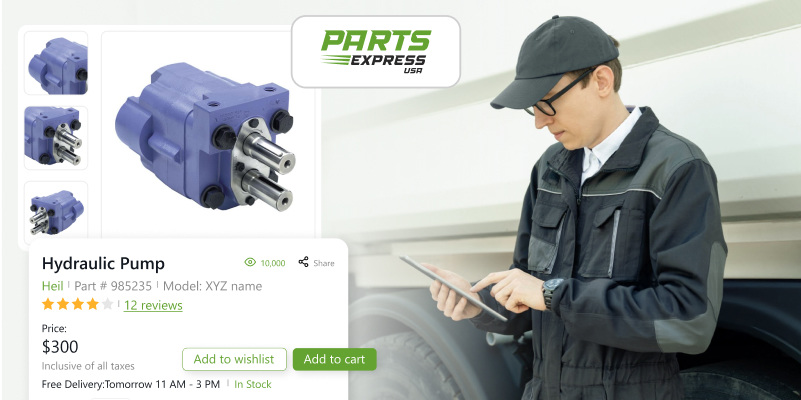
Parts Express
A centralized eCommerce marketplace for waste management equipment connecting buyers and sellers across the USA. Built with Laravel, PHP 8.1, and AWS, featuring multi-tier registration, advanced search, Stripe payments, multi-store seller dashboards, and contract pricing for municipalities.
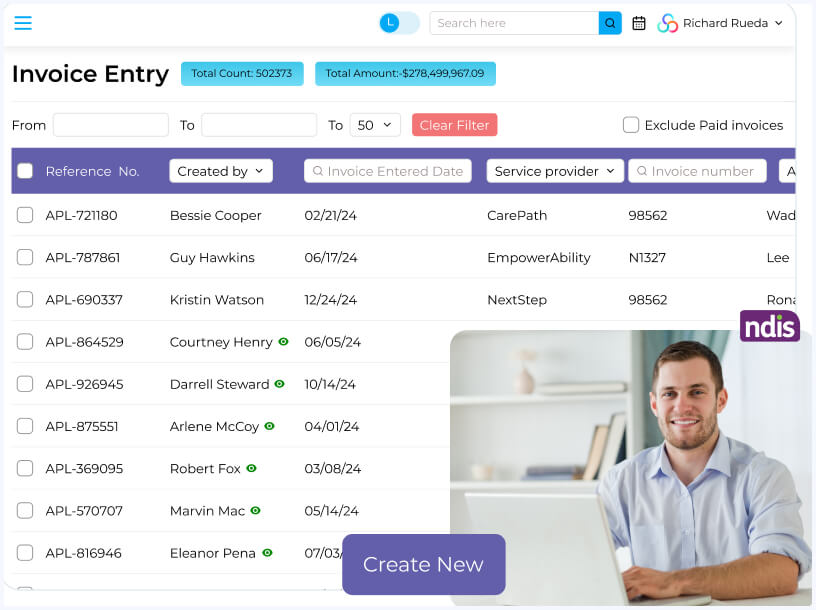
RaeCRM
An NDIS fund management platform helping Australian disability support participants, coordinators, and service providers manage claims and invoices. Built with Laravel and MySQL, featuring real-time client tracking, automated claim processing, NDIS budget oversight, and Docsumo API integration for document management.
Fyule Video Lab
An online learning platform enabling students and teachers to engage through art-integrated video projects and creative contests. Secured $1.4 million in funding, serving 100,000+ students across 150+ schools. Built with Flutter, Laravel, and MySQL with LMS, leaderboards, and analytics.

Have a web portal idea or looking to upgrade an existing platform? Get a free consultation to discuss your requirements with our team. Share your project scope, target users, and integration needs, and we will provide a detailed estimate with timeline, technology recommendations, and a clear development roadmap.
Let’s move on to the next section with frequently asked questions to clear your doubts and help you understand web portals precisely.
Frequently Asked Questions About Web Portals
What are the benefits of using web portals?
Here are the 4 core benefits that web portals provide:
- Centralized access to information
- Improved communication
- Enhanced user engagement
- Streamlined business processes.
What is a partner web portal?
A partner portal is an online platform designed to facilitate seamless communication, collaboration, and interaction between a company and its external partners. It serves as a centralized hub where partners can access resources, share information, and engage in joint activities.
What is a horizontal portal?
A horizontal portal is a versatile online platform catering to diverse site visitors, spanning industries. They provide general information, services, and resources, exemplified by search engines like Google, offering broad access to information and services.
What is a vertical portal?
A vertical portal is an industry-specific platform that targets specific fields, offering customized content, tools, and resources, for distinct audiences. For instance, an employee portal caters to company personnel, providing tailored information, collaboration tools, and HR resources.
What are the different types of web portals?
Common types include customer portals for client self-service and account management, employee portals for internal HR and communication tools, B2B portals for partner and supplier collaboration, e-commerce portals for online shopping, educational portals for course management and learning, healthcare portals for patient records and appointments, and community portals for user networking and content sharing. Each type is designed to serve specific audiences and business needs.
What features should a web portal have?
Essential features include secure user authentication, personalized dashboards, robust search functionality, user profile management, role-based access control, document management, communication tools like messaging and notifications, reporting and analytics, mobile responsiveness, and integration with existing systems. Additional important features are content management, workflow automation, and strong security measures including data encryption and regular backups.
Can a web portal integrate with existing CRM, ERP, or third-party systems?
Yes, system integration is a core capability of modern web portals. Most custom-built portals integrate with CRM systems like Salesforce, HubSpot, or Dynamics 365, ERP systems like SAP, Oracle, or NetSuite, payment gateways like Stripe or PayPal, and communication tools like Slack or Microsoft Teams.
Portals can also connect to cloud platforms such as AWS, Azure, or Google Cloud, and support custom REST or GraphQL APIs. The goal is to make your portal a single point of access that connects all your business systems and eliminates data silos.
What security measures should a web portal include?
Every web portal should include multi-layered security to protect user data and meet compliance standards. Key security measures include SSL/TLS encryption for data in transit, AES-256 encryption for data at rest, multi-factor authentication (MFA), single sign-on (SSO), and role-based access control (RBAC) with granular permissions.
Depending on your industry, your portal may also need to meet HIPAA, GDPR, SOC 2, or PCI-DSS compliance requirements. Regular vulnerability assessments, penetration testing, and automated monitoring are also essential for ongoing protection.
Should I use off-the-shelf portal software or custom web portal development?
It depends on your requirements. Off-the-shelf web portal software like SharePoint, WordPress, or Liferay works well for standard use cases with limited customization needs, with starting costs around $15,000 and a 1-3 month timeline.
Custom web portal development is the better choice when you need unique workflows, complex integrations, role-based access, or industry-specific compliance such as HIPAA or GDPR. Custom portals typically start at $50,000 and take 4-6 months.
A web portal development company can help you evaluate which approach fits your budget, timeline, and scalability needs.
What technologies are used to build web portals?
Modern web portals are built using frontend technologies like React, Angular, or Vue.js for responsive user interfaces, and backend frameworks like Node.js, Python (Django/Flask), PHP (Laravel), or Java (Spring Boot) for server-side logic.
Database options include PostgreSQL, MySQL, and MongoDB. Cloud platforms like AWS, Azure, or Google Cloud handle hosting and scalability. For enterprise portals, platforms like Liferay, SharePoint, or custom solutions built on a microservices architecture are common choices.



 All our projects are secured by NDA




 4.8
4.8