
 By
By 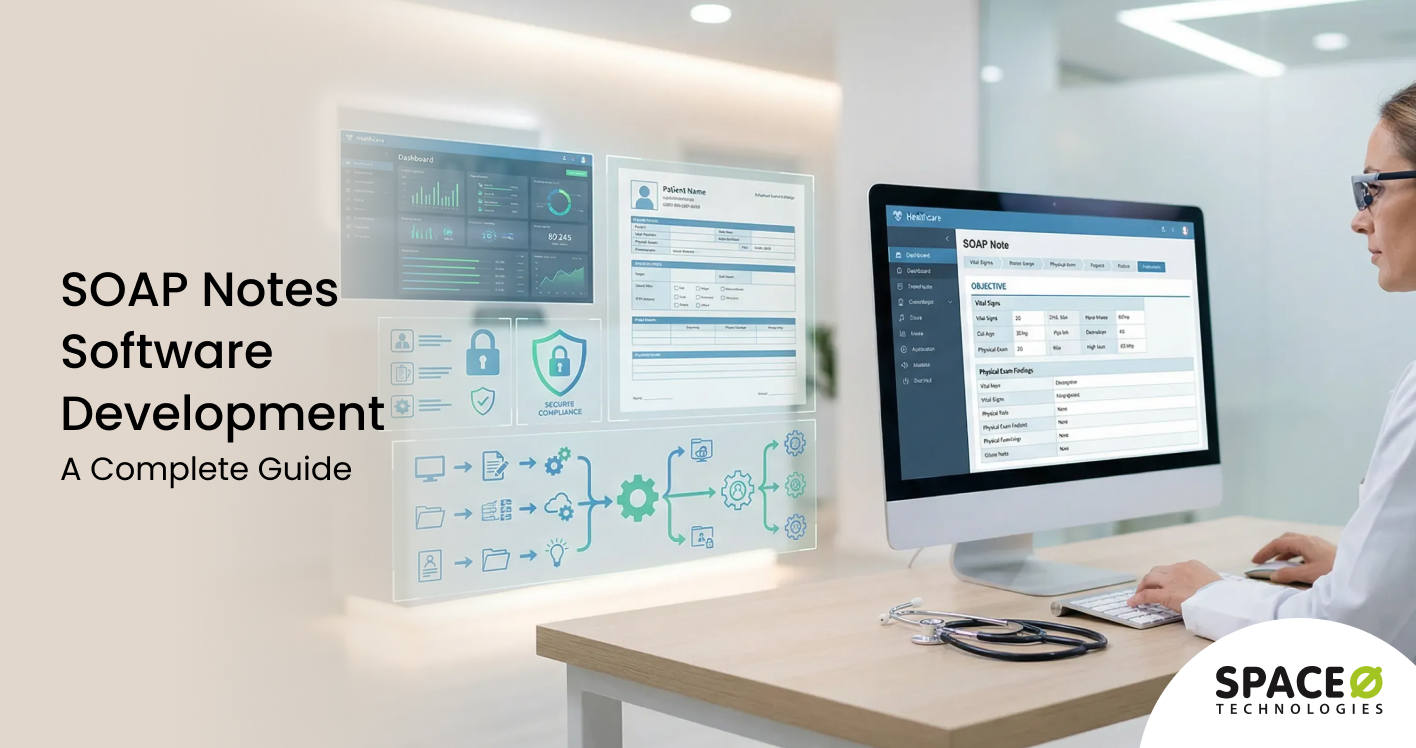
Contents
Clinical documentation remains one of the biggest time drains in healthcare today. Physicians spend hours writing notes instead of focusing on patient care. Paper-based records and outdated templates slow down every visit. SOAP notes provide structure to this process, but manual workflows still hinder providers.
SOAP notes software development addresses this challenge by digitizing structured clinical documentation. According to Precedence Research, the global clinical documentation improvement market reached $4.88 billion in 2024 and is projected to reach $10.44 billion by 2034. This rapid growth signals a strong demand for better documentation tools across the medical industry.
Still, many clinics rely on generic platforms that fail to match their unique workflows. That’s why many providers partner with a healthcare software development company to build custom SOAP note software tailored to their specialty and practice size.
The right solution reduces charting time, improves record accuracy, and supports regulatory compliance from day one. This guide covers everything you need to know about building SOAP notes software successfully.
What is SOAP Notes Software Development?
SOAP Notes software development refers to the process of designing and building a digital solution that enables healthcare providers to document patient encounters using the standardized SOAP framework: Subjective, Objective, Assessment, and Plan.
Instead of relying on paper-based records or basic documentation templates, healthcare organizations develop custom SOAP Notes software to create structured, secure, and workflow-driven clinical documentation systems. These solutions can function as standalone platforms or integrate seamlessly with EHR, practice management, billing, and telehealth systems.
Understanding the SOAP framework
A well-designed SOAP Notes system is built around four core components:
- Subjective: Captures the patient’s reported symptoms, concerns, and medical history shared during the visit.
- Objective: Records measurable clinical data such as vital signs, lab results, and physical examination findings.
- Assessment: Includes the clinician’s diagnosis or clinical interpretation of the patient’s condition.
- Plan: Outlines treatment recommendations, medications, follow-up instructions, and next steps.
SOAP Notes software digitizes this structure, ensuring consistent documentation across providers and specialties while reducing errors and incomplete records.
Why Invest in SOAP Notes Software Development: 6 Key Benefits
Building dedicated SOAP notes software delivers measurable gains for clinical teams and administrators alike. Practices that invest in tailored platforms reduce charting time and improve documentation quality. These benefits extend well beyond simple digital record keeping. Below are the most compelling reasons to build a custom solution.
1. Reduced documentation time for clinicians
Manual charting consumes a significant portion of every provider’s workday. Custom software automates repetitive entries through templates, voice input, and smart defaults. Clinicians complete notes faster without sacrificing detail or accuracy. Shorter documentation cycles mean more time spent directly with patients.
2. Improved accuracy and consistency
Handwritten notes and unstructured digital entries frequently introduce errors into patient records. Structured input fields and validation rules prevent incomplete or inconsistent documentation. Every note follows the same logical format regardless of which provider creates it. Standardized records significantly reduce miscommunication among care team members.
3. Stronger regulatory compliance
Healthcare regulations demand accurate, timely, and accessible patient documentation at all times. SOAP notes software enforces compliance by requiring fields and maintaining an audit trail. HIPAA security controls protect sensitive patient information throughout the documentation workflow. Built-in compliance features help practices avoid costly penalties and legal exposure.
4. Better billing and reimbursement outcomes
Thorough clinical documentation directly supports accurate medical coding and billing submissions. Incomplete notes lead to claim denials that delay revenue collection for weeks or months. SOAP notes software ensures every encounter captures the details insurers require for processing. Practices recover more revenue by consistently reducing coding errors and rejected claims.
5. Enhanced care coordination across providers
Multiple clinicians often treat the same patient across different departments and facilities. Structured SOAP notes give every provider a clear, readable summary of past encounters. Specialists access relevant history without requesting separate records from other offices. Seamless information sharing improves treatment decisions and patient safety outcomes.
6. Scalability for growing practices
Off-the-shelf tools often struggle to accommodate expanding patient volumes and new specialties. Custom platforms scale alongside your practice without forcing disruptive migrations later. You add new templates, user roles, and integrations as your needs evolve. Purpose-built software grows with your organization instead of limiting it.
These advantages make a strong case for investing in dedicated SOAP notes platforms. The right software transforms documentation from a burden into a strategic asset.
Need Expert SOAP Notes Software Development Support?
Access experienced healthcare developers who understand clinical workflows, compliance, and documentation standards. Build secure, efficient tools for your practice today.

Key Features Every SOAP Notes Software Needs
A well-designed platform must address clinical, administrative, and compliance requirements simultaneously. Each feature should reduce friction in the documentation process for end users. The right combination of capabilities turns your software into an indispensable clinical tool. Below are the essential features to include in your development roadmap.
1. Customizable SOAP note templates
Different specialties require different documentation structures for patient encounters. Dermatologists, cardiologists, and primary care physicians all capture distinct clinical data points. Template customization lets each provider configure forms that match their specific workflow. Pre-built fields accelerate charting while allowing flexibility for unique cases.
2. Voice-to-text dictation
Many clinicians prefer to speak their notes rather than type during patient visits. Integrated speech recognition converts voice input into structured SOAP entries in real time. This feature significantly reduces charting time and lets providers maintain eye contact with patients. Accurate transcription tools improve both efficiency and the overall patient experience.
3. EHR and EMR integration
SOAP notes software must connect seamlessly with existing electronic health record platforms. Integration ensures documentation flows directly into the patient’s comprehensive medical record automatically. Providers avoid double entry and maintain a single source of truth for all clinical data. Standards like HL7 FHIR enable reliable, secure data exchange between systems.
4. Role-based access control
Not every staff member needs full access to all patient documentation and records. Role-based permissions precisely restrict data visibility to each user’s clinical responsibilities. Physicians can view complete notes, while administrative staff can access only billing-relevant sections. Granular access controls strengthen HIPAA compliance and effectively protect patient privacy.
5. Automated coding suggestions
Clinical documentation feeds directly into the billing and revenue cycle management process. Smart software analyzes SOAP note content and suggests appropriate ICD-10 and CPT codes. Automated suggestions reduce manual coding effort and minimize claim rejection rates. Billing teams process encounters faster with fewer errors throughout the revenue cycle.
6. Audit trails and activity logging
Regulatory requirements demand a complete record of every action taken within the documentation system. Audit trails capture who accessed, created, or modified each note and when the change occurred. These logs support compliance audits, legal inquiries, and internal quality reviews. Comprehensive tracking builds trust and accountability across the entire organization.
These features form the foundation of a competitive SOAP notes platform. Prioritize capabilities based on your practice’s most pressing pain points and specialty requirements. A phased approach lets you launch core features first and expand functionality over time.
SOAP Notes Software Development Process
A structured software development process ensures your project stays on track and delivers real clinical value. Each phase builds on the previous one to create a reliable, secure platform. Follow this proven roadmap to successfully build your documentation solution.
Step 1: Gather requirements and define scope
Start by interviewing clinicians, administrators, and billing staff about their documentation needs. Identify the specialties your software must support and the workflows it must streamline. Document specific compliance requirements, including HIPAA, billing standards, and audit capabilities. Clear requirements prevent scope creep and keep the project focused on real priorities.
Step 2: Design the user experience
Create wireframes and prototypes that map every screen and interaction within the application. Prioritize simplicity so clinicians can complete notes with minimal clicks and navigation steps. Test designs with actual providers to validate usability before writing any code. A thoughtful UX design reduces training time and boosts adoption rates after launch.
Step 3: Develop core functionality
Build the SOAP note creation engine, template system, and user management modules first. Implement encryption, authentication, and access controls from the very beginning of development. Follow secure coding practices to prevent vulnerabilities in every component you build. Deliver working features in iterative sprints so stakeholders can provide feedback early.
Step 4: Integrate with existing systems
Connect your platform to EHR systems, billing software, and lab information systems through APIs. Use HL7 FHIR and other healthcare standards for reliable, secure data exchange. Test every integration point thoroughly to confirm data accuracy and message delivery. Seamless connectivity ensures your software integrates smoothly into existing clinical environments.
Step 5: Conduct comprehensive testing
Execute functional, security, performance, and usability testing before any production deployment. Verify that clinical workflows function correctly under realistic patient-volume conditions. Involve actual providers in acceptance testing to catch issues that technical testers miss. Resolve every identified defect before moving to the launch phase.
Step 6: Deploy and provide ongoing support
Launch the platform with dedicated support resources available for immediate troubleshooting needs. Monitor system performance, error rates, and user feedback closely during the initial weeks. Gather real-world usage data to guide future improvements and feature additions. Establish maintenance routines that keep your platform secure and reliable over the long term.
A disciplined process prevents expensive mistakes and delivers a platform clinicians actually want to use. Invest in each phase to build documentation software that stands the test of time.
Looking for a Reliable SOAP Notes Development Partner?
Collaborate with healthcare software experts who deliver compliant, user-friendly clinical tools on time and within budget. Get your project started with expert guidance today.
Technology Stack for SOAP Notes Software Development
Choosing the right technologies shapes your platform’s performance, security, and scalability. Healthcare applications demand specialized infrastructure that meets strict compliance standards. Below is a recommended technology stack for building clinical documentation tools.
| Layer | Recommended Technologies |
|---|---|
| Frontend | React.js, Angular, or Vue.js for web; React Native or Flutter for mobile. |
| Backend | Node.js, Python (Django/Flask), or Java (Spring Boot). |
| Database | PostgreSQL or MongoDB for storing structured clinical data. |
| Cloud Hosting | AWS (HIPAA-eligible), Microsoft Azure, or Google Cloud Healthcare API. |
| Authentication | OAuth 2.0, SAML, and multi-factor authentication (MFA). |
| Integration Standards | HL7 FHIR R4, HL7 v2, RESTful APIs. |
| Speech Recognition | Google Cloud Speech-to-Text, AWS Transcribe Medical, or Nuance Dragon. |
| Encryption | AES-256 for data at rest; TLS 1.2+ for data in transit. |
| DevOps | Docker, Kubernetes, CI/CD pipelines with automated security scanning. |
Cloud-native architectures provide the flexibility and compliance controls healthcare applications require. Your development team should select tools they know well while ensuring compliance with all requirements. The right stack balances developer productivity with clinical-grade security and reliability.
Common Challenges in SOAP Notes Software Development
Building clinical documentation tools involves unique obstacles that general software projects rarely encounter. Below are the most frequent issues developers face and practical strategies for overcoming them.
Challenge 1: Meeting HIPAA and regulatory compliance
Healthcare software must comply with strict federal and state regulations governing patient data protection. HIPAA requires encryption, access controls, audit trails, and business associate agreements throughout the system. Non-compliance exposes organizations to fines ranging from $100 to $50,000 per violation. Many physicians identify excessive documentation requirements as their leading cause of burnout. Your software must reduce this burden while still meeting every regulatory obligation.
How to overcome this challenge
- Embed HIPAA security controls into the architecture from the first sprint of development.
- Implement end-to-end encryption for all patient data in transit and at rest.
- Build comprehensive audit trails that automatically log every access and modification event.
- Conduct regular security assessments and penetration testing throughout the development lifecycle.
Challenge 2: Designing for clinical usability
Physicians and nurses work under intense time pressure during every patient encounter. Overly complicated interfaces slow documentation and frustrate clinicians who prioritize speed above all else. Poor usability drives low adoption rates even when the software meets every technical requirement. Balancing feature richness with simplicity requires a deep understanding of clinical workflows.
How to overcome this challenge
- Involve practicing clinicians in UX design sessions from the earliest project stages.
- Minimize the number of clicks required to complete a standard SOAP note entry.
- Provide keyboard shortcuts, voice input, and smart autofill to speed up documentation.
- Conduct usability testing with real providers before every major feature release.
Challenge 3: Integrating with diverse EHR platforms
Healthcare facilities run different EHR systems with varying levels of API support and openness. Some platforms offer modern FHIR APIs, while others rely exclusively on legacy HL7 v2 messaging. Building connectors for multiple systems multiplies development effort and testing complexity. Lack of standardization across vendors creates persistent interoperability headaches.
How to overcome this challenge
- Prioritize FHIR-based integrations for modern platforms and use middleware for legacy systems.
- Design a flexible integration layer that supports multiple protocols without major code changes.
- Partner with EHR vendors early to access sandbox environments for thorough testing.
- Implement error handling and retry logic to gracefully handle connectivity failures.
These obstacles are manageable with proper planning and experienced healthcare development teams. Providers who address them proactively build more reliable and widely adopted platforms. Investing in the right solutions early saves significant time and cost throughout the project.
Facing SOAP Notes Development Challenges?
Our experienced teams deliver reliable, HIPAA-compliant clinical documentation software on time and within budget. Leverage our proven processes and technical expertise to get your project on track.
How Much Does SOAP Notes Software Development Cost?
Development costs vary based on project scope, feature complexity, and compliance requirements. Understanding these cost drivers helps you budget accurately for your project.
Cost factors that influence your investment
- Feature complexity: Voice dictation, AI coding suggestions, and analytics dashboards substantially increase development effort.
- Number of integrations: Each EHR, billing, or lab system connection adds development, testing, and maintenance expenses.
- Compliance requirements: HIPAA security controls, encryption, and audit trails add to the overall project budget.
- Platform coverage: Supporting web, iOS, and Android multiplies frontend development and testing work.
- Customization depth: Specialty-specific templates and configurable workflows require additional design and development time.
- Ongoing maintenance: Post-launch updates, security patches, and feature additions require dedicated ongoing resources.
Typical SOAP notes software development cost ranges
| Project Scope | Estimated Cost Range | Timeline |
|---|---|---|
| Basic SOAP notes application (single specialty) | $30,000 to $80,000 | 8 to 14 weeks |
| Mid-range platform (multiple specialties, EHR integration) | $80,000 to $250,000 | 14 to 28 weeks |
| Enterprise solution (full integrations, AI features, analytics) | $250,000 to $500,000+ | 28 to 52 weeks |
| Legacy system modernization with SOAP notes module | $100,000 to $300,000 | 16 to 36 weeks |
These estimates cover design, development, testing, deployment, and initial support phases. Actual costs depend on your specific requirements, technology choices, and team composition. A phased approach lets you launch core features first and expand based on real user feedback.
Best Practices for Successful SOAP Notes Software Development
Following proven strategies improves your chances of delivering a platform clinicians love to use. Apply them from the start to avoid common pitfalls and wasted resources.
1. Put the clinician’s needs at the center of every decision
Design every screen, feature, and workflow around how providers actually document patient encounters. Observe real charting sessions to understand pain points that surveys and interviews miss. Clinician-centered design produces tools that reduce documentation burden rather than add to it. Software built without provider input often sits unused despite significant development investment.
2. Build compliance into the foundation
Never treat HIPAA compliance as a feature you add after core development finishes. Encrypt patient data, enforce access controls, and log all activity from the very first build. Retrofitting security into an existing application costs far more than building it correctly upfront. Compliance-first development protects your organization and your patients from the start.
3. Adopt an iterative development approach
Release working software in short cycles rather than building everything before launch. Early feedback from clinical users reveals problems that internal testing frequently overlooks. Iterative delivery reduces risk by catching issues before they compound into larger defects. Providers see progress regularly and stay engaged throughout the development journey.
4. Prioritize integration from day one
Plan your EHR and billing system connections early in the project rather than treating them as add-ons. Integration architecture decisions fundamentally affect database design, security models, and API structures. Late-stage integration work often forces expensive refactoring of previously completed components. Early planning ensures your software fits smoothly into existing healthcare environments.
5. Invest in thorough testing at every stage
Validate functionality, security, performance, and usability before every deployment without exception. Include edge cases, high-volume scenarios, and real clinical workflows in your testing plans. Involve practicing clinicians in acceptance testing to catch issues developers cannot anticipate. Untested healthcare software creates patient safety risks that no organization can afford.
These practices help teams build reliable clinical documentation tools that deliver lasting value. A disciplined approach produces software that clinicians trust and that practices depend on.
Partner with Space-O Technologies for Custom SOAP Notes Software Development
The development of SOAP note software is a strategic investment in better clinical documentation and patient care. The right platform reduces charting time, strengthens compliance, and improves record accuracy across your practice. Success requires careful planning, healthcare expertise, and a commitment to security at every layer.
At Space-O Technologies, we develop healthcare software solutions that support providers, hospitals, and digital health businesses across diverse specialties. Our team understands what it takes to build compliant platforms with clean UX, stable performance, and seamless integration with existing systems. We collaborate closely with your staff to translate clinical needs into documentation tools that reduce friction and improve day-to-day efficiency. To move faster with fewer risks, hire software developers with proven experience in healthcare software delivery.
If you are planning to develop custom SOAP Notes software, consult our healthcare technology experts today. Let Space-O Technologies help you build a secure, compliant, and future-ready documentation solution tailored to your organization’s needs.
FAQs on SOAP Notes Software Development
1. What are SOAP notes in healthcare?
SOAP notes are a structured documentation format used by clinicians during patient encounters. The acronym stands for Subjective, Objective, Assessment, and Plan. Each section captures a specific part of the clinical interaction in logical order. This format ensures consistent, complete medical records across all healthcare specialties.
2. Why should healthcare practices invest in custom SOAP notes software?
Custom software precisely matches your specialty workflows and documentation requirements. Off-the-shelf tools often force providers to adapt their processes to rigid templates. Tailored platforms reduce charting time, improve accuracy, and support regulatory compliance natively. They also integrate smoothly with your existing EHR and billing systems.
3. How long does it take to develop SOAP notes software?
Timelines depend on feature complexity, integration requirements, and platform coverage decisions. A basic single-specialty application may take 8 to 14 weeks to complete. Enterprise platforms with advanced integrations and AI features typically require 28 to 52 weeks. Thorough planning and iterative delivery help prevent costly delays throughout the process.
4. How much does SOAP notes software development cost?
Costs range from $30,000 for basic applications to $500,000 or more for enterprise solutions. Major cost drivers include feature complexity, number of integrations, and compliance requirements. Organizations that follow phased development approaches often manage budgets more effectively over time. Working with experienced healthcare developers helps control spending without sacrificing quality.
5. What compliance standards does SOAP notes software need to meet?
HIPAA is the primary regulatory framework governing patient data protection in the United States. Your software must implement encryption, access controls, audit trails, and secure data transmission. Integration standards like HL7 FHIR ensure interoperability with other healthcare systems. Meeting these requirements protects your organization from penalties and builds patient trust.



 All our projects are secured by NDA




 4.8
4.8