
 By
By 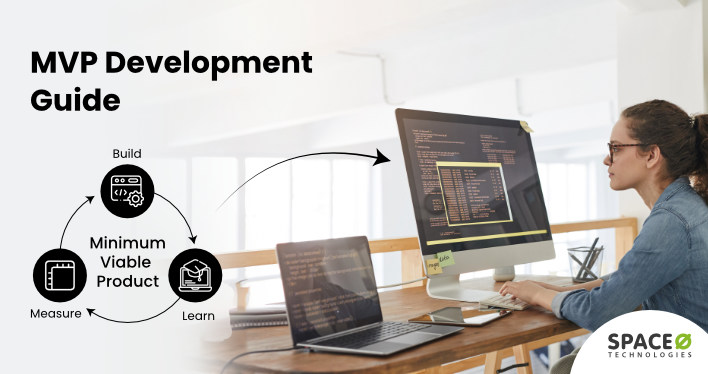
Contents
Every year, thousands of startups exhaust their budgets building products nobody uses. According to CB Insights, 35% of startups fail because there is no market demand for their product. The common pattern is simple. They skip validation and jump straight into full-scale development.
This is the exact problem that MVP development solves. Rather than investing months into a feature-heavy product, you start lean. You build a focused version that tests whether your idea resonates with real users. The demand for this faster, validation-first approach is rising, too. According to Intel Market Research, the global MVP development market was valued at USD 288 million in 2024 and grew to USD 315 million in 2025. It is expected to reach USD 541 million by 2031, reflecting a projected 9.5% CAGR.
This approach has transformed how modern startups build products. Companies like Airbnb, Uber, and Spotify all started with stripped-down versions of their platforms. They validated demand first and scaled only after proving that people actually wanted what they built.
That’s also why many founders choose to work with an MVP development company early in the process. The right team helps you define the core features, launch faster, and avoid building more than you need before real validation.
This guide covers everything about MVP development in detail. You will learn the definition, types, process, cost, and timeline.
What is MVP Development?
MVP development is the practice of creating a product with only its essential features to test a business idea in the real market. The term MVP stands for Minimum Viable Product. Eric Ries popularized this concept in his 2011 book, The Lean Startup. He defined an MVP as the version that lets a team collect the most validated learning with the least effort.
Let’s break down the two key words separately. “Minimum” means you include only the features necessary to deliver core value. No extras, no bonus screens, and no “nice-to-have” additions make the cut. “Viable” means the product still works well enough for someone to use it meaningfully. Users should be able to complete a real task and get genuine value from the experience.
In short, an MVP is the simplest version of your product that delivers real value and collects real feedback. Every decision during development should trace back to this principle.
Why MVP Development Matters for Startups
Building a full product without market validation is one of the most expensive mistakes a founder can make. MVP development exists to prevent that scenario entirely. Here is why it matters across critical dimensions.
1. Validates your idea with real users
Surveys and interviews only reveal what people say they want. An MVP reveals what they actually do when given a real product. You measure signups, task completions, repeat usage, and drop-off points. Behavioral data is far more reliable than verbal feedback from friends or focus groups.
2. Reduces development cost and financial risk
A full product can cost $150,000 or more to build from scratch. An MVP typically costs a fraction of that amount. You invest less money upfront and reserve your budget for features that users genuinely demand. This approach protects your runway and gives you room to pivot if needed.
3. Speeds up time to market
Traditional product development can take a year or longer before launch. MVP development compresses that timeline to weeks or a few months. Reaching the market sooner lets you start learning sooner. In competitive industries, launching first often creates a lasting advantage.
4. Attracts investors with proof of traction
Investors in 2026 rarely fund ideas alone. They fund products with real users, engagement data, and measurable traction. A live MVP with active users shifts investor conversations from “what if” to “what is.” That proof of demand makes fundraising significantly easier and more credible.
5. Creates a feedback loop for smarter product decisions
Your first users become your most valuable advisors. Their behavior tells you which features matter and which ones nobody touches. You build your product roadmap based on evidence, not assumptions. Each iteration brings you closer to genuine product-market fit.
6. Prevents building features nobody wants
Scope creep kills more startups than competition does. Without an MVP-first approach, teams build dozens of features based on guesswork. An MVP forces you to prioritize ruthlessly and launch only what truly matters. Features that users request after launch earn their place in the product.
MVP development is not about cutting corners or shipping something low-quality. It is about building the right thing before building it fully, which is why many businesses choose to hire MVP developers to ensure a strong, validated foundation from the start.
Turn Your Startup Idea Into a Real Product
Space-O Technologies helps founders validate ideas with focused MVP development. Skip the guesswork and build a product that real users actually want from day one.

Core Principles of MVP Development
Every successful MVP follows a small set of foundational principles. These principles keep your team focused, your budget lean, and your product relevant. Ignore them, and you risk building something that looks complete but misses the point entirely.
Focus on one core problem
Your MVP should solve one specific problem exceptionally well. Resist the temptation to address multiple pain points at once. Identify the single most important job your product does for users. Everything else can wait for future versions.
Build only essential features
List every feature you want in your product. Then cut that list aggressively until only the truly essential items remain. If a feature does not directly support the core user task, remove it from the first version. Discipline here saves weeks of unnecessary development work.
Launch fast, learn faster
Speed matters more than perfection in the MVP stage. A good product shipped this month beats a perfect product shipped six months from now. The goal is to start collecting real data as quickly as possible. Delaying your launch delays your learning.
Measure user behavior, not opinions
Track what users do inside your product, not just what they tell you about it. Monitor signups, activation rates, session lengths, and task completion rates. Behavioral metrics reveal the truth about your product’s value. Opinions are subjective, but actions are measurable.
Iterate based on real data
Your MVP is not a finished product. It is the starting point of a learning cycle. Use the data you collect to make informed decisions about what to build next. Each iteration should bring your product closer to what the market actually needs.
These principles form the backbone of lean startup methodology. Follow them consistently, and your MVP becomes a powerful learning engine.
Step-by-Step MVP Development Process
Building a minimum viable product requires a structured approach from start to finish. Skipping steps leads to misaligned features, wasted budgets, and delayed launches. Follow these eight steps to move from idea to market with clarity and confidence.
Step 1: Identify the core problem your product solves
Every successful product starts with a real problem. Define the specific pain point your target users face today. Be precise. “People need better productivity tools” is vague. “Remote teams waste eight hours per week on status meetings across disconnected tools” is actionable.
Step 2: Research your target market and competitors
Study the people who experience this problem most intensely. Understand their demographics, habits, and current workarounds. Analyze competitors already serving this audience and identify gaps they leave open. This research shapes every decision that follows.
Step 3: Define your value proposition
Articulate why someone should choose your product over existing alternatives. Your value proposition should be clear enough to fit in a single sentence. It answers the question: “What does this product do for me that nothing else does?” A strong value proposition becomes the foundation of your entire MVP.
Step 4: Prioritize features ruthlessly
List all the features you envision for the full product. Separate them into “must-have” and “nice-to-have” categories using methods like MoSCoW or RICE scoring. Your MVP includes only the must-have features that directly support the core user journey. Save everything else for future iterations after you collect real feedback.
Step 5: Choose the right tech stack
Select technologies that balance development speed with long-term flexibility. Consider your team’s expertise, scalability needs, and integration requirements. Frameworks like React, Node.js, or Flutter often suit MVP timelines well. The best tech stack is one your team can execute quickly without sacrificing quality.
Step 6: Design the user experience
Create clean, intuitive screens that guide users through the core task efficiently. Focus on clarity over visual complexity in the early stages. A simple UX that completes the job well outperforms a flashy interface that confuses users. Use tools like Figma to prototype screens before development begins.
Step 7: Develop and test the MVP
Build the product in focused development sprints with regular testing checkpoints. Run quality assurance tests across devices and browsers to catch critical issues. Invite a small group of beta users to test the experience before public launch. Fix blocking bugs, but do not chase perfection at this stage.
Step 8: Launch, measure, and iterate
Release your MVP to a targeted group of early adopters. Set up analytics to track key metrics like activation, retention, and task completion. Collect both quantitative data and qualitative feedback from your first users. Use those insights to plan your next development cycle.
Following this process keeps your MVP lean, focused, and aligned with real market needs.
Get Expert Help With Your MVP Build
Our product strategists and developers follow a proven MVP development process. Space-O Technologies takes you from idea to launch with speed, clarity, and zero guesswork.
Types of Minimum Viable Products
Not every MVP requires writing code or building a full application. Several proven formats let you test demand and gather feedback with minimal investment. Choose the type that fits your product idea and current resources best.
1. Landing page MVP
Create a single web page that explains your product’s value proposition and includes a signup form. Measure how many visitors convert into signups to gauge interest. Buffer used this approach by publishing a simple landing page before building any software. The conversion data confirmed demand and guided their development priorities.
2. Wizard of Oz MVP
Present users with what looks like a fully functional product. Behind the scenes, humans manually perform the tasks that software will eventually automate. Zappos used this model by photographing shoes in local stores and fulfilling orders manually. Users experienced a seamless buying process while the team validated market demand.
3. Concierge MVP
Deliver your product’s core value through personal, hands-on service instead of automated software. Work directly with a small group of users to solve their problem manually. This approach generates deep insights into user needs and pain points. Automate only after you understand exactly what users value most.
4. Single-feature MVP
Build a product that does one thing and does it exceptionally well. Instagram stripped away every feature from its predecessor app except photo sharing with filters. That laser focus on a single capability attracted millions of users rapidly. Add more features only after the core experience proves successful.
5. Piecemeal MVP
Combine existing tools and platforms to simulate your product experience without custom development. Use services like Stripe for payments, Airtable for data, and Zapier for automation. This approach lets you test workflows and user behavior at very low cost. Build custom software later once you validate the concept.
6. Video demo MVP
Create a short video that demonstrates how your product will work and measures audience response. Dropbox famously used a three-minute demo video to test interest before the product was finished. Beta signups jumped from 5,000 to 75,000 overnight after the video went live. This format validates demand without writing a single line of production code.
Each MVP type serves a different situation and budget level. The right choice depends on your product’s complexity and your biggest current uncertainty.
How Much Does MVP Development Cost?
MVP development cost is one of the first questions every founder asks about. The answer varies significantly based on complexity, platform, and team structure. Here are realistic ranges for 2026.
Cost ranges by complexity
- Simple MVP (landing page, basic web app, single platform): $10,000 to $25,000.
- Medium complexity (mobile app, user accounts, third-party integrations): $25,000 to $75,000.
- Complex MVP (AI features, real-time data, multi-platform): $75,000 to $150,000+.
Factors that affect cost
Several variables push costs higher or lower within these ranges.
- Feature complexity directly impacts development hours and total budget.
- Platform choice matters because building for web, iOS, and Android costs more than a single platform.
- Design requirements vary between basic functional layouts and polished, branded interfaces.
- Third-party integrations like payment gateways, maps, or messaging APIs add development time.
- Team location and structure influence hourly rates significantly across different regions.
- Post-launch iteration is an often-overlooked cost that every founder should budget for.
The smartest approach is to invest in a focused, lean first version. Then allocate additional budget for improvements based on real user feedback after launch.
Get a Custom MVP Cost Estimate Today
Every project is different. Share your idea with Space-O Technologies and receive a detailed cost breakdown tailored to your product scope and goals.
How Long Does It Take to Build an MVP?
Timelines for MVP development depend on scope, team capacity, and technology choices. Rushing leads to poor quality, while overthinking leads to missed market windows. Here are practical timelines based on project complexity.
Timeline ranges by complexity
- Simple MVP (basic web or mobile app with limited features): 4 to 8 weeks.
- Medium complexity (multi-screen app with user accounts and integrations): 8 to 16 weeks.
- Complex MVP (AI-powered features, real-time processing, multiple platforms): 16 to 24 weeks.
Factors that affect the timeline
- Scope clarity at the start prevents delays caused by mid-project feature changes.
- Team size and experience determine how quickly developers can deliver each sprint.
- Technology choices influence speed because familiar frameworks reduce learning curves.
- Feedback and iteration cycles add time but produce a much stronger final product.
- Third-party dependencies like API approvals or app store reviews can introduce unexpected delays.
Real-World MVP Examples
The most successful tech companies in the world started with stripped-down product versions. These examples show how a focused MVP can validate demand and fuel massive growth.
1. Airbnb: Basic listing website
Brian Chesky and Joe Gebbia listed their own apartment on a simple website to test a bold question. Would strangers pay to sleep in someone else’s home? No payment processing, no reviews, and no mobile app existed at that point. That scrappy listing page confirmed the business concept behind a company now valued at over $70 billion.
2. Dropbox: Demo video before the product was ready
Drew Houston recorded a three-minute video showing how Dropbox would sync files across devices. He shared it in online tech communities and watched the beta signup list explode from 5,000 to 75,000 overnight. The video validated enormous demand without requiring a publicly available product. Houston used that data to secure funding and accelerate development.
3. Uber: One city and one car type
Uber did not attempt a nationwide launch from the start. The first version was a basic app in San Francisco that connected riders with black car drivers. One city, one vehicle category, and one core booking feature. That narrow focus proved demand in a single market before the team expanded city by city.
4. Spotify: Invite-only launch in limited markets
Spotify launched its initial version in a handful of European countries with a restricted music catalog. An invite-only system controlled growth and prevented server overload. The team gathered detailed user data to refine the listening experience. They scaled globally only after confirming strong engagement and retention metrics.
5. Instagram: Single feature that changed everything
Instagram began as Burbn, a feature-heavy location check-in app. The founders noticed users only engaged with one capability: photo sharing with filters. They stripped away every other feature and relaunched with that single function. That focused MVP attracted one million users within about two months of launch.
6. Etsy: Simple marketplace for independent artisans
Etsy’s founders built a basic marketplace in just two and a half months from a Brooklyn apartment. They targeted handmade goods sellers who lacked a dedicated online platform for artisan products. The minimal storefront lets craft sellers list and sell products immediately. That focused MVP carved out a loyal niche that now serves over 96 million active buyers.
Each of these companies started with far less than what they eventually became. Their MVPs proved that a lean, focused launch creates the foundation for massive scale.
Common MVP Development Mistakes to Avoid
Even experienced founders fall into predictable traps during the MVP development process. Recognizing these mistakes early saves months of wasted effort and thousands of dollars. Here are six errors to watch for.
- Packing too many features into the first version: Scope creep is the most common MVP killer. Every additional feature adds development time, testing complexity, and launch delays. Build only what solves the core problem and save the rest for later iterations.
- Skipping market research before building: Some founders fall in love with their idea and start coding immediately. Without proper research, you risk building something nobody needs. Spend time understanding your audience, competitors, and market demand before writing any code.
- Ignoring user feedback after launch: Launching your MVP is not the finish line. It is the starting point. Teams that ignore early user feedback miss critical signals about what works and what fails. Set up analytics and feedback channels from day one and review them regularly.
- Confusing an MVP with a prototype or PoC: Each serves a distinct purpose in the product validation journey. A PoC tests technical feasibility. A prototype tests design and usability. An MVP tests real market demand with actual users. Mixing up these stages leads to misallocated time and budget.
- Choosing the wrong tech stack for speed: Picking unfamiliar or overly complex technologies slows development dramatically. Choose frameworks and tools your team knows well and can execute quickly. You can always refactor or migrate technologies after validating the core product.
- Spending too long before launching to real users: Perfectionism delays learning. Every week you spend polishing instead of shipping is a week of user insights you miss. Launch when your product is functional and stable, not when every pixel is perfect.
Avoiding these pitfalls keeps your development process lean, efficient, and focused on validated learning.
How to Choose the Right MVP Development Company
Selecting the right development partner significantly affects your MVP’s quality, timeline, and success. Not every software development agency understands the lean startup mindset or the urgency startups operate under. Evaluate potential partners across these six criteria.
Industry experience and portfolio
Review the company’s past projects to see if they have built products similar to yours. A strong portfolio demonstrates their ability to deliver across different industries and product types. Ask for case studies with measurable results, not just polished screenshots.
Technical expertise and stack flexibility
Confirm that the team has deep experience in the technologies your project requires. Flexible agencies adapt their tech stack to fit your product’s specific needs rather than forcing a one-size-fits-all approach. Ask about their experience with mobile, web, cloud, and API integrations.
Understanding of lean startup methodology
The best MVP development companies understand that speed and learning matter more than feature count. They should challenge unnecessary features and help you prioritize ruthlessly. Ask how they approach scope definition and feature prioritization during discovery.
Post-launch support and iteration capability
Your MVP needs attention after launch, not just before it. Choose a partner that offers post-launch analytics review, bug fixing, and iterative development services. The first version is only the beginning of your product journey.
Communication and project management approach
Clear communication prevents misunderstandings, scope creep, and missed deadlines. Ask about their project management tools, sprint cadence, and reporting frequency. Regular updates and transparent progress tracking are non-negotiable for MVP timelines.
Client reviews and case studies
Read reviews on platforms like Clutch, GoodFirms, or Google to gauge client satisfaction. Pay attention to feedback about communication, delivery timelines, and post-launch support. Consistent positive reviews across multiple clients signal a dependable partner.
Choosing the right company turns your MVP app development from a risky experiment into a structured path toward product-market fit.
Partner With a Proven MVP Development Company
Space-O Technologies has helped 250+ startups build validated MVPs since 2010. Share your idea and get a custom development plan from our experienced team.
How AI is Accelerating MVP Development in 2026
AI tools have reshaped every stage of the MVP development process, from planning and design to development and testing. To understand how AI agents fit into modern software products, read what OpenClaw is and how it works. The changes are practical, not hypothetical. Here is what faster product building actually looks like this year.
- AI coding assistants reduce development time: Tools like GitHub Copilot, Claude, and Cursor help developers write code, debug issues, and scaffold features faster. Tasks that previously took days now wrap up in hours. Engineering teams spend less time on repetitive work and more time on core product logic.
- AI design tools speed up prototyping: Figma’s AI features and platforms like Galileo AI generate screen layouts from simple text descriptions. Designers still refine every element manually, but the initial starting point arrives much faster. A process that once took days now begins within hours.
- No-code and low-code platforms lower the entry barrier: Tools like Bubble, FlutterFlow, and Webflow allow teams to build functional MVPs without heavy custom coding. A 2024 Gartner report found these platforms reduce delivery time by 50 to 70 percent. Non-technical founders can now test ideas faster than ever before.
- AI analytics identify user patterns earlier: AI-powered tools surface behavioral insights from user data much faster than manual analysis. Session replay tools with AI summarization highlight friction points automatically. Product teams iterate on real feedback within days instead of weeks.
The bottom line is clear. In 2026, the tools to validate faster will exist at every stage. Teams exploring OpenClaw use cases are already seeing how AI agents can cut validation cycles and accelerate time to market. The real advantage belongs to those who use these tools strategically.
Conclusion: Start Small, Learn Fast, Build Smart
MVP development is the most reliable way to turn a product idea into a validated business. It reduces financial risk by testing demand before you invest heavily. It saves months of development time by keeping your focus on what truly matters. And it gives you real data to guide every decision from launch day forward.
The companies that dominate their markets today did not start with complete products. They started with focused, minimal versions that solved one problem well. Airbnb, Dropbox, Uber, and Spotify all followed this pattern. Their success was not accidental. It was the result of validating first and scaling second.
Whether you are a first-time founder or a product leader at an established company, the MVP approach works. Identify your biggest risk, build the smallest product that tests it, and let real user behavior shape your roadmap.
Ready to Turn Your Idea into a Validated Product?
As an experienced MVP development company, Space-O Technologies helps startups and businesses move from concept to market with speed, precision, and the right strategy from day one.
Frequently Asked Questions About MVP Development
What does MVP stand for?
MVP stands for Minimum Viable Product. It refers to the simplest functional version of a product that delivers core value to users. The goal is to test market demand and collect feedback with minimal investment.
How is an MVP different from a prototype?
A prototype simulates how a product looks and feels through interactive screens or mockups, but it does not function as a real product. An MVP, on the other hand, is a fully functional product with working features and live data that real users can interact with and evaluate.
Can non-technical founders build an MVP?
Yes, non-technical founders can build simple MVPs using no-code platforms like Bubble or Webflow. For more complex products, partnering with an experienced MVP development company is often the most efficient approach. Choosing a partner who understands lean startup principles is key.
What features should an MVP include?
An MVP should include only the features that directly solve the primary user problem. It should also have basic analytics to measure engagement and a feedback mechanism to collect user input. Additional features should be reserved for future iterations.
How do I know if my MVP is successful?
MVP success depends on pre-defined metrics such as user signups, activation rates, task completion, and repeat usage. If users actively engage with the core feature and return to the product, it indicates that your MVP is delivering value.
Is an MVP only for startups?
No, MVP development is not limited to startups. Established companies also use MVPs to test new product ideas, features, or market expansions. It helps validate demand and reduce risk before committing significant resources.
Should I build an MVP in-house or outsource?
The decision depends on your internal capabilities and resources. In-house development offers more control but requires skilled engineers. Outsourcing to an MVP development services provider gives access to experienced teams without long-term hiring commitments.
What happens after the MVP launches?
After launch, the focus shifts to learning and improvement. You analyze user behavior, identify gaps, and plan future development cycles. Successful MVPs evolve through continuous iterations based on real user feedback, gradually scaling into a full product.



 All our projects are secured by NDA




 4.8
4.8