
 By
By 
Contents
Healthcare organizations face a growing talent crisis when building EHR systems. Finding developers who understand both software engineering and clinical workflows has become increasingly difficult. The demand for healthcare technology professionals continues to outpace the available supply across the industry.
Many companies struggle with lengthy hiring cycles that delay critical development projects. Traditional recruitment approaches often fail to identify candidates with the specialized skills required by EHR systems. Without proper evaluation criteria, organizations risk hiring developers who lack essential knowledge of the healthcare domain.
The stakes for getting this decision right are significant. Poor hiring choices for EHR software development services lead to compliance failures, security vulnerabilities, and systems that frustrate clinical staff. Conversely, assembling the right development team accelerates product delivery and improves patient outcomes.
This guide provides a structured approach to effectively hiring EHR software developers. You will learn about essential skills, evaluation criteria, sourcing strategies, and compensation benchmarks. We also cover common hiring mistakes and best practices to help you build a strong healthcare development team.
Approaches for Hiring EHR Software Developers
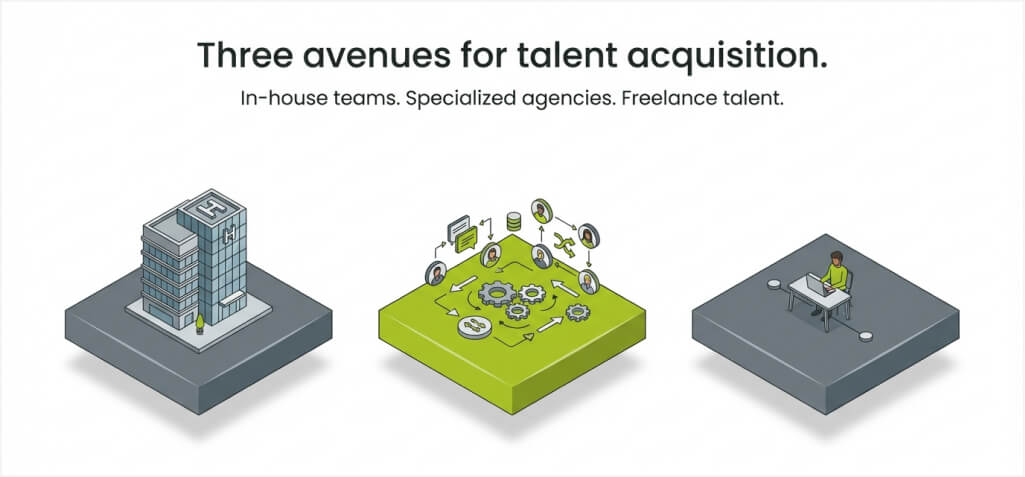
Healthcare organizations can hire EHR software developers through different engagement models, depending on budget, timeline, compliance needs, and long-term product vision. Each approach comes with its own trade-offs in terms of control, cost, scalability, and healthcare expertise.
Below are the three most common approaches to hiring EHR software developers, along with their advantages and limitations.
1. Hire in-house EHR software developers
Hiring in-house EHR developers means building a dedicated internal team that works exclusively on your EHR product. This approach is often preferred by large healthcare organizations or enterprises planning long-term EHR development and maintenance.
Pros and cons of hiring in-house EHR developers
| Pros | Cons |
|---|---|
| Full control over development and decision-making | High recruitment and onboarding costs |
| Deep alignment with internal workflows and processes | Longer time to hire skilled EHR developers |
| Better long-term knowledge retention | Requires ongoing investment in training and compliance |
| Easier collaboration with internal stakeholders | Limited scalability during peak development phases |
2. Hire from an EHR software development company
Hiring EHR developers from a specialized EHR software development company like Space-O Technologies gives you access to a pre-vetted team with proven healthcare domain expertise. This is a common choice for startups and healthcare organizations building EHR MVPs or scaling faster.
Pros and cons of hiring from an EHR software development company
| Pros | Cons |
|---|---|
| Access to experienced EHR developers with healthcare expertise | Less day-to-day control compared to in-house teams |
| Faster project kickoff with minimal hiring effort | Dependency on external partner availability |
| Built-in knowledge of compliance and interoperability standards | Requires clear communication and documentation |
| Flexible engagement and easy scalability | Long-term costs may vary based on scope changes |
3. Hire freelance EHR software developers
Freelance EHR developers are typically hired for short-term tasks, feature development, or early-stage experimentation. This approach may suit small projects but often comes with higher risk for complex EHR systems.
Pros and cons of hiring freelance EHR developers
| Pros | Cons |
|---|---|
| Lower upfront cost compared to full-time hiring | Limited healthcare and compliance expertise |
| Flexible hiring for short-term requirements | Higher risk of data security and compliance issues |
| Quick availability for small tasks | Lack of accountability and long-term support |
| Useful for prototyping or proof of concept | Not ideal for scalable or regulated EHR systems |
Why Hiring the Right EHR Developers Matters
Recruiting skilled EHR software developers creates advantages that extend beyond basic project completion. The quality of your development team directly influences product outcomes, compliance posture, and organizational efficiency.
1. Regulatory compliance assurance
EHR systems operate under strict regulatory oversight that general developers may not fully understand. Qualified healthcare developers build compliance into the software architecture from the beginning. They implement access controls, audit logging, and encryption that HIPAA requires.
Developers with healthcare experience recognize compliance requirements without extensive guidance. They anticipate regulatory audit needs when designing data structures. This built-in expertise reduces compliance gaps that create legal and financial risks.
Hiring dedicated developers without healthcare backgrounds often results in costly compliance remediation. Retrofitting security controls into existing systems proves expensive and time-consuming. The right initial hiring decision prevents these downstream problems.
2. Faster time to market
Experienced EHR developers understand common healthcare software patterns and architectures. They avoid the learning curve that general developers face when entering the healthcare domain. This familiarity translates directly into faster feature delivery.
Healthcare-experienced teams make better technical decisions early in projects. They recognize which approaches work well for clinical workflows. Poor architectural choices by inexperienced teams often require expensive rework later.
Reduced development timelines help organizations capture market opportunities sooner. Healthcare software projects already face lengthy timelines due to compliance requirements. Minimizing unnecessary delays improves competitive positioning.
3. Better clinical user experience
Developers who understand healthcare workflows build systems that clinicians actually want to use. They recognize the time pressures physicians face during patient encounters. Their interfaces minimize clicks and support efficient documentation.
General software developers often create systems that technically work but frustrate clinical users. They lack context about how physicians think and work. The resulting poor adoption undermines the entire EHR investment.
Healthcare-savvy developers advocate for clinical usability during technical discussions. They push back on requirements that would create workflow problems. This perspective significantly improves the final product.
4. Reduced long-term maintenance costs
Well-architected EHR systems require less ongoing maintenance and support. Experienced developers build scalable foundations that accommodate growth. They follow coding standards that make future modifications easier.
Inexperienced teams often create technical debt that accumulates maintenance costs over time. Poor code quality requires constant bug fixes and workarounds. Integration problems multiply as systems connect with more external applications.
Investing in qualified developers upfront reduces the total cost of ownership significantly. Lower maintenance burden allows teams to focus on new features. Organizations avoid the expensive rebuild projects that poor initial development causes.
5. Enhanced security posture
Healthcare data breaches carry severe financial and reputational consequences. EHR developers with security expertise build systems that resist common attack vectors. They implement defense-in-depth strategies appropriate for sensitive health information.
Developers without healthcare security experience often miss critical vulnerabilities. They may not understand the specific threats that target medical records. Security weaknesses discovered after deployment create expensive emergency remediation.
Proper security requires expertise beyond basic software development skills. Healthcare-specific threats require healthcare-specific defenses. Hiring developers with this knowledge protects your organization and patients.
Build Your EHR Product with the Right Team
Hire EHR developers who understand compliance, interoperability, and clinical workflows.

Essential Skills to Look for in EHR Software Developers
Evaluating EHR developer candidates requires assessing both technical competencies and domain knowledge in healthcare. When you hire expert EHR software developers, understanding which skills matter most helps focus your hiring criteria effectively to ensure you bring on the right talent for your organization.
1. Healthcare interoperability standards
EHR systems must exchange data with numerous external systems using standardized formats. Developers need proficiency in HL7 Version 2, HL7 FHIR, and CDA document standards. These protocols govern how healthcare information moves between organizations.
Key competencies:
- HL7 FHIR resource modeling and API implementation.
- HL7 Version 2 message parsing and generation.
- CDA document creation and validation.
- IHE profile implementation for specific use cases.
- Terminology services using SNOMED CT, ICD-10, and LOINC.
- Integration engine experience with Mirth Connect or similar tools.
- RESTful API design following healthcare best practices.
Interoperability skills are essential for any EHR development role. Systems that cannot exchange data effectively fail their fundamental purpose. Prioritize candidates who demonstrate hands-on experience with these standards.
2. Healthcare compliance and security
HIPAA compliance represents a baseline requirement for all EHR development work. Developers must understand the Security Rule’s technical safeguards and implementation specifications. They should know how to properly implement access controls, audit logging, and encryption.
Key competencies:
- HIPAA Security Rule technical safeguard implementation.
- Role-based access control design and enforcement.
- Comprehensive audit logging for all PHI access.
- Encryption at rest and in transit using approved algorithms.
- Secure software development lifecycle practices.
- Vulnerability assessment and penetration testing awareness.
- Business associate agreement technical requirements.
Security skills require ongoing learning as threats evolve continuously. Look for candidates who demonstrate current knowledge of healthcare security practices. Certifications like HCISPP indicate a dedicated security focus.
3. Backend development expertise
EHR systems require robust backend architectures capable of handling complex data relationships. Developers need experience with databases, APIs, and server-side programming languages. Performance optimization matters when systems serve hundreds of concurrent clinical users.
Key competencies:
- Relational database design and optimization.
- Backend languages such as Java, Python, C#, or Node.js.
- API development with REST and GraphQL approaches.
- Microservices architecture patterns and implementation.
- Message queue systems for asynchronous processing.
- Cloud platform experience with AWS, Azure, or GCP.
- Performance tuning for high-concurrency environments.
Backend skills fundamentally determine system reliability and scalability. Weak backend developers create systems that fail under production loads. Evaluate candidates through practical coding assessments that test real skills.
4. Frontend development skills
Clinical users interact with EHR systems through frontend interfaces throughout their workdays. Developers must create responsive, accessible interfaces that minimize documentation burden. Modern frameworks enable rich user experiences that improve clinical efficiency.
Key competencies:
- Modern JavaScript frameworks like React, Angular, or Vue.
- Responsive design for various device form factors.
- Accessibility compliance with WCAG guidelines.
- State management for complex application workflows.
- Component-based architecture patterns.
- Performance optimization for frontend rendering.
- Mobile development for iOS and Android platforms.
Frontend expertise directly impacts clinical user adoption and satisfaction. Beautiful interfaces that perform poorly frustrate users quickly. Prioritize developers who balance visual design with technical performance.
5. Database and data management
Healthcare data presents unique modeling challenges due to complex relationships between entities. Developers must design schemas that accommodate clinical terminologies and evolving data requirements. Both relational and document databases have appropriate use cases in EHR systems.
Key competencies:
- Relational database design with PostgreSQL or SQL Server.
- NoSQL databases for flexible document storage.
- Data modeling for clinical concepts and relationships.
- Query optimization for complex reporting needs.
- Data migration and transformation techniques.
- Backup, recovery, and disaster preparedness.
- Data archival and retention policy implementation.
Data management skills prove critical for EHR system reliability. Poor database design creates performance problems that worsen over time. Evaluate candidates on their approach to schema design and optimization.
6. Clinical workflow understanding
Technical skills alone prove insufficient for effective EHR development. Developers need to understand how clinicians use systems during patient care. This domain knowledge shapes better technical decisions throughout development.
Key competencies:
- Understanding of clinical documentation workflows.
- Knowledge of common healthcare processes and terminology.
- Experience gathering requirements from clinical stakeholders.
- Familiarity with different care settings and their needs.
- Awareness of clinical decision support concepts.
- Understanding of healthcare revenue cycle basics.
- Experience with user research in clinical environments.
Domain knowledge separates adequate developers from excellent ones in healthcare. Candidates who have worked in clinical settings bring a valuable perspective. Consider healthcare background as a significant differentiator during evaluation.
Need Developers with Healthcare Domain Expertise?
Our experienced EHR development teams combine technical excellence with 15+ years of understanding of clinical workflows and compliance requirements.
How to Hire EHR Software Developers: Step-by-Step Process
Building an effective EHR development team requires a structured hiring approach. Following proven processes helps identify qualified candidates while minimizing time-to-hire.
Step 1: Define your project requirements clearly
Before beginning recruitment, document exactly what your EHR project requires. Specify the features, integrations, and compliance requirements your system must address. This clarity helps identify candidates whose skills match your actual needs.
Key activities:
- Technical requirements documentation: List the programming languages, frameworks, and databases your project will use for EHR integration. Specify cloud platforms and infrastructure requirements. Detail integration needs with external healthcare systems.
- Team structure planning: Determine how many developers you need across different specializations. Define roles for backend, frontend, and full-stack positions. Identify technical leadership requirements for the team.
- Timeline and priority assessment: Establish project phases and their development priorities. Identify skills needed immediately versus those required later. This phasing helps sequence hiring activities appropriately.
Clear requirements prevent mismatches between candidate skills and project needs. Vague requirements lead to poor hiring decisions that create problems later. Invest time upfront in thorough requirements definition.
Step 2: Create compelling job descriptions
Job descriptions serve as your first point of contact with potential candidates. Effective descriptions attract qualified applicants while deterring those who lack required skills. Specificity helps candidates self-select appropriately.
Key activities:
- Skills specification: List required technical skills with specific technologies and experience levels. Distinguish between mandatory requirements and preferred qualifications. Avoid generic lists that fail to differentiate your role.
- Role responsibilities: Describe the actual work candidates will perform daily. Explain the types of features they will build. Specify collaboration expectations with clinical stakeholders.
- Company and project context: Explain your organization’s mission and the product’s purpose. Describe the development team culture and methodology. Highlight what makes your opportunity attractive to candidates.
Well-crafted descriptions significantly improve application quality. Generic postings attract generic candidates who may not fit your needs. Invest in descriptions that clearly communicate your specific requirements.
Step 3: Source candidates through multiple channels
EHR developers with healthcare experience represent a specialized talent pool. Relying on single sourcing channels significantly limits your candidate pipeline. Diversified sourcing improves both the quantity and the quality of applicants.
Effective sourcing channels:
- Healthcare-specific job boards: HIMSS, Health IT Jobs, and similar platforms reach healthcare-focused candidates. These channels attract developers who have deliberately chosen healthcare careers. Response rates typically exceed those of general job boards.
- Professional networks and referrals: Employee referrals often produce the highest-quality candidates. LinkedIn outreach to developers at healthcare companies yields good results. Healthcare technology conferences provide networking opportunities.
- Technical communities: GitHub profiles reveal actual coding experience and quality. Stack Overflow activity indicates problem-solving abilities. Open-source healthcare project contributors demonstrate genuine interest.
- Specialized recruiters: Healthcare technology recruiters maintain candidate networks built over the years. They pre-screen candidates for healthcare experience and cultural fit. Agency fees represent worthwhile investments for critical positions.
Multiple sourcing channels create robust candidate pipelines for comparison. Single-channel approaches risk settling for inadequate candidates. Invest in sourcing breadth to ensure access to top talent.
Step 4: Screen candidates effectively
Initial screening separates qualified candidates from those who do not meet essential requirements. Efficient screening processes respect candidate time while identifying promising applicants. Structured approaches ensure consistent evaluation across all candidates.
Key activities:
- Resume evaluation criteria: Assess experience with healthcare-specific technologies and standards. Look for employment at healthcare technology companies or health systems. Evaluate project descriptions for their relevance and complexity.
- Technical phone screens: Conduct brief technical conversations to verify claimed skills. Ask about specific healthcare development challenges candidates have faced. Assess communication skills that matter for stakeholder collaboration.
- Healthcare knowledge assessment: Probe understanding of HIPAA requirements and their technical implications. Ask about interoperability standards and implementation experience. Evaluate familiarity with clinical workflows and terminology.
Effective screening reduces the time spent interviewing unqualified candidates. Rushed screening leads to poor candidates advancing too far. Balance thoroughness with efficiency to optimize the hiring process.
Step 5: Conduct technical interviews
Technical interviews reveal whether candidates can actually perform the work your project requires. Well-designed interviews assess both problem-solving abilities and healthcare-specific knowledge. Multiple interview formats provide comprehensive candidate evaluation.
Key activities:
- Coding assessments: Provide realistic problems that test relevant technical skills. Healthcare-specific scenarios reveal domain knowledge application. Time-boxed exercises show how candidates work under pressure.
- System design discussions: Present architectural challenges similar to your actual project. Evaluate approaches to scalability, security, and compliance. Assess the ability to clearly explain technical decisions.
- Healthcare scenario reviews: Discuss how candidates would handle specific clinical workflow requirements. Explore approaches to HIPAA compliance in system design. Evaluate understanding of interoperability implementation challenges.
- Behavioral interviews: Ask about past healthcare project experiences and challenges. Explore collaboration approaches with clinical stakeholders. Assess cultural fit with your development team.
Structured technical interviews predict job performance better than unstructured conversations. Consistent evaluation criteria enable fair comparison across candidates. Document interview feedback systematically for hiring decisions.
Step 6: Make competitive offers
Qualified EHR developers receive multiple competing offers in the current market. Attractive compensation packages are necessary to secure top candidates. Beyond salary, benefits, and growth opportunities influence candidate decisions.
Key activities:
- Compensation benchmarking: Research current market rates for EHR development roles. Consider geographic factors and the implications of remote work. Account for healthcare premiums when comparing to general software development roles.
- Benefits package optimization: Healthcare developers particularly value comprehensive health insurance. Remote work flexibility has become a standard expectation. Professional development budgets demonstrate investment in growth.
- Offer presentation: Clearly and compellingly communicate the total value proposition. Highlight meaningful work impact on patient care. Address candidate questions promptly to maintain momentum.
Competitive offers convert preferred candidates into actual team members. Lowball offers lose candidates to competitors willing to pay market rates. Invest in compensation research to make appropriate offers.
EHR Developer Salary and Cost Benchmarks
Understanding compensation expectations helps organizations budget accurately for EHR development talent. Rates vary significantly based on experience, location, and engagement model.
Salary ranges by experience level
| Experience Level | Annual Salary (US) | Hourly Rate (Contract) |
|---|---|---|
| Junior (1-3 years) | $70,000 – $95,000 | $40 – $55/hour |
| Mid-Level (3-6 years) | $95,000 – $140,000 | $55 – $80/hour |
| Senior (6-10 years) | $140,000 – $180,000 | $80 – $110/hour |
| Lead/Architect (10+ years) | $180,000 – $250,000 | $110 – $150/hour |
Geographic salary variations
| Region | Salary Adjustment |
|---|---|
| San Francisco Bay Area | +25% to +40% |
| New York City | +20% to +35% |
| Boston | +15% to +25% |
| Seattle | +15% to +25% |
| Austin/Denver | +5% to +15% |
| Midwest/South | Baseline |
| Remote (US-based) | +5% to +15% |
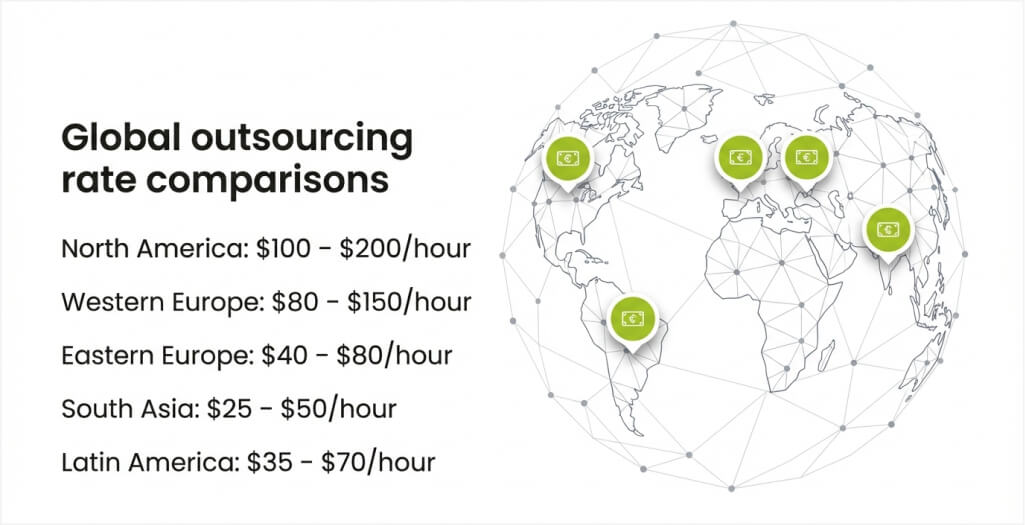
Outsourcing cost comparison
| Region | Hourly Rate Range |
|---|---|
| North America | $100 – $200/hour |
| Western Europe | $80 – $150/hour |
| Eastern Europe | $40 – $80/hour |
| South Asia | $25 – $50/hour |
| Latin America | $35 – $70/hour |
Additional cost considerations
Several factors beyond base salary affect total hiring costs for EHR developers.
- Recruitment costs: Agency fees typically range from 15% to 25% of first-year salary. Internal recruitment incurs costs for job postings, screening, and interviewing. Budget $10,000 to $30,000 per developer hire for recruitment expenses.
- Onboarding investment: New developers require orientation to the codebase, processes, and domain knowledge. Productivity ramp-up typically takes two to four months for complex EHR projects. Mentorship time from existing team members represents additional hidden costs.
- Benefits and overhead: Total compensation typically exceeds base salary by 25% to 40%. Health insurance, retirement contributions, and equipment add substantial costs. Payroll taxes and administrative overhead further increase total employment expenses.
- Training and development: Healthcare technology evolves constantly, requiring ongoing learning investments. Conference attendance, certifications, and courses improve team capabilities. Budget $3,000 to $8,000 annually per developer for professional development.
Get an Accurate EHR Development Team Budget
Share your project requirements with our technical team for detailed hiring cost estimates and team structure recommendations.
Common Challenges in Hiring EHR Developers
Even well-planned recruitment efforts encounter obstacles during execution. Anticipating these challenges enables proactive mitigation strategies.
Challenge 1: Limited talent pool
EHR development requires a rare combination of software skills and healthcare knowledge. The number of developers with both qualifications remains relatively small. Competition for qualified candidates has intensified significantly.
How to overcome this challenge
- Expand geographic search to include remote candidates nationwide.
- Consider developers with strong technical skills who can learn the specifics of healthcare.
- Build internship programs to develop healthcare expertise in promising developers.
- Partner with healthcare informatics academic programs for emerging talent.
- Offer competitive compensation packages that attract candidates from competing employers.
Challenge 2: Lengthy hiring timelines
EHR developer hiring often extends beyond typical software recruitment timelines. Multiple interview rounds and technical assessments consume significant time. Candidates may accept other offers before your process completes.
How to overcome this challenge
- Streamline interview processes to minimize unnecessary rounds.
- Make hiring decisions quickly after completing candidate evaluations.
- Communicate timeline expectations clearly to candidates throughout the process.
- Use asynchronous assessments to reduce scheduling bottlenecks.
- Maintain warm relationships with promising candidates during extended processes.
Challenge 3: Evaluating healthcare domain knowledge
Assessing healthcare-specific knowledge proves difficult for technical interviewers without clinical backgrounds. Candidates may overstate their healthcare experience during interviews. Verification of claimed expertise requires specialized evaluation approaches.
How to overcome this challenge
- Develop standardized healthcare knowledge assessments for consistent evaluation.
- Include clinical stakeholders on interview panels to add domain expertise.
- Ask for specific examples and details about previous healthcare projects.
- Conduct reference checks that specifically address healthcare experience claims.
- Use practical scenarios that reveal actual understanding of clinical workflows.
Challenge 4: Competing with technology companies
Major technology companies offer compensation packages that healthcare organizations struggle to match. Brand recognition and perceived career opportunities favor large tech employers. Healthcare organizations may seem less attractive to candidates seeking rapid advancement.
How to overcome this challenge
- Emphasize meaningful work impact on patient health and outcomes.
- Highlight healthcare-specific career development opportunities.
- Offer flexible work arrangements that match technology company practices.
- Create competitive total compensation packages beyond base salary.
- Build an employer brand through engagement with the healthcare technology community.
Challenge 5: Retention after hiring
Retaining EHR developers proves challenging given the strong market demand for their skills. Developers may leave for higher compensation elsewhere after gaining experience. Turnover disrupts projects and requires costly replacement hiring.
How to overcome this challenge
- Conduct regular compensation reviews to maintain market competitiveness.
- Provide clear career advancement paths within the organization.
- Create engaging work environments with interesting technical challenges.
- Invest in professional development that benefits both the developer and the organization.
- Build a strong team culture that makes developers want to stay.
Hire Our Expert EHR Software Developers and Avoid Costly Mistakes
Partner with healthcare technology specialists who understand the unique requirements of building EHR development teams.
Best Practices for Hiring EHR Software Developers
Following proven practices significantly increases hiring success rates. These guidelines represent accumulated wisdom from successful healthcare technology organizations.
1. Prioritize healthcare experience appropriately
Healthcare experience matters, but should not exclude technically excellent candidates. Strong developers can learn domain knowledge in the healthcare industry with proper mentorship. Balance healthcare background requirements with overall technical capability assessment.
Consider creating junior positions for talented developers new to healthcare. Pair them with experienced healthcare developers for knowledge transfer. This approach expands your candidate pool while building long-term capability.
Evaluate candidates on their ability to learn quickly and ask good questions. Curiosity about healthcare indicates potential for rapid domain knowledge development. Past success in learning new domains predicts future success in healthcare learning.
2. Test practical skills, not theoretical knowledge
Technical interviews should assess the ability to perform actual work effectively. Coding assessments using relevant technologies reveal genuine capability. Theoretical questions about concepts have limited predictive value for job performance.
Design practical exercises that mirror real project challenges your team faces. Observe how candidates approach problems, not just their final solutions. The problem-solving process reveals more than just correct answers.
Include healthcare-specific scenarios in technical assessments when possible. Ask candidates to design data models for clinical concepts. Evaluate their approach to handling HIPAA requirements in system design.
3. Involve clinical stakeholders in hiring
Clinical users can effectively assess a candidate’s understanding of healthcare workflows. Their participation reveals whether candidates can communicate with non-technical stakeholders. This collaboration improves both hiring decisions and candidate experience.
Include clinicians in final interview rounds for key development positions. Have them describe workflow challenges and evaluate candidate responses. Their perspective identifies candidates who will build systems clinicians actually want to use.
Clinical involvement also demonstrates organizational commitment to user-centered development. Candidates see that clinical input matters to technical decisions. This culture attracts developers who value building meaningful healthcare solutions.
4. Build comprehensive onboarding programs
Effective onboarding significantly accelerates new developer productivity. Structured programs introduce codebase, processes, and domain knowledge systematically. Mentorship pairings support learning beyond formal training materials.
Create documentation that explains your EHR system architecture and design decisions. Record clinical workflow overviews that new developers can review independently. Build libraries of resources that support ongoing learning.
Plan gradual increases in complexity during initial assignments. Start new developers on well-defined tasks with clear specifications. Progress to more complex work as understanding develops.
5. Develop a strong employer brand
Healthcare organizations must compete with technology companies for developer attention. Strong employer brands attract candidates before positions even open. Investment in brand building reduces recruiting costs over time.
Participate actively in healthcare technology communities and conferences. Share technical content that demonstrates organizational expertise. Highlight interesting technical challenges your team addresses.
Encourage developers to speak at conferences and contribute to open-source projects. Their visibility raises organizational profile within the developer community. Current employees become your most effective recruiters through their networks.
6. Consider multiple engagement models
Different project needs require different approaches to talent engagement. Full-time employees make sense for core long-term development needs. Contractors provide flexibility for temporary capacity requirements.
Outsourcing provides access to specialized skills that are unavailable locally. Staff augmentation supplements internal teams during peak periods. Hybrid models combining multiple approaches often prove most effective.
Match the engagement model to specific role requirements and project duration. Core platform development benefits from the stability of full-time employees. Short-term integration projects may better suit contractor engagement.
Hire Expert EHR Software Developers from Space-O Technologies
Finding skilled EHR software developers with the right healthcare expertise can be challenging and time-consuming. When you partner with Space-O Technologies, you gain immediate access to pre-vetted EHR developers who understand clinical workflows, regulatory compliance, and modern healthcare architecture patterns. Our team eliminates lengthy recruitment cycles while ensuring you work with developers who have proven experience across diverse healthcare settings.
Our EHR developers bring deep expertise in building systems that integrate seamlessly with existing healthcare infrastructure. Whether you need specialists in HL7 FHIR integration, clinical decision support modules, or patient data management, we match you with developers whose skills align precisely with your project requirements. This targeted approach means your hired developers contribute meaningfully from day one.
We offer flexible hiring models designed to fit your project scope and budget. Choose staff augmentation to strengthen your in-house team with specialized EHR expertise, or engage a dedicated development team for end-to-end project delivery. Both options give you direct collaboration with developers who treat your project as their priority.
Ready to build your EHR development capability without recruitment delays? Connect with our consultants for a detailed assessment of your project needs. We’ll recommend the right team structure and help you hire EHR developers who can deliver results aligned with your timeline and compliance requirements.
FAQs on Hiring EHR Software Developers
1. What qualifications should EHR software developers have?
EHR software developers should possess strong programming skills in languages such as Java, Python, or JavaScript. They need experience with healthcare interoperability standards, including HL7 FHIR and HL7 Version 2. An understanding of HIPAA security requirements proves essential. Database design skills and cloud platform experience round out technical qualifications. Healthcare domain knowledge, while valuable, can be developed with proper mentorship.
2. How much does it cost to hire EHR developers?
EHR developer costs vary significantly based on experience and engagement model. Junior developers earn $70,000 to $95,000 annually in the US market. Senior developers command $140,000 to $180,000 or more. Contract rates range from $40 to $150 per hour, depending on experience level. Outsourcing to Eastern Europe or South Asia reduces hourly rates to $25 to $80. Total hiring costs, including recruitment fees, typically add 15% to 25% to first-year compensation.
3. How long does it take to hire an EHR developer?
EHR developer hiring typically takes 6 to 12 weeks from job posting to accepted offer. Specialized skill requirements extend timelines beyond general software developer recruitment. Technical screening, multiple interview rounds, and reference checks consume significant time. Candidates often have competing offers requiring quick decision-making. Streamlined processes and competitive offers help reduce time-to-hire.
4. Should I hire in-house developers or outsource EHR development?
The decision depends on your project scope, timeline, and long-term needs. In-house teams provide better alignment with organizational culture and long-term product ownership. Outsourcing offers faster access to specialized skills and reduced recruitment burden. Many organizations use hybrid approaches with core in-house teams supplemented by outsourced specialists. Consider project duration, intellectual property concerns, and ongoing maintenance needs when making your decision.
5. What interview questions should I ask EHR developer candidates?
Technical questions should cover healthcare interoperability standards, such as FHIR resource modeling and HL7 message handling. Security questions should assess understanding of HIPAA technical safeguards and encryption requirements. Ask about experience with clinical workflow design and stakeholder collaboration. Behavioral questions should explore past healthcare project challenges and the approaches used to resolve them. Practical coding assessments reveal actual implementation skills better than theoretical discussions.
6. Where can I find qualified EHR software developers?
Healthcare-specific job boards like HIMSS and Health IT Jobs effectively reach targeted audiences. LinkedIn enables direct outreach to developers at healthcare technology companies. Employee referrals often yield the highest-quality candidates. Specialized healthcare technology recruiters maintain networks of pre-screened candidates. Open-source healthcare projects and GitHub profiles help identify developers with a genuine interest in the field.



 All our projects are secured by NDA




 4.8
4.8