
 By
By 
Contents
Hiring a dedicated software development team is transforming how organizations build digital products. Instead of managing recruitment, hiring, and training in-house, many businesses partner with external specialists who work exclusively on their projects. These dedicated teams function as seamless extensions of your organization, bringing expertise, speed, and cost efficiency to your development initiatives.
The global IT outsourcing market reflects this shift. According to Statista, the worldwide IT outsourcing market is projected to reach US$634.18bn by 2026, growing consistently each year. This expansion demonstrates that enterprises worldwide are increasingly recognizing the strategic value of outsourced development teams.
Many organizations face significant challenges when building software internally. Recruiting skilled developers takes months, demands substantial budgets, and requires ongoing training investments. Dedicated teams eliminate these obstacles by providing pre-vetted professionals ready to contribute immediately. Whether you’re launching a startup, building a web application, or modernizing legacy systems, understanding how to hire the right team is crucial.
This comprehensive guide will help you navigate the entire process. You’ll learn what dedicated development teams are, their advantages over other engagement models, costs across different regions, a step-by-step hiring framework, and essential best practices. By following this roadmap, you can make informed decisions and build a successful partnership with external development talent.
What is a Dedicated Software Development Team?
A dedicated software development team is a group of skilled professionals hired exclusively for your project. These developers work as remote employees, functioning as an integrated part of your organization. Unlike freelancers or project-based contractors, dedicated teams commit to long-term engagements and develop a deep understanding of your product, goals, and company culture.
Dedicated teams typically include software developers, quality assurance specialists, project managers, and business analysts. The composition depends on your project requirements and complexity. These professionals remain focused entirely on your work, preventing distraction from competing priorities or multiple clients. This exclusive engagement creates accountability and ensures consistent productivity throughout the development cycle.
The dedicated team model originated from the growing need for specialized talent and cost-effective development solutions. As the talent shortage intensifies globally, this engagement model has become a preferred strategy for organizations seeking skilled engineering resources without establishing permanent in-house positions. Dedicated teams represent a middle ground between hiring contractors and building full-time internal teams.
This model works exceptionally well for long-term projects lasting six months or longer. Organizations with clearly defined objectives, moderate complexity requirements, and existing team structures benefit most from this approach. The dedicated team integrates smoothly with your workflows and contributes to your overall strategic objectives.
Planning to Hire a Dedicated Software Development Team?
Get in touch with us. Discuss your project requirements. Choose your hiring model and get your development started.

Key Benefits of Hiring a Dedicated Software Development Team
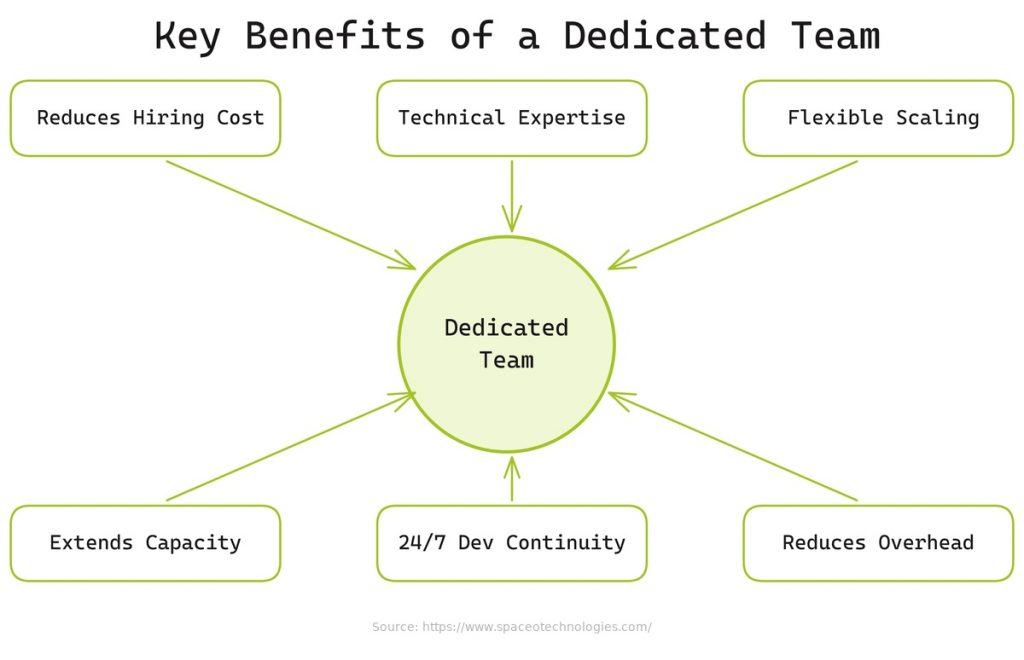
Dedicated development teams deliver measurable advantages that extend beyond simple cost reduction. Organizations gain access to specialized expertise, improved productivity, and flexible resource scaling. These benefits create significant competitive advantages in today’s fast-moving technology landscape.
1. Reduces overall hiring costs and time
Building an in-house development team demands substantial financial and temporal investment. Posting job listings, screening candidates, conducting interviews, and onboarding typically require 3 to 6 months. Salary expectations for senior developers in developed markets often exceed $100,000 annually, excluding benefits and overhead costs.
Dedicated teams eliminate recruitment expenses and dramatically shorten your time-to-productivity window. You access pre-vetted professionals within days, not months. Many dedicated team providers handle all hiring, vetting, and onboarding responsibilities themselves. This arrangement significantly reduces your human resources burden and allows you to allocate budgets directly toward development activities rather than administrative overhead.
2. Provides access to specialized technical expertise
Finding developers with specific technology skills proves increasingly difficult in today’s competitive market. Dedicated teams give you access to professionals with deep expertise in various technologies, frameworks, and domains. Whether you need expertise in cloud architecture, AI integration, or legacy system modernization, dedicated teams offer immediate specialized knowledge.
These professionals bring real-world experience from diverse projects and industries. They understand best practices, common pitfalls, and proven solutions for technical challenges. This expertise accelerates your project timeline and improves code quality significantly. You avoid the learning curve associated with hiring junior talent and training them on specialized technologies.
3. Scales flexibly based on project needs
Project requirements fluctuate throughout development cycles. Dedicated teams adapt seamlessly to changing scope and complexity. Adding developers takes days, not months. Reducing team size during maintenance phases preserves your budget without disrupting operations. This flexibility enables you to respond quickly to market changes, business pivots, or unexpected technical challenges.
Traditional in-house teams create rigid cost structures. Scaling down requires managing layoffs and severance obligations. Scaling up demands lengthy recruitment processes. Dedicated teams eliminate these constraints by providing agile resource allocation. You pay for exactly what you need, when you need it, without contractual obligations for permanent positions.
4. Extends your team’s capacity and capabilities
Dedicated teams complement your existing workforce rather than replacing it. Your in-house team maintains strategic control and decision-making authority. The dedicated team handles execution and technical implementation under your supervision. This hybrid model combines the best of both approaches: internal strategic direction with external execution expertise.
Your team gains additional bandwidth to focus on core strategic initiatives. Project managers can oversee architecture and requirements without getting bogged down in daily coding tasks. This is especially valuable when working alongside an enterprise software development company that already understands execution at scale. Internal teams spend time on high-impact work while dedicated teams handle execution-focused tasks.
5. Ensures 24/7 development continuity
Dedicated teams spanning multiple time zones provide around-the-clock development progress. While your internal team sleeps, developers in different regions continue building your product. This continuous productivity accelerates time-to-market significantly. Features that might take three months with a single time zone team can be completed in six weeks with distributed, dedicated teams.
Round-the-clock work requires excellent documentation, communication systems, and project management. When managed properly, this continuous workflow delivers substantial competitive advantages. Your product evolves constantly, gathering market feedback and iterating faster than competitors relying on single-location teams.
6. Reduces operational overhead and infrastructure costs
Hiring permanent employees creates various overhead expenses: office space, equipment, benefits, training, administrative management, and infrastructure costs. Dedicated teams eliminate these recurring expenses. Your dedicated team provider handles all employee-related infrastructure and management requirements.
This arrangement frees your finance and human resources teams from managing additional headcount. You avoid committing capital to workspace expansion or equipment purchases. Your cost structure becomes more predictable and variable, improving financial flexibility and allowing better budget forecasting.
When Should You Hire a Dedicated Development Team?
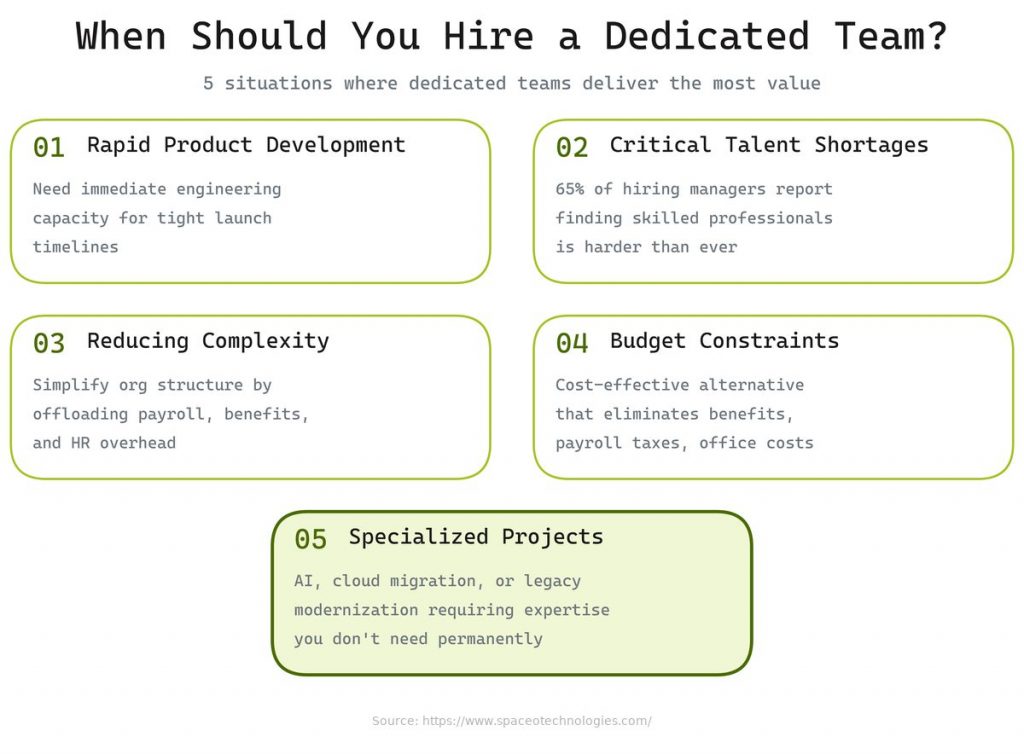
Understanding the right timing for hiring dedicated teams helps you make strategic decisions. Certain situations and business conditions make dedicated teams particularly valuable and cost-effective. Recognizing these circumstances enables better resource planning and improved project outcomes.
Situation 1: Rapid product development and scaling
Growing startups and expanding enterprises need rapid development velocity. Dedicated teams provide immediate engineering capacity without lengthy hiring processes. If your business plan requires a product launch within tight timelines, dedicated teams accelerate the achievement of these goals significantly. They enable quick pivots based on market feedback without the disruption of reorganizing internal teams.
Situation 2: Addressing critical talent shortages
According to Robert Half, nearly 65% of technology hiring managers report finding skilled professionals is more challenging than it was a year ago. Geographic limitations, specialized skill requirements, and competitive salary demands create persistent talent gaps. Dedicated teams bypass these constraints by accessing global talent pools with specialized capabilities.
Situation 3: Reducing operational complexity
Managing permanent employees involves payroll, benefits, compliance, and human resources overhead. Organizations seeking to minimize complexity opt for dedicated teams. This arrangement simplifies your organizational structure and reduces administrative burden. Your internal team focuses on strategy and product vision while external teams handle execution.
Situation 4: Managing budget constraints
Many organizations have limited budgets for permanent hires. Dedicated teams offer cost-effective alternatives that reduce overall expenses. You avoid benefits, payroll taxes, office space, and training costs associated with permanent employees. This financial flexibility helps smaller organizations and startups compete with larger enterprises that have bigger engineering budgets.
Situation 5: Handling specialized projects
Some projects require specific expertise you don’t need permanently. Building AI capabilities, migrating to cloud infrastructure, or modernizing legacy systems might require knowledge unavailable in your current team. In these cases, consulting a list of software consulting companies can help you identify dedicated teams with exactly the niche skills you need, without the permanent cost commitment.
Looking for a Dedicated Development Team?
Contact us. We have dedicated development teams that can help you to build solutions as per your project requirements.
Dedicated Team vs. Other Engagement Models: A Comprehensive Comparison
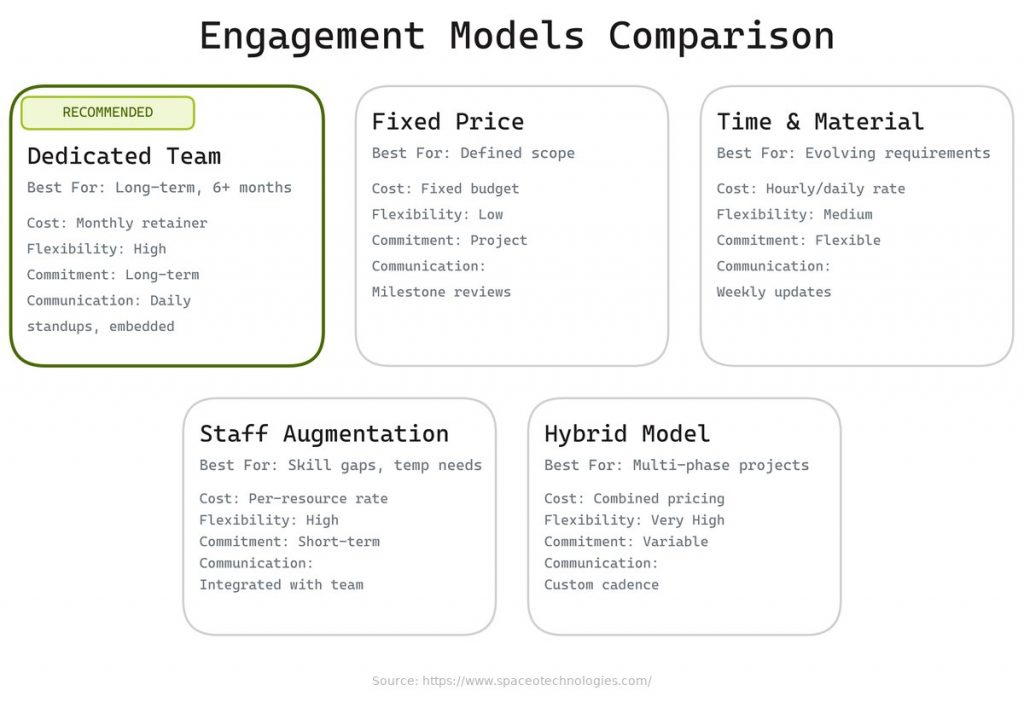
Understanding how dedicated teams compare to alternatives helps you select the best approach for your situation. Each engagement model offers distinct advantages and disadvantages depending on your specific needs, timeline, and budget constraints.
| Model | Best For | Cost | Flexibility | Commitment | Communication |
| Dedicated Team | Long-term projects 6+ months. | $25-50/hr offshore, $35-75/hr nearshore. | Large-scale up/down easily. | 3-12 months minimum. | Excellent – exclusive focus. |
| Staff Augmentation | Adding specific skills temporarily. | $20-45/hr offshore, $30-65/hr nearshore. | Very high – short-term needs. | Month-to-month typically. | Good – integrated with your team. |
| Project-Based | Fixed scope work. | Fixed price model. | Low – locked scope. | Project duration only. | Moderate – vendor manages team. |
| Freelancers | Small tasks and quick fixes. | $15-35/hr offshore, $25-60/hr onshore. | Very high – hire/release instantly. | Hourly or task-based. | Variable – less structured. |
| In-House Hiring | Permanent growth. | $80-200/hr fully loaded costs. | Low – hiring/separation delays. | Long-term investment. | Excellent – direct control. |
Dedicated teams offer the best balance of cost efficiency, quality control, and long-term value for most organizations. Unlike freelancers, they provide stability and a deeper project understanding. Unlike in-house hiring, they eliminate permanent overhead and accelerate time-to-productivity.
A Step-by-Step Guide to Hiring a Dedicated Software Development Team
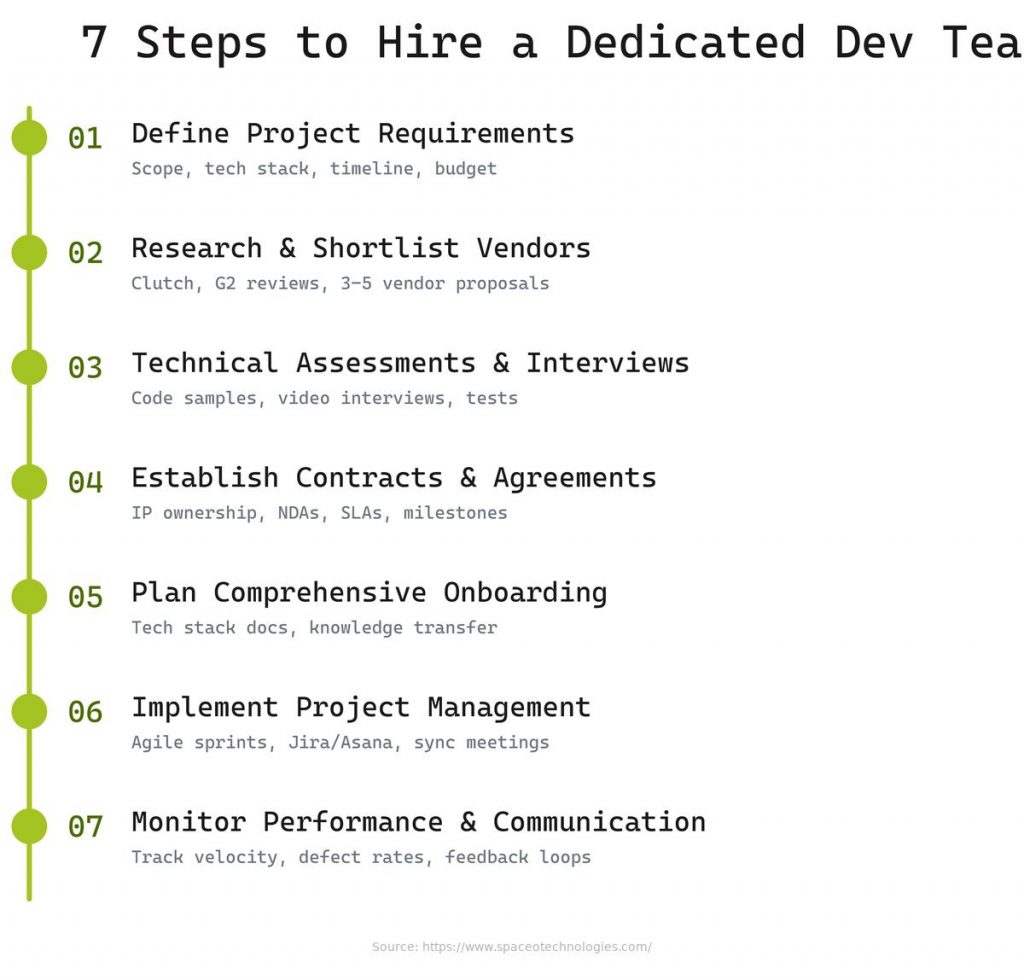
Hiring dedicated teams requires careful planning and evaluation. Following a structured process ensures you find the right partner and establish a successful long-term relationship. This framework guides you through each critical phase.
Step 1: Define your project requirements clearly
Begin by documenting your project scope, technical requirements, and desired outcomes. Whether you need to hire software developers for a full product build or a focused sprint, specifying the technologies, frameworks, and programming languages upfront ensures you evaluate the right candidates. Define team size, expertise levels, and specific skills required. Create a detailed project specification document that potential vendors can evaluate.
Document your timeline expectations, budget parameters, and success metrics. Clarify whether you need ongoing support, maintenance, or if this is a time-limited engagement. The more detailed your requirements, the better vendors can assess fit and provide accurate proposals. This groundwork prevents misunderstandings later and ensures alignment from the beginning.
Step 2: Research and shortlist reputable vendors
Identify potential dedicated team providers that align with your technical requirements and budget. Research companies thoroughly using multiple sources, including curated lists of top software outsourcing companies. Check reviews on platforms like Clutch.co, G2, and industry-specific directories. Verify case studies, client testimonials, and portfolio work relevant to your industry and technology stack.
Narrow your list to three to five vendors that meet your criteria. Reviewing profiles of top software development companies can help benchmark quality and pricing before committing. Balance factors including price, experience, communication quality, and cultural alignment. Request detailed proposals from each shortlisted vendor outlining team composition, methodology, and pricing structure. Compare proposals systematically to understand what each vendor offers.
Step 3: Conduct technical assessments and interviews
Evaluate the technical capabilities of potential teams through assessments and interviews. Request code samples, architecture examples, and technical documentation from past projects. Conduct video interviews with proposed team members to assess communication skills and cultural fit.
Present technical challenges relevant to your project and observe how candidates approach problem-solving. Ask about their experience with similar projects, how they handle technical debt, and their testing methodologies. These assessments reveal technical depth and decision-making processes. They also build confidence in the team’s ability to deliver quality work.
Step 4: Establish clear contracts and agreements
Work with legal counsel to develop comprehensive agreements addressing intellectual property ownership, confidentiality, service levels, and dispute resolution. Define payment terms, milestone-based deliverables, and penalties for missing deadlines. Include clauses protecting your intellectual property and confidential information.
Specify communication expectations, working hours, response time requirements, and escalation procedures. Outline the process for adding or removing team members and adjusting project scope. Clear contracts prevent misunderstandings and protect if issues arise. They also demonstrate professionalism and commitment to both parties.
Step 5: Plan a comprehensive onboarding
Develop a detailed onboarding plan covering your technology stack, development processes, project management tools, and code standards. Prepare documentation about your product architecture, business context, and strategic objectives. Assign a dedicated point of contact for team coordination and questions.
Plan for knowledge transfer sessions covering your codebase, deployment procedures, and existing system behavior. Introduce the dedicated team to relevant internal team members and stakeholders. Early investment in comprehensive onboarding accelerates productivity and reduces integration friction significantly.
Step 6: Implement structured project management
Establish clear project management methodologies such as Agile, Scrum, or Kanban aligned with your software development process. Schedule regular sync meetings, sprint planning sessions, and progress reviews. Use project management tools like Jira, Asana, or Monday.com for visibility and coordination.
Define sprint cycles, deliverables, and review procedures. Establish metrics for tracking progress, code quality, and team productivity. Regular communication prevents misalignment and enables quick problem resolution. Structured project management also provides reassurance about team performance and project advancement.
Step 7: Monitor performance and maintain communication
Monitor team performance through established metrics and regular reviews. Track code quality through automated testing and code reviews. Measure velocity, defect rates, and delivery timelines against expectations. Schedule regular one-on-one meetings and team syncs to maintain strong communication.
Provide constructive feedback and recognize excellent contributions. Address performance issues promptly and directly. Strong communication prevents problems from escalating and builds positive working relationships. Regular engagement also helps teams feel valued and motivated.
Common Challenges When Hiring Dedicated Teams and How to Overcome Them
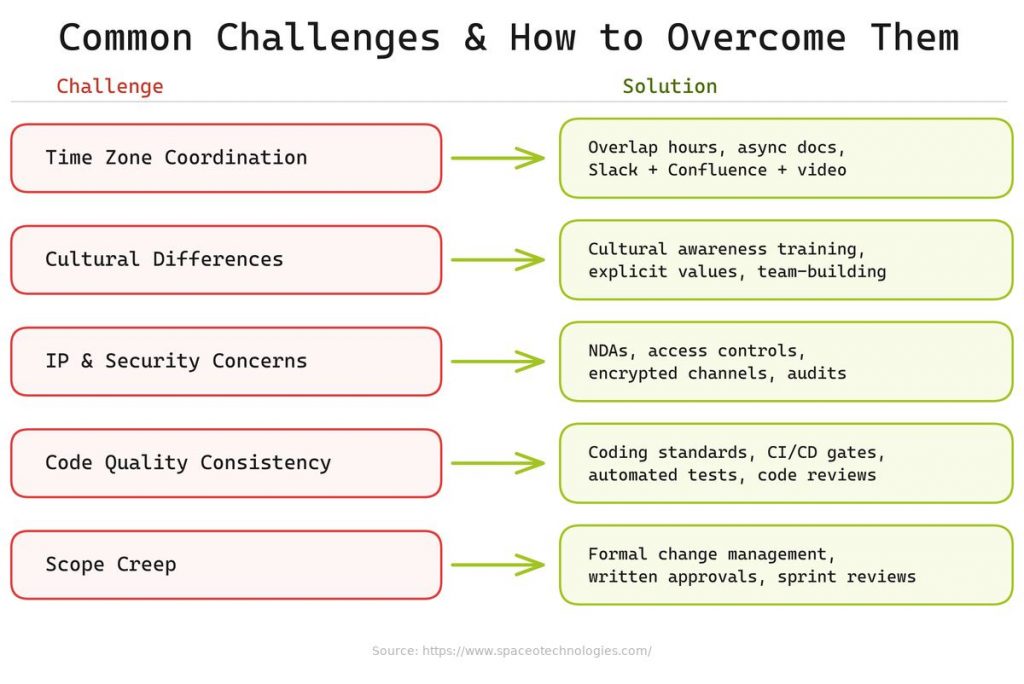
Dedicated team engagements can face several obstacles that impact success. Understanding these challenges and preparing mitigation strategies ensures smoother execution and better outcomes.
Challenge 1: Communication and coordination across time zones
Managing teams in different time zones creates scheduling difficulties and communication delays. Asynchronous work is often necessary but can slow decision-making. Documentation becomes critical when teams cannot communicate synchronously.
How to overcome:
- Establish clear communication protocols with defined overlap hours for synchronous discussions.
- Use asynchronous-first documentation approaches with comprehensive written specifications.
- Leverage tools like Slack, Confluence, and video recording for team communication.
- Designate team members in each timezone responsible for daily standups and updates.
Challenge 2: Cultural differences and work style misalignment
Different cultures have varying approaches to hierarchy, communication directness, decision-making, and conflict resolution. These differences can create friction or misunderstandings without proper awareness and management.
How to overcome:
- Invest time in cultural awareness training for both internal and dedicated team members.
- Be explicit about your company culture, values, and expectations.
- Schedule team-building activities that help teams bond despite distance.
- Regular check-ins identify cultural friction early before it becomes problematic.
Challenge 3: Intellectual property and security concerns
Sharing proprietary code, business logic, and confidential information with external teams creates security and IP risks. Data breaches, unauthorized access, or IP theft can cause significant harm.
How to overcome:
- Establish strict non-disclosure agreements protecting your intellectual property.
- Implement robust access controls, limiting what team members can access.
- Use secure development environments and encrypted communication channels.
- Conduct security audits of vendor infrastructure.
- Ensure contracts include IP assignment clauses, making your ownership explicit.
Challenge 4: Quality control and code standards consistency
Maintaining consistent code quality and architecture standards across distributed teams requires discipline. Without careful oversight, code quality can suffer, and technical debt accumulates quickly.
How to overcome:
- Establish clear coding standards and architectural guidelines documented comprehensively.
- Implement automated testing frameworks, code reviews, and quality gates.
- Use continuous integration tools that enforce standards.
- Schedule regular code review sessions.
- Provide clear examples of acceptable code quality and architecture patterns.
Challenge 5: Managing scope creep and changing requirements
Project requirements often change unexpectedly. Without clear processes, the scope expands without corresponding budget or timeline adjustments. This creates cost overruns and team frustration.
How to overcome:
- Establish formal change management procedures requiring written approval for scope changes.
- Clearly define what’s included in current deliverables.
- Track change requests and their impact on the timeline and budget.
- Regular sprint reviews help catch emerging requirement changes early.
Challenge 6: Dependency on key team members
If critical knowledge is concentrated with one or two developers, losing them disrupts project progress. This dependency creates risk and limits flexibility.
How to overcome:
- Require comprehensive documentation and knowledge transfer among team members.
- Cross-train team members on critical components.
- Maintain redundancy in key areas.
- Regular code reviews ensure multiple people understand critical systems.
Best Practices for Managing Dedicated Software Development Teams Successfully
Successful dedicated team engagements follow several proven practices. These approaches maximize value delivery, build strong relationships, and create sustainable long-term partnerships.
1. Establish crystal-clear expectations upfront
Define what success looks like explicitly. Specify deliverables, quality standards, timeline milestones, and key metrics. Document everything in writing. Ambiguous expectations create misalignment and disappointment. Detailed specifications prevent confusion and reduce scope disputes.
2. Maintain regular and transparent communication
Schedule daily standups, weekly planning sessions, and monthly reviews. Share updates openly about business conditions, strategic changes, and project adjustments. Respond quickly to questions and provide constructive feedback. Strong communication builds trust and prevents misunderstandings.
3. Invest in relationship building and team integration
Treat dedicated teams as true team members, not external vendors. Include them in relevant meetings and discussions. Celebrate milestones together. Recognize excellent contributions publicly. Team members who feel valued deliver better results and stay engaged longer.
4. Provide detailed feedback and performance recognition
Offer constructive feedback on both strengths and areas for improvement. Recognize excellent work explicitly and publicly. Create opportunities for professional growth. A fair assessment of performance builds morale and improves engagement levels significantly.
5. Document decisions and processes thoroughly
Record architectural decisions, design rationale, and technical specifications. Maintain updated documentation about your systems, processes, and standards. Good documentation enables onboarding, supports continuity, and prevents knowledge loss.
6. Use metrics to track progress and performance
Monitor velocity, code quality, defect rates, and delivery timelines. Review metrics regularly in team meetings. Use data to identify bottlenecks and improvement opportunities. Metrics provide objective performance assessment and enable data-driven decision-making.
7. Plan for knowledge transfer and sustainability
Require your dedicated team to document code, architecture, and decisions. Plan regular knowledge transfer sessions. Ensure your internal team understands critical systems. Good knowledge transfer enables smooth transitions if team composition changes.
Cost Considerations When Hiring Dedicated Development Teams
Understanding costs helps you budget effectively and make informed decisions. Dedicated team costs vary significantly based on location, expertise level, team size, and engagement duration.
Regional cost variations
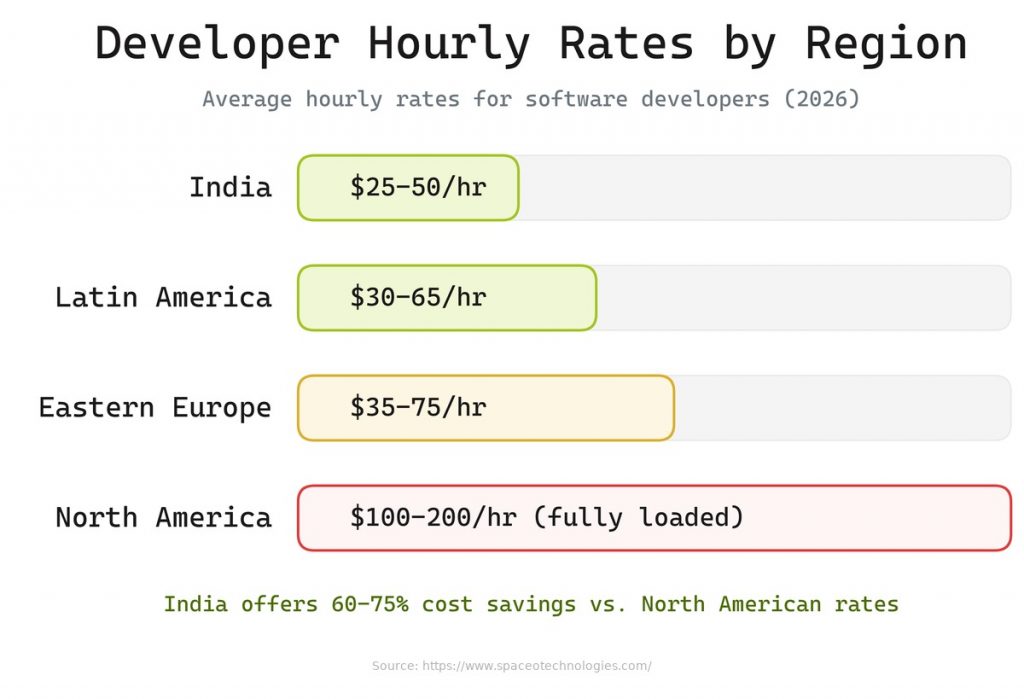
Developer costs differ substantially across regions based on local economies, skill availability, and competition. Eastern European developers typically charge $35-75 per hour. Latin American developers range from $30-65 per hour. Offshore developers in India cost $25-50 per hour. North American developers command $100-200 per hour. These rates provide approximate guidance; actual costs depend on specific skills, experience, and vendor.
Cost factors beyond hourly rates
Beyond hourly rates, consider supporting costs. Project management, quality assurance, infrastructure, and tools add overhead. Onboarding and initial productivity ramp time consume resources without full output. Training and knowledge transfer require investment. Vacation, holidays, and administrative time reduce billable hours.
Total cost of engagement calculation
Calculate total engagement cost, including hourly rates, team size, duration, and overhead factors. A six-month engagement with four developers in Eastern Europe might cost $150,000-200,000. Compare this to typical in-house costs. Senior developers in North America cost $150,000-250,000 annually, plus 25-35% overhead for benefits and facilities. Over a full year, in-house costs significantly exceed dedicated team expenses for equivalent capabilities.
Budget-friendly strategies
Start with smaller team sizes and expand as success validates the relationship. Explore nearshore software development companies to balance cost savings with timezone convenience. Consider different engagement models: fixed-price for well-defined scope, time-and-materials for evolving requirements. Negotiate pricing based on commitment duration. Longer commitments typically reduce hourly rates.
Industry Use Cases: How Organizations Successfully Hire Dedicated Teams
Real-world examples demonstrate the effectiveness of dedicated team engagements across diverse industries and scenarios.
Use case 1: Startup rapid product development
Early-stage startups need development velocity with minimal overhead. A funded startup might hire a dedicated team of five to eight developers to accelerate MVP development for startups quickly. This approach costs significantly less than hiring internal teams and provides flexibility as the startup pivots. Many successful startups leverage dedicated teams through their early scaling phases, transitioning to hybrid models as they mature.
Use case 2: Enterprise digital transformation
Large enterprises modernizing legacy systems need specialized expertise in cloud migration, microservices architecture, and DevOps practices. Choosing a proven enterprise digital transformation partner with specific modernization experience accelerates transformation while maintaining business continuity. The enterprise benefits from external expertise without disrupting existing teams or creating permanent positions for specialized knowledge.
Use case 3: Seasonal and project-based development
Media companies, retail businesses, and entertainment platforms experience seasonal demand spikes requiring temporary development capacity. Dedicated teams scale up for peak seasons and scale down during low periods. This flexibility maintains optimal cost efficiency while meeting variable business demands. Fixed in-house teams cannot achieve this cost optimization.
Use case 4: Specialized technology implementation
Companies adopting artificial intelligence, blockchain, or specialized platforms may lack internal expertise. Whether you’re evaluating SaaS development companies or dedicated AI/ML specialists, hiring the right team accelerates implementation without permanent overhead costs once the work is complete.
Use case 5: Product expansion and diversification
Established companies launching new products or expanding into new markets need development capacity without adding permanent headcount. Dedicated teams provide capacity for innovation projects while internal teams maintain core products. This approach supports strategic diversification with managed risk and cost.
Making the Final Decision: Is a Dedicated Team Right for You?
Dedicated teams offer substantial advantages but aren’t optimal for every situation. Evaluate your specific circumstances before committing.
Dedicated teams work best for projects lasting six months or longer with clearly defined objectives. Prefer dedicated teams when you need specialized expertise, have budget constraints, or face talent shortages locally. Dedicated teams suit organizations that can provide clear direction and specifications upfront.
Dedicated teams may not be ideal for very short-term projects, highly specialized one-off work, or situations requiring extensive hands-on management. If your organization cannot clearly define requirements, your in-house team may need dedicated focus to provide direction and oversight.
Evaluate your circumstances honestly. Consider the total cost, including the overhead of alternatives. Assess your organization’s ability to provide direction, communicate clearly, and integrate external teams. With careful evaluation, dedicated teams provide exceptional value for most modern organizations.
Hire a Dedicated Development Team from Space-O Technologies
Since 2010, Space-O Technologies has helped startups and enterprises build high-performing software products by providing dedicated development teams tailored to their unique project needs. Whether you need a full-stack team for a long-term product or specialized developers for a short-term sprint, we match you with skilled professionals who integrate seamlessly with your in-house workflow.
Our dedicated teams work exclusively on your project, ensuring complete focus, faster delivery, and transparent communication throughout the engagement. From healthcare software and AI-powered applications to custom enterprise solutions, our developers bring domain expertise and technical depth to every project they take on.
Getting started is simple. Share your project requirements with us, and we’ll recommend the right team structure, tech stack, and engagement model for your goals. You can start with a small pilot team, evaluate performance, and scale up as your project grows with no long-term lock-in.
Ready to build your dedicated development team? Contact us today to discuss your project and get a free consultation from our experts.
Frequently Asked Questions About Dedicated Development Teams
How long does it take to hire a dedicated development team?
Most vendors can provide qualified development teams within two to four weeks. This timeline assumes that project requirements and team composition are clearly defined. If the project requires specialized skills or niche technologies, the timeline may extend slightly.
This rapid availability is one of the key advantages of hiring a dedicated development team compared to traditional in-house hiring processes, which often take three to six months to recruit, onboard, and train new developers.
What should a dedicated team’s first week look like?
The first week typically focuses on onboarding and knowledge transfer. Activities include team introductions, granting system access, and setting up development environments. Teams should receive detailed documentation about the product, architecture, workflows, and coding standards.
Technical deep-dive sessions help developers understand the system architecture, while alignment on communication protocols, daily standups, and project management tools ensures everyone understands how collaboration will work from the beginning.
Can you easily add or remove team members?
Yes, flexibility is a major advantage of the dedicated team model. Vendors can often add developers within a few days because they maintain a pool of available resources. This allows companies to scale teams quickly when project demands increase.
Similarly, replacing or removing underperforming team members is straightforward and usually handled through direct communication with the vendor. This flexibility is significantly greater than what is typically possible with internal hiring structures.
How do you prevent intellectual property theft from external teams?
Protecting intellectual property requires clear legal and technical safeguards. Organizations typically use comprehensive non-disclosure agreements and contracts that explicitly assign IP ownership to the client. Role-based access control ensures developers only access the resources necessary for their work.
Secure development environments, encrypted communication channels, and vendor security audits further reduce risks. Regular monitoring and reviews ensure that sensitive information remains protected throughout the project lifecycle.
What happens if a dedicated team member leaves?
Reliable vendors quickly replace departing team members with developers who possess similar skill sets. Professional service agreements usually define replacement timelines and procedures to ensure minimal disruption.
Maintaining detailed documentation and encouraging knowledge sharing across the team helps prevent dependency on a single developer. Cross-training team members on key system components further reduces risks when transitions occur.
How is communication managed with distributed teams?
Successful distributed teams rely on structured communication practices. Teams typically hold daily standup meetings, weekly planning sessions, and periodic project reviews scheduled during overlapping working hours across time zones.
Collaboration tools such as Slack support quick communication, while documentation platforms like Confluence store technical knowledge and project details. Establishing clear communication protocols helps teams collaborate efficiently despite geographical differences.
What metrics should you track for dedicated team performance?
Common performance metrics include development velocity, code quality indicators such as test coverage and bug density, defect rates, and deployment frequency. Monitoring delivery timelines and sprint completion rates helps evaluate team efficiency.
Regular feedback sessions and engagement surveys also provide insights into team health and collaboration effectiveness. Using data-driven metrics helps identify areas for improvement and supports continuous performance optimization.
How do you ensure quality code from dedicated teams?
Ensuring high code quality requires structured development practices. Teams typically implement automated testing frameworks, conduct regular code reviews, and establish strict coding standards and architectural guidelines.
Continuous integration tools help enforce quality gates and detect issues early in the development cycle. Periodic quality audits and review sessions ensure consistent coding practices and help address potential problems before they affect the product.



 All our projects are secured by NDA




 4.8
4.8