
 By
By 
Contents
The fintech industry continues to reshape how businesses and consumers manage money. According to Fortune Business Insights, the global fintech market was valued at approximately US $395 billion in 2025 and is projected to reach roughly US $461 billion in 2026. This growth reflects massive opportunities for startups, financial institutions, and innovative entrepreneurs entering the financial technology space.
However, building a fintech product differs significantly from traditional software development. Fintech MVPs must navigate complex regulatory frameworks, security requirements, and compliance standards from day one. Unlike generic software, fintech applications handle sensitive financial data and must meet rigorous government regulations across multiple jurisdictions.
That is why choosing the right development approach and partnering with an experienced MVP software development company becomes critical for fintech founders. A specialized team can help you validate your product idea quickly while ensuring the MVP is built with strong security, compliance, and scalability in mind.
This guide explains how to build a fintech MVP with a compliance-first strategy. We cover essential features, regulatory requirements, and development costs by vertical, and step-by-step processes for launching secure financial products. Drawing from extensive fintech software development experience, we provide actionable insights for founders, product managers, and entrepreneurs planning fintech MVPs in 2026.
What is Fintech MVP Development?
Fintech MVP development is creating a minimum viable financial product that demonstrates core value while meeting regulatory requirements. This product must handle financial transactions securely while remaining cost-efficient to build and launch. Unlike standard MVPs, fintech applications require security architecture and compliance frameworks from the earliest stages.
Financial products must satisfy strict government regulations and industry standards from inception. Payment processors need PCI DSS certification for handling card data. Lending platforms require compliance with anti-money laundering laws and consumer protection regulations. Banking applications must implement know-your-customer verification and maintain audit trails.
The following sections examine why fintech MVPs demand specialized development approaches distinct from generic software products.
Why Fintech MVP Development Requires a Compliance-First Approach
Traditional MVP development follows a build-learn-iterate cycle that emphasizes speed and cost minimization. Fintech development reverses these priorities by prioritizing regulatory compliance and security architecture from the very beginning. This fundamental difference distinguishes fintech MVPs from other software development approaches.
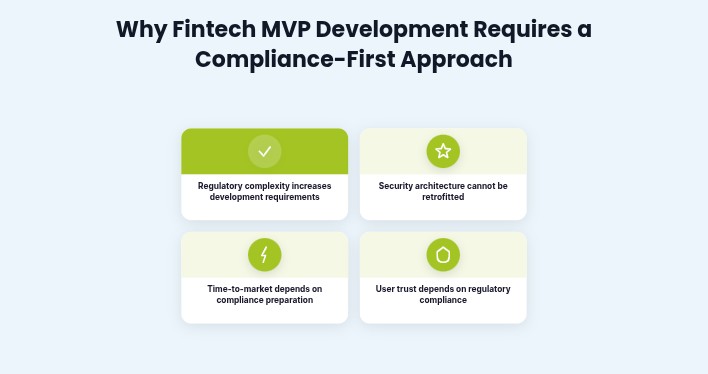
1. Regulatory complexity increases development requirements
Financial services operate under extensive government regulations that vary significantly by jurisdiction. The United States imposes different requirements than the European Union or Asian markets. Each fintech sub-vertical addresses specific regulatory frameworks that shape development decisions.
Payment processors must comply with PCI DSS standards for secure card data handling. These requirements are non-negotiable and affect database design, encryption protocols, and system architecture. Lending platforms must implement KYC and AML procedures that verify user identity and detect suspicious patterns.
Neobanking applications require banking licenses or partner banks in many jurisdictions. Cryptocurrency platforms face evolving regulatory landscapes that are constantly. Starting development without understanding these requirements creates expensive delays and security vulnerabilities.
2. Security architecture cannot be retrofitted
Security in fintech applications must be designed into the system, not added later. Building a secure financial product requires specific authentication mechanisms, encryption standards, and data protection protocols from day one. Adding security after development creates vulnerabilities that may not be detectable.
Fintech users trust applications with their money, personal information, and financial identity. A single security breach can destroy user confidence and the company’s reputation permanently. Regulatory fines for security failures often reach millions of dollars or more.
Compliance-first development integrates security architecture throughout every component. Authentication systems use multi-factor verification. Data travels encrypted between all system components. Access controls restrict information visibility based on user roles and permissions.
3. Time-to-market depends on compliance preparation
Fintech founders often underestimate how long regulatory approval timelines extend development schedules. Obtaining necessary licenses, certifications, or regulatory sandbox approval requires extensive documentation and waiting periods. These cannot be rushed, regardless of development team size.
Proper compliance planning identifies regulatory requirements early and integrates them into development sprints. Applications built without compliance consideration require expensive rework after regulatory review. Budget timelines must include regulatory approval periods that may span months.
4. User trust depends on regulatory compliance
Fintech customers hesitate to trust new platforms with their money unless compliance is obvious. Users research regulatory status, security certifications, and company background before depositing funds. Transparent compliance documentation directly influences user acquisition and retention.
Demonstrating regulatory compliance through visible certifications, transparent security practices, and trusted partnerships builds user confidence. Applications launched without proper compliance documentation struggle to attract users despite excellent features.
Build a Fintech MVP That’s Compliant From Day One
Regulatory missteps kill fintech startups before they scale. Our team builds MVPs with compliance baked into the architecture, not bolted on later.

Essential Fintech MVP Features
Successful fintech MVPs prioritize features addressing regulatory requirements while validating business assumptions. Strategic feature selection balances compliance necessity with user value and MVP app development cost.
Core feature set for fintech MVPs
- User identity verification: KYC verification is legally required for most fintech applications. Document verification, biometric authentication, and sanctions list screening prevent fraud and ensure compliance. Implementation can occur in phases with lighter MVP requirements.
- Secure payment processing: Payment processing forms the core functionality for most fintech MVPs. Integration with payment processors like Stripe reduces development complexity. Real-time fraud detection, settlement reconciliation, and transaction history support operations.
- Encryption and data protection: AES-256 encryption for stored data and TLS 1.2+ for communications are mandatory. Key management systems with rotation procedures and secure deletion protocols protect sensitive information. This technical requirement must be correct from inception.
- User authentication: Multi-factor authentication prevents unauthorized access. Role-based access control limits visibility. Password complexity enforcement and login monitoring detect suspicious activity.
- Compliance reporting: Comprehensive audit trails document all transactions and system access. Regulatory reporting capabilities demonstrate compliance. Data retention management follows regulatory timelines.
These features work together to create a compliant, secure fintech application. Each feature supports both regulatory requirements and user trust.
Fintech MVP Development Process: A Compliance-First Roadmap
Building fintech MVPs follows a structured process with compliance integration at every stage. Rushing this process creates expensive problems that compound throughout development.
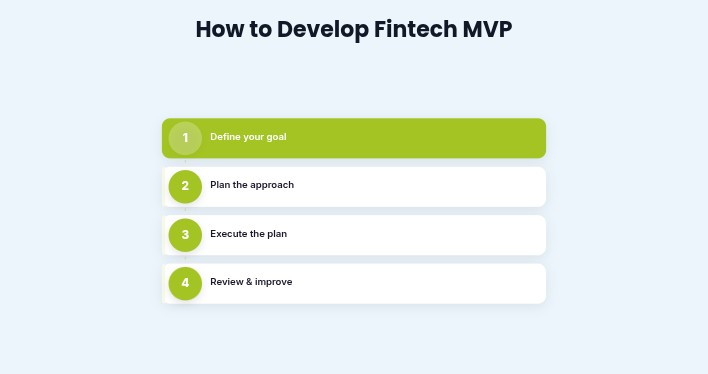
Phase 1: Regulatory analysis and planning
Timeline: 6 to 10 weeks
Regulatory analysis determines what compliance frameworks apply to your specific fintech product. This phase identifies applicable regulations, licensing requirements, and industry standards. Thorough upfront analysis prevents costly rework after development advances.
- Identify applicable regulations: Fintech regulatory requirements vary dramatically by jurisdiction and sub-vertical. Payment processors face PCI DSS standards and money transmitter regulations. Lending platforms must comply with consumer protection and predatory lending laws. Cryptocurrency platforms navigate evolving regulatory landscapes.
- Assess licensing and partnership requirements: Many fintech activities require specific licenses or partnerships with regulated institutions. Money transmitter licenses enable payment processing in specific jurisdictions. Banking partnerships reduce regulatory complexity compared to obtaining independent licenses. Insurance partnerships provide policy underwriting capabilities. Planning these requirements early prevents launch delays.
Regulatory planning establishes the foundation for successful development. Expert guidance from regulatory consultants prevents expensive mistakes during later phases.
Phase 2: Security architecture and compliance design
Timeline: 4 to 8 weeks
Security architecture design translates regulatory requirements into technical blueprints. This phase defines how the system protects financial data and implements compliance controls. Early architectural decisions affect system capabilities throughout the product lifetime.
- Design core security systems: Encryption implementation, key management, and secure storage are detailed. Multi-factor authentication mechanisms prevent unauthorized access. Audit trail systems record all transactions and activities. Data retention procedures follow regulatory timelines.
Security architecture requires specialized fintech expertise. Consider engaging security architects or experienced fintech developers during this phase.
Phase 3: Core MVP development
Timeline: 12 to 20 weeks
Development transforms security architecture into working software. Agile methodologies deliver functionality incrementally with continuous feedback. Sprint-based delivery enables course correction before significant investment accumulates.
- Sprint planning prioritizes regulatory requirements first: KYC verification, payment processing, and encryption are prioritized over secondary features. Each sprint delivers functionality progressing toward regulatory readiness. Continuous testing catches issues early.
- Security is integrated throughout development: Code reviews emphasize security best practices. Automated security testing identifies vulnerabilities with every code change. Integration testing validates that financial service connections work correctly.
Phase 4: Testing, compliance validation, and launch
Timeline: 8 to 12 weeks
Comprehensive testing ensures fintech applications protect financial data reliably. Testing validates both individual components and complete financial workflows. Regulatory compliance validation confirms adherence to requirements.
- Penetration testing: Security professionals attempt to find vulnerabilities through simulated attacks. Third-party testing provides objective validation. Compliance experts verify regulatory requirement adherence. User acceptance testing validates transaction accuracy and functionality.
- Deployment and go-live: Final security assessments confirm production readiness. Gradual customer launch identifies issues early. Intensive support during initial operation addresses problems quickly. Monitoring for compliance violations occurs continuously.
Turn Your Fintech Idea Into a Validated Product Faster
From digital banking to payment platforms, our MVP development team understands the unique challenges of building financial products that users trust.
Fintech MVP Development Cost Breakdown by Vertical
Development costs vary significantly based on fintech sub-vertical and specific features. Understanding typical cost ranges helps founders budget accurately for development. According to KPMG data from 2025, global fintech funding reached US $44.7 billion across 2,216 deals, reflecting substantial investment in fintech innovation and MVP development.
Cost by fintech vertical
| Fintech Vertical | Cost Range | Timeline | Key Cost Drivers |
| Payment/Wallet MVP | US $75,000 – US $150,000 | 2-3 months | Payment processor integration, PCI DSS compliance |
| Lending MVP | US $100,000 – US $200,000 | 2-4 months | Underwriting algorithms, credit bureau integration, regulatory complexity |
| Neobanking MVP | US $150,000 – US $300,000 | 3-5 months | Banking partnerships, ACH integration, KYC/AML systems |
| Insurance/Insurtech MVP | US $120,000 – US $250,000 | 3-6 months | Policy management, claims processing, regulatory requirements |
| Investment/Trading MVP | US $200,000 – US $400,000 | 3-7 months | Market data integration, compliance systems, securities regulations |
Cost breakdown by development phase
| Phase | Percentage of Total Cost |
| Regulatory Analysis and Planning | 10-15% |
| Security Architecture and Design | 15-20% |
| Core MVP Development | 40-50% |
| Security Testing and Compliance | 15-20% |
| Regulatory Submission and Launch | 5-10% |
Factors increasing fintech MVP development costs
- Regulatory complexity significantly increases development requirements: Payment processing requires PCI DSS implementation that standard web applications don’t need. Lending platforms require anti-money laundering systems and affordability assessments. Insurance platforms require specific claims processing and underwriting workflows.
- Financial service integrations add substantial costs: Connecting to banking systems, payment networks, and credit bureaus requires specialized expertise. Each integration adds US $20,000 to US $80,000, depending on technical complexity and partner requirements. Legacy financial systems with poor documentation increase integration timelines and costs.
- Security and compliance expertise drives labor costs higher: Experienced fintech developers command premium salaries versus generic software developers. Security specialists add significant expense to development teams. Regulatory consultants review designs and implementations.
- Licensing and certification requirements extend timelines: Obtaining money transmitter licenses, banking partnerships, or regulatory sandbox approval requires time and documentation. These cannot be rushed, regardless of team size. Timelines may extend 4 to 12 months, depending on jurisdiction.
- Team composition for fintech MVPs requires specialized expertise. Backend developers with financial systems experience cost more than generic developers. Full-stack developers proficient in modern security practices are essential. QA specialists with fintech testing knowledge are valuable. Product managers with a financial services industry background guide development.
Compliance Frameworks by Fintech Vertical
Different fintech sub-verticals operate under different regulatory frameworks. Understanding applicable regulations is essential before development begins.
Payment and wallet applications
Payment applications must comply with PCI DSS standards for secure card data handling. Money transmitter regulations apply in each jurisdiction where the company operates. Anti-fraud measures and transaction monitoring are required. AML and KYC procedures verify customer identity. Regulatory sandbox programs in some jurisdictions enable limited operation during development.
Lending platforms
Consumer lending must comply with Truth in Lending Act requirements for transparent interest rate and cost disclosure. The Fair Credit Reporting Act governs how credit data is used. The Equal Credit Opportunity Act prevents discrimination in lending decisions. State lending regulations vary significantly. Underwriting systems must follow regulatory guidelines. Interest rate caps vary by state, requiring compliance system flexibility.
Neobanking and digital banks
Banking regulations require a charter or partnership with licensed banks. Reserve requirements and capital adequacy standards apply. Deposit insurance requirements affect user trust and operations. Payment system connections follow specific technical and security standards. Consumer protection regulations govern transaction disputes and error handling.
Insurance and insurtech
Insurance regulations are state-specific and require proper licensing. Policy management systems must follow regulatory documentation requirements. Claims processing must follow state insurance regulations. Underwriting systems must prevent unfair discrimination. Rates must be filed and approved with state insurance departments. Consumer privacy regulations govern how customer data is used.
Cryptocurrency and blockchain applications
Cryptocurrency regulations continue evolving rapidly across jurisdictions. Money transmitter licenses apply to exchange platforms. Investment regulations apply to tokenized securities. Anti-money laundering and KYC requirements are mandatory. Custody regulations apply to platforms holding customer assets. Tax reporting requirements are complex and evolving.
Don’t Let Compliance Complexity Stall Your Fintech MVP
We’ve built fintech products that meet PCI DSS, SOC 2, GDPR, and regional banking regulations without sacrificing speed or user experience.
Security Architecture Best Practices for Fintech MVPs
Fintech security requires specific practices to protect financial data and customer assets. These practices differ significantly from standard web application security.
Zero-trust architecture assumes all network traffic is potentially compromised and verifies every connection. Verify every user authentication through multi-factor mechanisms. Encrypt all data in transit between services. Implement network segmentation, isolating sensitive operations.
PCI DSS compliance establishes minimum standards for secure credit card handling. Never store sensitive card data in your systems. Partner with PCI-compliant payment processors. Use tokenization, replacing card data with tokens.
Comprehensive audit systems record all financial transactions and system access. Log authentication attempts and successful logins. Monitor for unusual patterns indicating fraud. Alert security teams to suspicious activities immediately.
Disaster recovery planning maintains operations during incidents. Implement redundant systems across geographic regions. Maintain recent backups with rapid recovery capability. Test procedures regularly and document recovery steps.
Regulatory monitoring tracks evolving requirements. Budget for ongoing compliance adaptation. Build flexible systems accommodating new controls. Maintain regulatory consultant relationships.
Best Practices for Launching Your Fintech MVP
Successful fintech MVP launches require careful planning beyond technical development. These practices increase the probability of market and regulatory success.
- Validate market demand: Conduct customer interviews exploring financial pain points. Validate that customers would pay for your solution. Test prototypes with customer feedback before full development begins.
- Build partnerships early: Strategic partnerships accelerate regulatory progress and time-to-market. Payment processors handle technical integration complexity. Banks provide infrastructure and regulatory credibility. Begin partnership discussions during planning phases.
- Plan customer acquisition: Fintech users require trust before using your application with money. Word-of-mouth and industry partnerships drive adoption more effectively than traditional marketing. Plan for gradual growth rather than rapid expansion.
- Invest in support: Build support teams familiar with your product and compliance. Create comprehensive documentation and FAQ systems. Maintain compliance expertise for customer questions.
- Monitor compliance continuously: Regulatory compliance is ongoing after launch. Monitor agency announcements for requirement changes. Review audit logs and compliance reports regularly. Update systems as regulations and best practices evolve.
Ready to Build a Fintech MVP?
Space-O Technologies specializes in fintech MVP development with compliance built in from day one.
Why Choose Space-O Technologies for Fintech MVP Development
Building a fintech MVP requires more than technical skills alone. Success depends on understanding financial services, regulatory frameworks, security requirements, and customer trust. This specialized combination of expertise is rare in traditional software development companies.
Space-O Technologies brings 15+ years of fintech domain knowledge to every project. Our teams understand payment processing, lending operations, banking infrastructure, and insurance systems. This financial software development services expertise shapes our approach from initial planning through post-launch support.
Regulatory compliance guides our development process from day one. We design security architecture that satisfies regulatory requirements rather than adding compliance later. Our developers understand PCI DSS, KYC/AML procedures, and financial data protection standards. We engage regulatory consultants to validate compliance strategies before development begins.
Fintech security receives specialized attention throughout our MVP development process. Our teams implement encryption, multi-factor authentication, and audit trails as core functionality. Penetration testing and vulnerability scanning occur continuously. We deliver production-ready applications that protect customer assets and company reputation.
Connect with our fintech specialists to discuss your specific requirements. We provide thorough regulatory assessments, transparent cost estimates, and detailed development roadmaps. Let us transform your fintech vision into a secure, compliant, and market-ready MVP.
FAQs About Fintech MVP Development
How long does fintech MVP development typically take?
Fintech MVP development timelines range from 1.5 to 16 months depending on the product type and complexity. Simple payment wallet MVPs can launch in 1.5 to 2.5 months, while lending platforms typically take 2 to 6 months including regulatory approvals. Neobanking MVPs may require 2 to 7 months due to banking partnerships, insurance platforms take 6 to 12 months, and complex investment platforms may take 3 to 9 months. Timelines vary mainly due to regulatory requirements that cannot be accelerated.
What are the essential features for a fintech MVP?
Core fintech MVP features include user identity verification and KYC for compliance, secure payment processing for transactions, encryption and data protection for sensitive information, and multi-factor authentication for account security. Compliance reporting and audit trails are necessary for regulatory visibility, while transaction history and statements improve user transparency. Security and compliance features are essential from day one, while advanced features can be added later.
How much does fintech MVP development cost?
Fintech MVP development costs typically range from $75,000 for basic payment solutions to over $400,000 for complex investment platforms. Payment wallets usually cost between $75,000 and $150,000, lending platforms range from $100,000 to $200,000, neobanking MVPs cost $150,000 to $300,000, insurance platforms range from $120,000 to $250,000, and investment platforms may exceed $200,000 to $400,000. Costs depend on regulatory requirements, integrations, and development complexity.
What regulatory frameworks apply to my fintech MVP?
Regulatory requirements depend on your fintech category and target markets. Payment systems must comply with PCI DSS standards, while money transmission requires licensing in each jurisdiction. Lending platforms must follow consumer protection laws, and neobanking solutions require banking partnerships and regulatory compliance. Insurance platforms need appropriate licensing, and crypto-related products must adapt to evolving regulations. Consulting regulatory experts is essential before development.
How do we ensure PCI DSS compliance in our fintech MVP?
To ensure PCI DSS compliance, avoid storing sensitive card data and rely on PCI-compliant payment processors. Implement network segmentation to isolate payment systems, use tokenization to replace card data, and encrypt all data in transit and at rest. Maintain detailed audit logs of all transactions, conduct regular security testing, and document compliance processes thoroughly to meet regulatory standards.
What security measures are most critical for fintech MVPs?
Critical security measures include multi-factor authentication to prevent unauthorized access, strong encryption to protect financial data, and audit trails to track all activities. Role-based access controls restrict data exposure, while fraud detection systems identify suspicious behavior. Disaster recovery planning ensures continuity, and regular security audits help identify vulnerabilities. These measures must be implemented from the initial launch, not added later.



 All our projects are secured by NDA




 4.8
4.8