
 By
By 
Contents
Most businesses evaluating generative AI consulting companies are not starting from zero. They have read the reports, sat through vendor demos, and likely run at least one internal pilot. What they cannot figure out is why none of it has made it to production. For a foundational guide to generative AI, see our companion resource before comparing consulting firms.
That is the problem a generative AI consulting company is supposed to solve. Not by recommending another tool or building another prototype, but by working through the real blockers: fragmented data with no clear ownership, use cases that are too vague to scope, enterprise systems that were never designed for AI integration, and compliance requirements that nobody scoped at the beginning.
According to Gartner, at least 50% of generative AI projects are abandoned after proof of concept. The reasons are almost always the same: poor data quality, unclear business value, weak risk controls, and a disconnect between what the AI can do and what the business actually needs. These are consulting problems, not engineering problems. And they require a generative AI consulting partner with the depth to address them before a single line of model code is written.
If you are evaluating generative AI consulting companies for your next project, this blog will help you understand:
- What does a generative AI consulting company actually do?
- Which are the top 10 generative AI consulting companies in the USA for 2026?
- Where does generative AI consulting create the most business impact?
- How do you choose the right generative AI partner for your needs?
- What are the most important questions to ask a consulting firm before signing?
Consulting answers the strategy question. Execution still needs a team that can ship. If you are already past the planning stage and need engineering depth to build, integrate, and deploy, you can hire generative AI developers with proven experience taking AI systems from proof of concept to production.
How We Shortlisted These 10 Generative AI Consulting Companies
With no shortage of firms calling themselves generative AI consultants in 2026, we focused on identifying companies with proven consulting and production expertise. We reviewed 60+ companies in the USA using a consistent evaluation process. We assessed each firm on the following criteria:
- US presence: A registered and publicly listed US office.
- Clutch rating:4.7+ rating based on verified client reviews.
- Production experience: At least three generative AI systems deployed at real user volume, with documented outcomes.
- Consulting approach: A structured process for use-case validation, data readiness, architecture, governance, and compliance.
- Security and compliance: Verifiable certifications or compliance, including ISO 27001, SOC 2, HIPAA, or GDPR.
- Pricing transparency: Publicly available hourly rates and minimum project sizes.
- Post-launch support: Defined services for monitoring, retraining, optimization, and ongoing AI performance.
Every generative AI company on this list passed these filters. For a deeper look at our research process, see our listicle research methodology.
Top 10 Generative AI Consulting Companies to Consider in 2026
Compare the best generative AI consulting firms delivering AI strategy, custom model integration, and enterprise-grade implementation for modern businesses.
| Company | Clutch Rating | Hourly Rate | Min. Project | Founded | Location |
|---|---|---|---|---|---|
| Space-O Technologies | 4.8/5 (75 reviews) | $25–$49/hr | $25,000+ | 2010 | Mesa, AZ |
| Biz4Group LLC | 4.9/5 (28 reviews) | $25–$49/hr | $10,000+ | 2003 | Orlando, FL |
| HatchWorks AI | 4.9/5 (29 reviews) | $50–$99/hr | $25,000+ | 2016 | Atlanta, GA |
| Master of Code Global | 4.7/5 (35 reviews) | $50–$99/hr | $25,000+ | 2004 | Redwood City, CA |
| LeewayHertz | 4.7/5 (9 reviews) | $50–$99/hr | $10,000+ | 2007 | San Francisco, CA |
| OpenXcell | 4.8/5 (21 reviews) | <$25/hr | $10,000+ | 2009 | Las Vegas, NV |
| Markovate | 5.0/5 (12 reviews) | $50–$99/hr | $50,000+ | 2015 | San Francisco, CA |
| SoluLab | 4.9/5 (50 reviews) | $25–$49/hr | $25,000+ | 2014 | New York, NY |
| InData Labs | 4.9/5 (20 reviews) | $50–$99/hr | $10,000+ | 2014 | Miami, Florida |
| EffectiveSoft | 4.9/5 (19 reviews) | $50–$99/hr | $25,000+ | 2003 | San Diego, CA |
Choosing the right generative AI consulting company depends on your business goals, industry requirements, implementation complexity, and long-term AI vision.
If you are also evaluating firms for hands-on build and deployment work, explore our detailed guide on the top generative AI development companies to compare delivery models, technical strengths, and engagement options side by side.
In-Depth Profiles of the 10 Best Generative AI Consulting Companies
Choosing a generative AI consulting partner is easier when you know exactly what each firm does well and who they typically work with. The profiles below give you that clarity across ten vetted companies, covering rates, ratings, specializations, and best-fit use cases in one place.
1. Space-O Technologies
| Company | Details |
|---|---|
| Hourly Rate | $25–$49/hr |
| Clutch Rating | 4.8/5 (75 reviews) |
| Minimum Project | $25,000+ |
| Founded | 2010 |
| USA Office | Mesa, AZ |
| Proven Clients | Nike, McAfee, Domino’s, Saint-Gobain |
| Certifications | ISO 27001:2013, ISO 9001:2015 |
| Best For | Startups, mid-market, and enterprise businesses that need consulting and building under one accountable team |
| Clutch Profile | View on Clutch |
Space-O Technologies does not separate consulting from engineering. The same team that validates your use case also designs the architecture and ships the system. This matters because most generative AI failures happen when strategy consultants hand off to a development team that was not involved in the scoping decisions.
Their generative AI consultancy begins with what they call a deep discovery phase. Before any model is recommended, the team audits your data environment: where it lives, how clean it is, who owns it, and whether it can actually support the AI use case being proposed. If the data cannot support the plan, they say so before you have spent a dollar on development. That upfront honesty is reflected in their 97% client retention rate and 98% satisfaction score on Upwork.
The core consulting question they answer for every client is whether to build a custom model, fine-tune an existing LLM, or integrate a pre-trained API. That decision depends entirely on your data volume, the level of specialization of your domain, and the level of output control your use case requires. Space-O Technologies makes that recommendation with reasoning, not a preference for whichever approach generates more billable hours.
After deployment, experienced generative AI consultants continue supporting businesses through model monitoring, drift detection, and retraining cycles. They track model accuracy weekly during the initial deployment phase and transition to monthly evaluations once the system stabilizes, ensuring founders and product teams always have clear visibility into AI performance.
Core generative AI consulting services
- Use case discovery and ROI definition before any architecture work begins
- Data readiness audit, including data quality, ownership mapping, and gap identification
- Build vs. buy vs. fine-tune decision advisory with vendor-agnostic recommendations
- LLM architecture design covering RAG pipelines, fine-tuning strategies, and API integration
- AI agent development for workflow automation and autonomous decision support
- Cloud-native deployment on AWS, Azure, and GCP with MLOps built in
- Post-launch performance monitoring, drift detection, and retraining programs
Real-World AI Projects Delivered by Space-O Technologies
GPT Vix: AI Recruitment Platform
We developed an AI-powered recruitment platform for a New Jersey recruiting agency to streamline video interviews and candidate assessments. The solution integrated OpenAI ChatGPT for dynamic question generation, Whisper for speech transcription, and Synthesia AI avatars supporting 120+ languages.
Learn More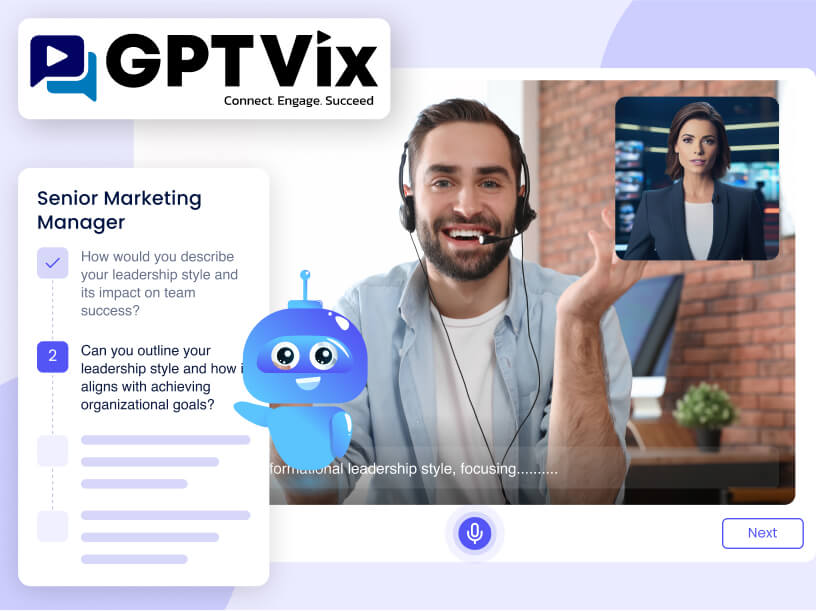
eComChat: AI Ecommerce Search Bot
We built an AI-driven ecommerce search platform for a US online retailer managing 47,000+ products. Powered by OpenAI embeddings and vector search technology, the solution improved search relevance, increased revenue by 23%, and reduced bounce rates caused by poor product discovery.
Learn More
ReadGenie: AI Reading Assistant App
We created an iOS reading assistant app that transforms images into text using OCR, summarizes lengthy content, and generates new content with GPT-3.5. The app achieved 525+ downloads within its first week and offers multilingual translation support across English, French, Spanish, and Japanese.
Learn More
2. Biz4Group LLC
| Company | Details |
|---|---|
| Hourly Rate | $25–$49/hr |
| Clutch Rating | 4.9/5 (28 reviews) |
| Minimum Project | $10,000+ |
| Founded | 2003 |
| USA Office | Orlando, FL |
| Best For | SMBs and mid-market businesses need applied generative AI consulting with a compliance-first approach |
| Clutch Profile | View on Clutch |
Biz4Group’s consulting practice starts from a question most firms skip: what is the specific operational problem this AI system is supposed to fix, and what does success look like in six months? Their Technical Director, Dave Caplis & Sean Hynes, have put this directly: “The organizations doing this well are not chasing AI for its own sake. They are asking what specific problem this solves and what the outcome looks like six months from now. That is the conversation we have with every client.”
That orientation shapes how they run genAI consulting engagements. For clients earlier in the AI journey, they offer an AI strategy phase that assesses existing infrastructure, identifies entry points with real ROI potential, and builds a compliance-first roadmap before any development scoping begins. This is particularly well developed for healthcare clients, where HIPAA compliance and clinical workflow integration require generative AI consultant expertise that cannot be treated as a post-development checkbox.
For organizations ready to build, their consulting transitions directly into development without a handoff. The team of 300+ AI engineers works under a unified engagement model, meaning the consultants who scoped the architecture are accountable for what gets built. Clients have documented 30% to 40% time savings on specific workflow tasks from their AI systems, outcomes that trace back to good consulting before engineering, not just good code.
Breaking down their generative AI consulting services
- AI strategy assessment covering infrastructure readiness, use case prioritization, and ROI modeling
- Compliance-first consulting for healthcare, fintech, legal, and insurance under HIPAA and SOC 2
- Generative AI platform design, including LLM selection, agentic workflow architecture, and integration planning
- AI agent and agentic workflow consulting for multi-step business process automation
- Rapid proof-of-concept consulting to validate AI feasibility before full program commitment
- Ongoing post-launch consulting covering model accuracy monitoring and system optimization
3. HatchWorks AI
| Company | Overview |
|---|---|
| Hourly Rate | $50–$99/hr |
| Clutch Rating | 4.9/5 (29 reviews) |
| Minimum Project | $25,000+ |
| Founded | 2016 |
| USA Office | Atlanta, GA |
| Best For | US-based teams that want generative AI consulting with nearshore engineering and strong MLOps |
| Clutch Profile | View on Clutch |
HatchWorks AI made the Clutch 1000 list for 2023 and has built a consulting practice around one principle: their clients own the strategy and IP, and HatchWorks owns the execution. That framing shapes every consulting engagement. They do not present a recommended AI architecture and walk away. They stay as an accountable partner through deployment, retraining, and expansion.
Their generative AI consulting services model begins with strategy and roadmap work tied directly to measurable business ROI, not technology adoption metrics. They define success before they define the architecture. For a Cox2M IoT client, the consulting engagement determined that a RAG-based chat assistant architecture was the right approach for the use case. The delivered system responded to user questions with over 90% accuracy, delivered on time and within budget, with handover documentation detailed enough that the client could replicate the work internally.
Their delivery model is nearshore LATAM engineering led by US-based consultants. This means strategy conversations happen in US time zones with senior practitioners, while execution is handled by cost-effective engineering talent. Every engagement is structured so that clients never depend on HatchWorks AI for system survival after the engagement ends.
A closer look at their generative AI service offering
- AI strategy and ROI-linked roadmap development before architecture scoping begins
- Pilot-to-production consulting for teams that have a working demo but cannot scale it
- RAG system design and deployment consulting for enterprise knowledge management
- LLM selection and fine-tuning advisory based on data environment and compliance requirements
- MLOps consulting covering monitoring architecture, retraining cadence, and performance benchmarks
- IP ownership and strategy control consulting to ensure clients are never vendor-dependent
4. Master of Code Global
| Company | Details |
|---|---|
| Hourly Rate | $50–$99/hr |
| Clutch Rating | 4.7/5 (35 reviews) |
| Minimum Project | $25,000+ |
| Founded | 2004 |
| USA Office | Redwood City, CA |
| Best For | Enterprises building conversational AI, LLM-powered products, and generative AI features at scale |
| Clutch Profile | View on Clutch |
Master of Code Global has delivered generative AI and conversational AI solutions used by more than a billion users globally. Their consulting practice is built around a specific belief: generative AI should turn potential into revenue-generating software, not experimental demos. Their consulting process challenges clients to go beyond technology exploration and define the business outcome their AI system needs to achieve before any model work begins.
Their AI strategy consulting is specifically designed to move clients from a pilot project to a fully scaled solution. They guide clients through LLM selection across the full provider landscape, including OpenAI, Claude, and open-source models, based on what the specific use case requires rather than vendor partnerships. They also built and open-sourced LOFT, an LLM Orchestration Framework that reduces the setup effort for clients integrating multiple LLMs into complex enterprise workflows. This tool comes out of genuine production experience building multi-LLM systems, not theoretical architecture.
For clients in ecommerce, financial services, healthcare, and travel, Master of Code’s consulting practice pays particular attention to conversation design, UX, and the human experience of interacting with AI systems. This reflects an understanding that most enterprise AI consultants focus on the model layer and ignore the usability layer, which is where adoption dies even when the model performs well.
Key generative AI consulting services
- AI strategy consulting that defines business outcomes before model selection
- LLM selection advisory across OpenAI, Claude, open-source, and fine-tuned model options
- Conversational AI and chatbot design consulting covering conversation flows, UX, and human escalation paths
- LOFT-based LLM orchestration consulting for multi-model enterprise integrations
- AI agent consulting for autonomous customer support, sales, and onboarding workflows
- Post-deployment consulting, including analytics, conversation optimization, and model performance review
5. LeewayHertz
| Company | Details |
|---|---|
| Hourly Rate | $50–$99/hr |
| Clutch Rating | 4.7/5 (9 reviews) |
| Minimum Project | $10,000+ |
| Founded | 2007 |
| USA Office | San Francisco, CA |
| Best For | Enterprises needing production LLM platform engineering and deep technical generative AI consulting |
| Clutch Profile | View on Clutch |
LeewayHertz was named a representative vendor in Gartner’s 2024 Hype Cycle Report for Generative AI consulting services, which reflects their standing as a technical authority in the space, not just a service provider. Their consulting practice is rooted in engineering-led thinking: they do not start with what AI can theoretically do for your business. They start with what your data environment actually supports right now and work backward to a realistic, production-grade plan.
Their primary consulting contribution is helping enterprises choose between building on top of existing LLM APIs, designing RAG systems grounded in internal knowledge bases, or developing proprietary models where domain specificity justifies the investment. They have delivered this analysis for 160+ organizations across finance, healthcare, and enterprise SaaS. Their proprietary ZBrain platform reflects this depth. It is not a generic AI builder but a framework that emerged from repeated experience helping enterprises deploy generative AI against their internal data without the hallucination and security risks that come with ungrounded models.
For consulting clients, LeewayHertz also brings a team model and an AI agent development practice using crewAI and AutoGen Studio. This positions them well for enterprises moving beyond single-model deployments toward multi-agent systems where different AI components handle different parts of a complex workflow.
What the generative AI consulting engagement includes
- Data architecture consulting to determine what generative AI use cases your current data can support
- LLM strategy consulting covering build, fine-tune, and RAG approaches with honest feasibility assessment
- ZBrain platform consulting for enterprises deploying generative AI against internal knowledge bases
- AI agent architecture consulting for multi-agent enterprise workflow design
- NLP system consulting for document intelligence, extraction, and classification use cases
- Production deployment consulting covering security, governance, and performance under real traffic
6. Openxcell
| Company | Details |
|---|---|
| Hourly Rate | <$25/hr |
| Clutch Rating | 4.8/5 (21 reviews) |
| Minimum Project | $10,000+ |
| Founded | 2009 |
| USA Office | Las Vegas, NV |
| Best For | Cloud-native generative AI consulting for companies on AWS or GCP that need speed from strategy to production |
| Clutch Profile | View on Clutch |
OpenXcell is a generative AI consulting company with a global team of 500+ engineers serving clients across 40+ countries. The company has delivered 1,000+ projects spanning generative AI strategy, custom LLM development, RAG implementation, data engineering, and full-stack web and mobile applications. Their consultants are proficient in deep learning, GANs, reinforcement learning, LangChain, and LLM fine-tuning across OpenAI, Llama 2, and Mistral model families. OpenXcell suits startups and SMBs that need generative AI engineering at offshore-friendly pricing.
The firm’s generative AI consulting practice covers end-to-end delivery: data preparation and modeling, algorithm development and implementation, and ongoing support and maintenance. As a trusted generative AI consultancy, their consultants seamlessly integrate the power of generative AI into existing business processes and digital products. OpenXcell holds CMMI Level 3 and ISO 27001 certifications, simplifying compliance reviews for enterprise procurement teams. Their dedicated team model allows clients to scale generative AI capacity without long onboarding cycles.
Generative AI capabilities across the engagement lifecycle
- Generative AI strategy consulting using deep learning, GANs, and reinforcement learning for SaaS and enterprise clients.
- Custom LLM development, fine-tuning, and RAG implementation for domain-specific accuracy and real-time knowledge retrieval.
- LLM-powered chatbot and AI agent development with NLP and contextual awareness for customer engagement and workflow automation.
- Data preparation, modeling, and algorithm development with ongoing post-deployment support and maintenance.
7. Markovate
| Company | Details |
|---|---|
| Hourly Rate | $50–$99/hr |
| Clutch Rating | 5.0/5 (12 reviews) |
| Minimum Project | $50,000+ |
| Founded | 2015 |
| USA Office | San Francisco, CA |
| Best For | Mid-market businesses moving from a proof of concept to a production-ready generative AI system |
| Clutch Profile | View on Clutch |
Markovate holds a perfect 5.0/5 Clutch rating and has built its generative AI consultancy practice around a specific transition point: the gap between a working AI demo and a production system that performs under real usage. Most of their consulting engagements begin with clients who have already validated a concept internally but cannot figure out why the model behaves inconsistently at scale, why integration with the enterprise stack is proving harder than expected, or why data quality issues that were not apparent in the prototype are breaking the production system.
Their consulting process addresses these problems before writing production code. They run an AI proof-of-concept consulting phase where ROI is demonstrated under controlled conditions before a full implementation commitment is made. For regulated clients, this phase also covers HIPAA and GDPR compliance architecture, since retrofitting compliance after the system is built is one of the most common and expensive mistakes in enterprise AI programs.
Their documented production outcomes reflect the quality of the consulting behind the engineering. A 40% reduction in documentation time and a 70%+ reduction in quote generation time on client deployments do not happen because the model was well-chosen. They happen because the consulting work defined the right success metrics, designed the right workflows around the AI, and ensured the system was actually integrated into how the business operates.
Generative AI services included in each engagement
- Proof-of-concept consulting to demonstrate ROI before full implementation commitment
- Data environment assessment and remediation planning for mid-market AI programs
- LLM and RAG architecture consulting using OpenAI, LangChain, and custom frameworks
- Compliance architecture consulting for HIPAA and GDPR regulated environments
- Agentic AI consulting for enterprise copilot and autonomous workflow design
- MLOps consulting covering production deployment, monitoring, and retraining strategy
8. SoluLab
| Company | Details |
|---|---|
| Hourly Rate | $25–$49/hr |
| Clutch Rating | 4.9/5 (50 reviews) |
| Minimum Project | $25,000+ |
| Founded | 2014 |
| USA Office | New York, NY |
| Best For | Enterprises blending generative AI consulting with blockchain, Web3, or complex enterprise integration |
| Clutch Profile | View on Clutch |
SoluLab has a 97% customer success score and has delivered 1,500+ projects for clients, including Walt Disney, Goldman Sachs, and Mercedes-Benz. Ranked among the leading generative AI consulting companies in the USA, their leadership includes former Goldman Sachs and Citrix executives, which shapes how they approach enterprise AI consulting: with the same discipline around risk management, compliance, and ROI accountability that financial services and technology enterprises expect from senior advisors.
Their consulting practice is particularly strong for enterprises that need generative AI alongside broader technology modernization. Where many consulting firms focus narrowly on the LLM layer, SoluLab consults across generative AI, AI agents, enterprise workflow automation, and blockchain integration. For clients whose AI strategy intersects with data provenance, tokenized systems, or decentralized data architectures, this breadth of consulting expertise removes the need for multiple vendors.
Their AI workflow automation consulting has helped clients reduce manual workload by 65% to 70% on production deployments. These outcomes come from consulting work that maps current manual processes in detail before designing the AI replacement, ensuring that the automated system matches how work actually flows rather than how it looks on an org chart.
Key generative AI services and capabilities
- Enterprise AI strategy consulting with risk management and compliance frameworks built in
- Generative AI and LLM consulting for Fortune 500 environments with complex integration requirements
- AI workflow automation consulting that maps manual processes before designing AI replacements
- Blockchain and Web3 integration consulting alongside generative AI programs
- Custom LLM development and fine-tuning consulting for proprietary domain applications
- Post-deployment AI performance consulting and retraining program management
9. InData Labs
| Company | Details |
|---|---|
| Hourly Rate | $50–$99/hr |
| Clutch Rating | 4.9/5 (20 reviews) |
| Minimum Project | $10,000+ |
| Founded | 2014 |
| USA Office | Miami, Florida |
| Best For | Growth-stage enterprises entering their first structured generative AI consulting program |
| Clutch Profile | View on Clutch |
InData Labs is a data science and generative AI consulting firm with a 100+ person team that has delivered 150+ AI projects for clients across the United States, the UK, and Europe. Their generative AI consulting practice covers three core areas: AI digital transformation consulting, AI data consulting (covering data quality, governance, and infrastructure readiness), and generative AI solutions development, including custom LLMs, virtual assistants, chatbots, and recommender engines. The firm is a certified AWS Partner and works across OpenAI, LangChain, Pinecone, Qdrant, Azure, and LangSmith in its delivery stack.
What sets InData Labs apart is the depth of its industry specialization. Their consulting engagements are structured around sector-specific use cases rather than generic AI roadmaps, with dedicated practices covering healthcare and pharma, fintech, e-commerce, retail, transport and logistics, automotive manufacturing, MarTech, gaming, and sport and wellness. This allows their consultants to enter client engagements with pre-built knowledge of relevant data patterns, regulatory considerations, and workflow structures rather than building context from scratch.
Core generative AI consulting services
- AI digital transformation consulting covering process automation, technology selection, and GenAI implementation roadmaps aligned to business goals.
- AI data consulting for data governance, quality standards, infrastructure upgrades, and cloud readiness assessments ahead of AI deployment.
- Custom generative AI solution development, including LLM-powered chatbots, virtual assistants, personalized recommendation engines, and sentiment analysis platforms.
- Ongoing post-deployment support and maintenance with performance monitoring, model updates, and scalability enhancements.
- Industry-specific GenAI consulting across healthcare, fintech, logistics, e-commerce, retail, and marketing verticals.
10. EffectiveSoft
| Company | Details |
|---|---|
| Hourly Rate | $50–$99/hr |
| Clutch Rating | 4.9/5 (19 reviews) |
| Minimum Project | $25,000+ |
| Founded | 2003 |
| USA Office | San Diego, CA |
| Best For | Mid-market enterprises needing LLM integration consulting and AI copilot development at competitive rates |
| Clutch Profile | View on Clutch |
EffectiveSoft is a USA-headquartered generative AI consulting company that specializes in helping mid-sized enterprises bridge the gap between AI ambition and production-grade deployment. Their consulting approach is built around a common reality: most mid-market organizations do not have an AI team, a clear data strategy, or a defined AI governance policy when they start evaluating generative AI. EffectiveSoft’s consulting practice covers all three before any model selection happens.
Their methodology involves architecture design, model vendor selection, integration planning, and data governance as sequential consulting phases before development begins. For clients evaluating LLM vendors, they provide a structured selection framework that matches model capabilities to the specific requirements of the use case rather than defaulting to the most popular API. Their LLM integration and AI copilot consulting practice has been particularly active for knowledge management and employee productivity use cases, where the consulting challenge is as much about change management and workflow redesign as it is about the AI architecture.
The generative AI consulting services they offer
- LLM vendor selection consulting using a structured capability-to-requirement matching framework
- AI copilot consulting for internal knowledge management and employee productivity workflows
- Data governance consulting to establish data ownership, quality standards, and access controls before AI deployment
- Workflow redesign consulting to map how AI will change existing processes before the system is built
- Architecture design and integration planning consulting for mid-market enterprise environments
Ready to Move From AI Ambition to a Production System?
Space-O Technologies has delivered generative AI solutions across recruiting, ecommerce, healthcare, and consumer apps. Every engagement starts with a consulting discovery phase, not assumptions.
Why Businesses Partner With Generative AI Consulting Companies
A generative AI consulting company helps organizations identify, design, implement, and govern AI solutions built on large language models (LLMs) and foundation models to drive measurable business value. They bridge the gap between complex AI technology and real-world business applications, offering services that span strategic roadmapping, model selection, custom development, and end-to-end workflow integration. The goal is not just to deploy AI, but to ensure it solves the right problem in a way that scales.
Key services offered
- Strategy & Roadmap Development: Identifying high-impact AI use cases, conducting feasibility assessments, and defining a phased adoption roadmap aligned to business goals.
- Custom Solution Development: Building, training, and fine-tuning models and applications tailored to specific workflows, data environments, and output requirements.
- GenAI System Integration: Embedding generative AI into existing technology stacks without disrupting current operations.
- Governance & Compliance: Establishing safety, privacy, and ethical frameworks to manage risk, reduce hallucinations, and ensure regulatory alignment. This work matters most where generative AI insurance solutions must satisfy state and federal compliance requirements before reaching a policyholder.
- Training & Change Management: Preparing teams to work alongside AI tools effectively and sustainably.
How they create value
- Operational Efficiency: Automating repetitive tasks and streamlining complex processes to reduce costs and turnaround time.
- Improved Customer Experience: Deploying intelligent chatbots, personalization engines, and content generation tools that improve engagement. The same mechanics driving generative AI in online ecommerce, where AI shopping assistants and conversational search now shape the buying journey.
- Smarter Decision-Making: Using AI-driven data analysis to surface insights that inform faster, more confident business decisions. This is central to generative AI for sales operations, where reps and managers rely on AI-generated pipeline summaries and forecasts to prioritize deals.
- Risk and Compliance Management: Automating audits, fraud checks, and regulatory documentation in industries where errors carry heavy penalties. This mirrors generative AI for banking, where GenAI now drafts compliance reports and flags suspicious transactions for review.
What to look for
The best generative AI consulting companies go beyond technology delivery. Look for partners that assess your data readiness before proposing architecture, define measurable success metrics upfront, and include governance, change management, and post-launch monitoring as part of their engagement, not as optional add-ons.
How to Choose a Generative AI Consulting Company
Choosing the right generative AI consulting firm goes beyond comparing portfolios and pricing. Look for a partner that understands your business problem, handles your data responsibly, makes sound technical decisions, and supports you beyond deployment.
Step 1: Define the problem and success metrics
Start with business challenges, not technology. Identify the problems AI should solve and define measurable outcomes for each.
Step 2: Assess your data
Map where your data lives, who owns it, and whether it is accessible and ready for AI. A strong consulting partner should address data readiness early.
Step 3: Check relevant experience
Prioritize firms with proven experience solving similar problems in your industry. Review verified client feedback and ask for relevant case studies — a consultant who has scoped generative AI applications in retail personalization projects may not carry over well to a highly regulated fintech or healthcare engagement.
Step 4: Evaluate their technical approach
Ask how they choose between RAG, fine-tuning, and pre-trained APIs. Look for clear reasoning rather than generic AI buzzwords.
Step 5: Compare engagement costs
Get detailed proposals from at least three firms. Check what is included, including infrastructure, monitoring, model updates, and post-launch support.
Step 6: Start with a small project
Consider a four- to six-week pilot with clear outcomes before committing to a larger engagement. This helps assess the firm’s delivery capabilities with lower risk.
Step 7: Clarify terms before signing
Document KPIs, milestones, IP ownership, payment terms, and post-launch support before the engagement begins.
Choosing a generative AI services provider is ultimately a bet on the quality of their thinking, not just the strength of their technology stack. The firms worth hiring are the ones that slow down at the start, ask the uncomfortable questions, and treat your business outcome as the definition of success, not the delivery of a system. Firms worth shortlisting also track generative AI industry trends closely enough to explain how those shifts affect your roadmap.
If you’re estimating your AI investment, use our AI development cost calculator to understand potential costs based on your project scope and requirements.
Understand What Your AI Investment Returns Before Spending a Dollar
Map out your AI goals and compliance needs in the calculator, and our consultants send back a budget that reflects real return potential.
Top 8 Strategic Questions to Ask When Evaluating GenAI Consulting Companies
Choosing a generative AI consulting company based only on pricing and portfolios can lead to costly mistakes. Use these questions to assess how well a firm understands your problem, technical requirements, and long-term AI goals.
1. How do you determine whether generative AI is right for my problem?
A strong consultant should challenge assumptions when necessary and consider alternatives such as NLP, machine learning, automation, or improved search before recommending GenAI.
2. How do you assess our data before proposing an architecture?
Ask how the firm evaluates data quality, accessibility, ownership, and readiness and what it recommends when your data needs improvement.
3. How do you choose between RAG, fine-tuning, and API integration?
The right approach depends on your use case. Ask the firm to explain why it would recommend RAG, fine-tuning, or a pre-trained API for your specific requirements.
4. How will you define and measure project success?
Look for measurable business KPIs, not simply technical deliverables. Confirm how success will be measured and reported throughout the engagement.
5. How do you mitigate hallucinations in production?
Ask about grounding, confidence scoring, output validation, guardrails, and monitoring. Their answer can reveal whether they have genuine production experience. The stakes are especially high in generative AI for manufacturing, where an ungrounded response could translate into an unsafe maintenance instruction or a costly production error.
6. Who will work on our engagement?
Request the names, roles, and experience of the team members who will handle strategy, architecture, development, and deployment. Confirm who will remain involved throughout the project.
7. What post-launch support do you provide?
Understand what happens after deployment, including monitoring, model updates, retraining, optimization, and ongoing support, and whether these services are included in the engagement.
8. Can we speak with past clients?
Ask for references from clients with similar projects. Focus on whether the firm challenged assumptions, delivered as promised, and provided reliable support after launch.
The right generative AI consulting company should be comfortable answering these questions with specific examples. Use the responses to evaluate consulting quality, technical judgment, and long-term accountability before making your final decision.
FAQs About Generative AI Consulting
How is generative AI consulting different from generative AI development?
Generative AI consulting focuses on validating business use cases, assessing data readiness, defining measurable success metrics, and determining whether AI is the right solution before development begins. Generative AI development focuses on building and deploying the actual system. The strongest AI partners combine both consulting and engineering under one accountable team.
How much does generative AI consulting cost in the USA?
Consulting engagements covering discovery, architecture planning, and AI strategy typically start around $25,000. Mid-market consulting and implementation programs usually range from $75,000 to $300,000, while large enterprise initiatives often exceed $500,000. Consulting rates generally range from $25 to $99 per hour depending on expertise and project scope.
What is a data readiness assessment, and why does it matter for generative AI?
A data readiness assessment evaluates whether your existing data can effectively support a generative AI solution. It reviews data quality, structure, ownership, completeness, volume, and freshness. This step is critical because many AI implementation failures result from poor or unprepared data rather than model limitations.
What should the first consulting session with a generative AI firm look like?
The first session should focus on understanding your business challenges, current systems, data environment, and desired outcomes. A strong consulting firm will ask detailed questions before suggesting technologies or architectures. Firms that immediately present solutions without understanding your context are often prioritizing sales over strategy.
How do I know whether a generative AI consulting company has real production experience?
Ask for production case studies with measurable results several months after launch. Request examples involving model retraining, post-launch optimization, or handling unexpected issues such as model drift and data quality problems. Companies with real production experience can discuss both successes and operational challenges in detail.



 All our projects are secured by NDA




 4.8
4.8