
 By
By 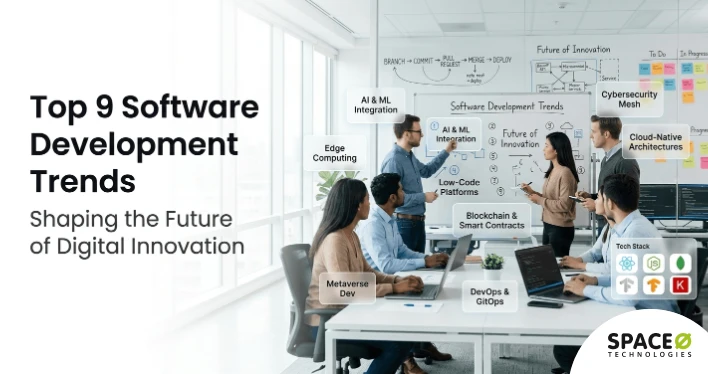
Contents
Digital transformation is no longer a long-term ambition. It is an immediate business priority. Organizations across industries are rethinking how they design, build, and scale software to remain competitive in an environment driven by automation, data intelligence, and rapidly shifting customer expectations. Software is no longer just a support function. It is the foundation of innovation, operational efficiency, and market differentiation.
Today’s development ecosystem is shaped by artificial intelligence, cloud native infrastructure, low-code acceleration, cybersecurity advancements, and product-led growth strategies. Engineering teams are expected to deliver faster releases, resilient architectures, and seamless digital experiences while maintaining security and compliance. This shift is redefining how modern applications are architected, deployed, and continuously optimized.
To successfully adopt these advancements, many organizations rely on specialized enterprise software development services that bring structured processes, architectural expertise, and scalable engineering capabilities. Leveraging the right technical partnership ensures that innovation aligns with long-term business goals rather than short-term experimentation.
In this blog, we explore the key software development trends shaping the future of digital innovation and how forward-thinking businesses can strategically embrace them to build scalable and future-ready digital ecosystems.
1. AI-Augmented Software Development (AI-Powered)
AI augmented development is transforming how modern software is designed, built, and optimized across the entire lifecycle. Artificial intelligence capabilities are now embedded within development environments to assist with code generation, refactoring, documentation, and test creation. Rather than replacing engineers, AI acts as a productivity multiplier that reduces repetitive effort and accelerates delivery timelines. Organizations are strategically implementing AI to improve consistency, reduce technical debt, and strengthen code quality standards.
Enterprise adoption of AI-powered development also introduces new governance considerations related to data privacy, model transparency, and intellectual property protection. Integrated tools such as GitHub Copilot, Claude Code, OpenAI enterprise APIs, and Amazon Web Services CodeWhisperer are being deployed with policy controls and monitoring mechanisms. These platforms analyze contextual code patterns to generate secure and optimized outputs aligned with organizational standards. AI-driven analytics further assist in identifying performance bottlenecks and potential vulnerabilities before production deployment.
Key implementation areas
- Intelligent code completion aligned with internal architecture patterns
- Automated unit and integration test generation
- Real-time vulnerability detection during development
- AI-driven code refactoring to reduce legacy complexity
- Context-aware documentation generation within repositories
- Predictive performance optimization using historical telemetry
- Automated pull request reviews to improve quality control
AI augmented development delivers measurable gains in productivity and quality when supported by structured governance and security frameworks. Organizations that integrate AI responsibly into their engineering ecosystems can accelerate innovation while maintaining compliance and operational reliability.
Ready to Build Scalable Software? Let’s Get Started
Work with experienced engineers to create secure, high-performing solutions designed to grow your business. Take the first step today.

2. Cloud-Native and Edge Computing
Cloud native architecture has become the foundation for building scalable, resilient, and highly available digital systems. Organizations are moving away from monolithic applications toward containerized, microservices-based, and event-driven designs that support rapid deployment and independent scaling. This architectural shift improves system flexibility, reduces downtime risk, and enables faster innovation cycles. As digital demand grows, cloud native environments provide the elasticity required to handle fluctuating workloads efficiently.
Edge computing extends cloud capabilities by processing data closer to the source, reducing latency and improving real-time performance. Technologies such as Kubernetes, Microsoft Azure, Google Cloud, and Cloudflare support distributed deployments across hybrid and multi-cloud environments. By combining centralized cloud infrastructure with localized edge processing, organizations can enhance responsiveness while maintaining centralized governance. This approach is particularly valuable for IoT ecosystems, real-time analytics platforms, and performance-sensitive digital applications.
Key implementation areas
- Container orchestration for automated scaling and workload management
- Infrastructure as code for repeatable and consistent deployments
- Multi-cloud workload distribution to reduce vendor dependency
- Real-time data processing at edge locations
- Distributed observability with centralized monitoring dashboards
- Automated disaster recovery and failover systems
- Cost optimization through cloud usage analytics and resource right-sizing
Cloud native and edge computing strategies provide the scalability and operational resilience required for modern digital ecosystems. When implemented with strong governance and cost transparency, they enable sustained performance, improved user experience, and long-term infrastructure efficiency.
3. DevSecOps and Security Focus
DevSecOps integrates security practices directly into the software development lifecycle rather than treating them as a final stage review. Security validation now begins at the coding phase and continues through testing, deployment, and runtime monitoring. This proactive approach reduces vulnerability exposure and strengthens overall system integrity. Continuous security integration also improves compliance readiness and minimizes the cost of late-stage remediation.
Modern security automation platforms such as Snyk, Checkmarx, Jenkins, and HashiCorp Vault are embedded within CI and deployment workflows. These tools enable automated code scanning, secrets management, and policy enforcement without slowing release cycles. Runtime monitoring and anomaly detection further ensure that applications remain secure after deployment. By aligning security controls with development velocity, organizations can maintain both agility and protection.
Key implementation areas
- Static and dynamic application security testing within development pipelines
- Automated dependency and container image vulnerability scanning
- Secrets management with controlled access and automated rotation
- Zero trust access validation across systems and APIs
- Continuous compliance tracking and audit reporting dashboards
- Runtime application monitoring with anomaly detection capabilities
- API gateway security enforcement and traffic validation
DevSecOps strengthens organizational resilience by embedding security into every stage of software delivery. When supported by automation and policy-driven governance, it enables secure innovation without compromising speed or operational efficiency.
4. Low Code No Code LCNC Platforms
Low-code and no-code platforms are accelerating digital transformation by enabling faster application development with minimal manual coding. These platforms empower business units to build workflows, dashboards, and internal tools while reducing dependency on core engineering teams. Structured governance ensures that rapid development does not compromise security, scalability, or architectural standards. Organizations are increasingly integrating LCNC platforms into enterprise ecosystems to improve operational efficiency and shorten innovation cycles.
Enterprise solutions such as OutSystems, Mendix, and Microsoft Power Apps provide secure integration with ERP, CRM, and legacy systems. These platforms support API connectivity, role-based access control, and compliance management within enterprise environments. Centralized oversight allows organizations to monitor citizen development initiatives while maintaining consistency. When implemented strategically, LCNC tools complement traditional engineering rather than replacing it.
Key implementation areas
- Rapid development of internal workflow automation tools
- Integration with enterprise systems through secure APIs
- Controlled citizen developer governance models
- Accelerated prototyping of digital products
- Automated approval and compliance tracking systems
- Standardized user interface components for brand consistency
Low-code and no-code platforms enhance agility while preserving architectural discipline. With clear governance and integration strategies, they reduce backlog pressure and improve enterprise responsiveness.
Build Scalable Software That Drives Growth
Transform your ideas into secure, high-performance digital solutions with Space-O Technologies. Our modern engineering approach ensures scalability, efficiency, and long-term business value.
5. Sustainable Software Engineering
Sustainable software engineering focuses on reducing energy consumption and infrastructure waste through efficient design and coding practices. Organizations are evaluating applications not only for functionality and performance but also for environmental impact. Optimized algorithms, efficient data storage strategies, and intelligent workload distribution contribute to measurable cost savings. Sustainability objectives are now aligned with long-term operational and ESG commitments.
Cloud providers such as Google offer carbon footprint insights that help monitor infrastructure utilization and environmental metrics. These dashboards allow teams to identify inefficient workloads and optimize deployment patterns. Efficient container orchestration and automated shutdown of idle environments further reduce resource waste. Sustainability in software is becoming a competitive and regulatory consideration.
Key implementation areas
- Server right-sizing to prevent overprovisioning
- Carbon-aware workload scheduling during low-emission periods
- Optimized database queries to reduce compute cycles
- Efficient frontend performance to minimize data transfer
- Automated shutdown of unused environments
- Sustainable DevOps metrics tracking and reporting
Sustainable engineering reduces operational expenditure while supporting environmental responsibility. Organizations that prioritize efficiency gain financial and reputational advantages simultaneously.
6. Internet of Behavior IoB
The Internet of Behavior integrates behavioral data analytics with artificial intelligence to influence and optimize user interactions. By analyzing digital engagement patterns, organizations can predict user intent and improve personalization strategies. This approach combines real-time analytics with machine learning models to enhance customer experience and retention. Responsible data governance remains essential to maintain trust and regulatory compliance.
Platforms such as Snowflake, Databricks, and Adobe Experience Cloud enable scalable behavioral modeling and advanced segmentation. These tools aggregate structured and unstructured data across channels for comprehensive insights. Real-time analytics engines generate predictive scores that guide engagement strategies. Ethical AI frameworks ensure transparency and fairness in behavioral modeling.
Key implementation areas
- Predictive churn modeling using engagement analytics
- Real-time personalization across digital touchpoints
- Behavioral segmentation for targeted campaigns
- Fraud detection through anomaly analysis
- Customer lifetime value forecasting models
- Privacy first consent and data governance integration
IoB enables deeper customer understanding while demanding strong ethical oversight. Balanced implementation drives growth without compromising data integrity.
7. Standardized Developer Experience DevEx
Standardized developer experience improves productivity, collaboration, and deployment speed across engineering teams. Unified tools and automated workflows reduce friction and eliminate redundant configuration tasks. Centralized documentation and service catalogs enhance visibility across distributed systems. Measuring developer efficiency has become a key indicator of engineering maturity and operational health.
Platforms such as Backstage and collaboration ecosystems from Atlassian support internal portal creation and workflow standardization. These systems provide self-service infrastructure provisioning and API discovery capabilities. Automation reduces onboarding time and simplifies environment setup. Consistency across pipelines improves release reliability and deployment frequency.
Key implementation areas
- Self-service infrastructure provisioning portals
- Centralized API and service catalog management
- Unified continuous integration and deployment workflows
- Automated onboarding environments for new developers
- Integrated documentation and knowledge sharing systems
- Real-time developer productivity analytics
Improving developer experience strengthens innovation velocity and talent retention. Structured DevEx strategies create scalable engineering ecosystems that support sustainable growth.
8. Blockchain Beyond Cryptocurrency
Enterprise blockchain adoption is expanding beyond digital currency applications toward secure data validation and process automation. Distributed ledger technology enables transparent and tamper-resistant record keeping across multiple parties. Smart contracts automate predefined business rules without manual intervention. Integration with enterprise systems determines practical value and scalability.
Frameworks such as Hyperledger Fabric and Ethereum support decentralized applications and programmable contracts. These platforms facilitate trust-based collaboration between organizations without centralized intermediaries. Permissioned blockchain models provide controlled access and regulatory compliance alignment. Enterprise integration ensures interoperability with existing financial and operational systems.
Key implementation areas
- Supply chain traceability and transparency systems
- Automated smart contract execution for business workflows
- Decentralized identity verification frameworks
- Immutable audit trails for regulatory compliance
- Secure cross-border transaction validation
- Multi-organization governance and data sharing models
Blockchain provides enhanced trust and transparency when aligned with clear business objectives. Strategic deployment ensures measurable ROI rather than experimental adoption.
9. Progressive Web Applications PWAs
Progressive web applications combine the reach of web platforms with the performance of native applications. They provide responsive interfaces, offline functionality, and push notifications without requiring separate mobile development streams. Organizations adopt PWAs to reduce maintenance complexity and accelerate deployment cycles. This approach enhances accessibility across devices and network conditions.
Frameworks such as React, Angular, and Vue.js enable scalable and performance-driven PWA architectures. Service workers manage caching and offline access for improved reliability. Secure HTTPS implementation ensures safe data transmission across sessions. A unified codebase simplifies updates and long-term maintenance.
Key implementation areas
- Offline functionality through service workers
- Unified cross-device compatibility with a single codebase
- Faster deployment compared to native applications
- Improved search engine visibility and discoverability
- Push notification integration for user engagement
- Reduced long-term maintenance and operational costs
Progressive web applications deliver cost efficiency and a strong user experience within a single architecture. When executed strategically, they provide scalable digital reach without increasing platform complexity.
Future Ready Software Built for Enterprise Success
Empower your organization with resilient, performance-optimized applications developed by Space-O Technologies. Drive measurable ROI through strategic technology modernization.
How Software Development Trends Impact Businesses
Software development trends are no longer confined to engineering teams; they directly influence revenue models, operational structures, customer engagement strategies, and long-term competitiveness. As digital ecosystems expand, technology decisions shape how efficiently organizations innovate and respond to market dynamics. Emerging trends such as AI integration, cloud native infrastructure, security automation, and behavioral analytics are redefining enterprise performance benchmarks. Understanding their business impact is essential for sustainable growth and strategic planning.
Accelerated innovation and faster time to market
Modern development practices significantly reduce the time required to move from concept to production. AI-powered tooling, automation frameworks, and cloud native infrastructure enable shorter release cycles and continuous deployment models. Faster experimentation allows organizations to validate new products, services, and features with minimal delay. This agility improves responsiveness to customer demands and market shifts. For early-stage ventures, custom software development services for startups ensure these modern practices translate into faster launches and stronger market entry.
Improved operational efficiency and cost optimization
Automation across coding, testing, deployment, and monitoring reduces manual intervention and human error. Cloud optimization strategies help control infrastructure spending through right-sizing and efficient workload distribution. Sustainable engineering practices further reduce computing waste and energy consumption. Together, these improvements enhance profitability while maintaining scalability.
Enhanced security and risk mitigation
Integrated security within development workflows strengthens protection against cyber threats. Continuous vulnerability scanning and compliance monitoring reduce exposure to regulatory penalties and reputational damage. Early detection mechanisms minimize remediation costs and system downtime. Strong security posture increases stakeholder confidence and long-term resilience.
Scalable and resilient digital infrastructure
Cloud native and distributed architectures allow systems to scale dynamically based on demand. Edge computing improves performance for latency-sensitive applications and real-time analytics. Automated failover systems and disaster recovery planning enhance uptime reliability. This resilience ensures uninterrupted service delivery during growth or unexpected disruptions.
Data-driven decision-making
Advanced analytics and behavioral intelligence platforms provide actionable insights from large-scale data streams. Real-time processing supports personalized experiences and operational forecasting. Predictive modeling helps organizations anticipate trends rather than react to them. Data-driven strategies strengthen competitive positioning and revenue growth.
Strengthened customer experience and engagement
Modern web technologies and personalization engines enhance digital interactions across devices and platforms. Faster load speeds, offline capabilities, and targeted engagement tools improve user satisfaction. Behavioral analytics refines product recommendations and communication strategies. Improved customer experience translates directly into higher retention and lifetime value.
Workforce productivity and talent retention
Standardized developer environments and automation reduce friction in daily workflows. Faster onboarding and streamlined collaboration improve engineering efficiency. AI-assisted development tools decrease repetitive workload and enhance job satisfaction. Organizations with modern engineering ecosystems attract and retain high-performing talent.
Long-term strategic competitiveness
Adopting modern software development trends builds a foundation for continuous innovation and adaptability. Scalable infrastructure, secure systems, and intelligent automation support evolving business models. Organizations that proactively modernize their technology landscape outperform competitors dependent on legacy systems. Strategic alignment between technology investment and business objectives drives sustainable market leadership.
In an increasingly digital economy, software development trends are not optional enhancements but strategic enablers of growth. Businesses that evaluate and adopt these trends with structured planning, governance, and measurable KPIs position themselves for long-term operational excellence and competitive advantage.
Future-Proof Your Business with Modern Software Development at Space-O Technologies
Technology evolution is accelerating, and businesses that fail to modernize risk operational inefficiencies, security vulnerabilities, and lost competitive advantage. Future proofing requires more than adopting new tools; it demands a strategic approach to architecture, scalability, security, and long-term maintainability. Modern software development enables organizations to build resilient systems that adapt to market shifts and technological disruption.
At Space-O Technologies, modern software development is driven by cloud native architecture, AI integration, secure DevOps practices, and scalable engineering frameworks. The focus is on building performance-optimized, secure, and future-ready solutions tailored to evolving industry demands. From enterprise application development to infrastructure modernization and digital product engineering, solutions are aligned with long-term business objectives. Continuous innovation, transparent processes, and measurable KPIs ensure sustainable digital growth.
Modern software development is not a one-time upgrade but an ongoing strategic investment. With the right development partner and forward-looking engineering approach, organizations can build adaptive digital ecosystems that evolve alongside market demands. Future-ready systems ensure operational efficiency, customer satisfaction, and long-term competitive advantage in an increasingly digital world.
Frequently Asked Questions About Software Development Trends
What are the most important software development trends in 2026?
The most important software development trends in 2026 include AI-augmented development, cloud-native and edge computing, DevSecOps integration, sustainable software engineering, and advanced behavioral analytics. These trends emphasize automation, scalability, security, and data-driven intelligence. Organizations are increasingly adopting architectures that support flexibility, interoperability, and long-term cost optimization.
How do software development trends impact enterprise businesses?
Software development trends directly impact operational efficiency, innovation speed, security, and scalability. Modern architectures reduce downtime risks, while automation lowers development and maintenance costs. Data-driven systems improve decision-making and enable personalized customer experiences, giving enterprises a strong competitive advantage.
Are AI-driven tools replacing software developers?
No, AI-driven tools are not replacing developers but enhancing their productivity. They automate repetitive tasks like code generation, testing, and documentation, allowing developers to focus on complex problem-solving and system design. Human expertise remains critical for architecture, business logic, and governance.
How can startups adopt modern software development trends efficiently?
Startups can adopt modern trends by building scalable cloud-native architectures from the start. Using managed services, automation tools, and AI-assisted development platforms helps reduce complexity and accelerate product validation. Prioritizing security early and aligning technology choices with business goals ensures sustainable growth.
What risks come with adopting new development technologies?
Adopting new technologies can introduce challenges such as integration issues, skill gaps, higher initial costs, and vendor dependency. Immature tools may lack long-term support or scalability. These risks can be mitigated through proper evaluation, pilot testing, and phased implementation strategies.



 All our projects are secured by NDA




 4.8
4.8